


Herculaneum · The buried theatre
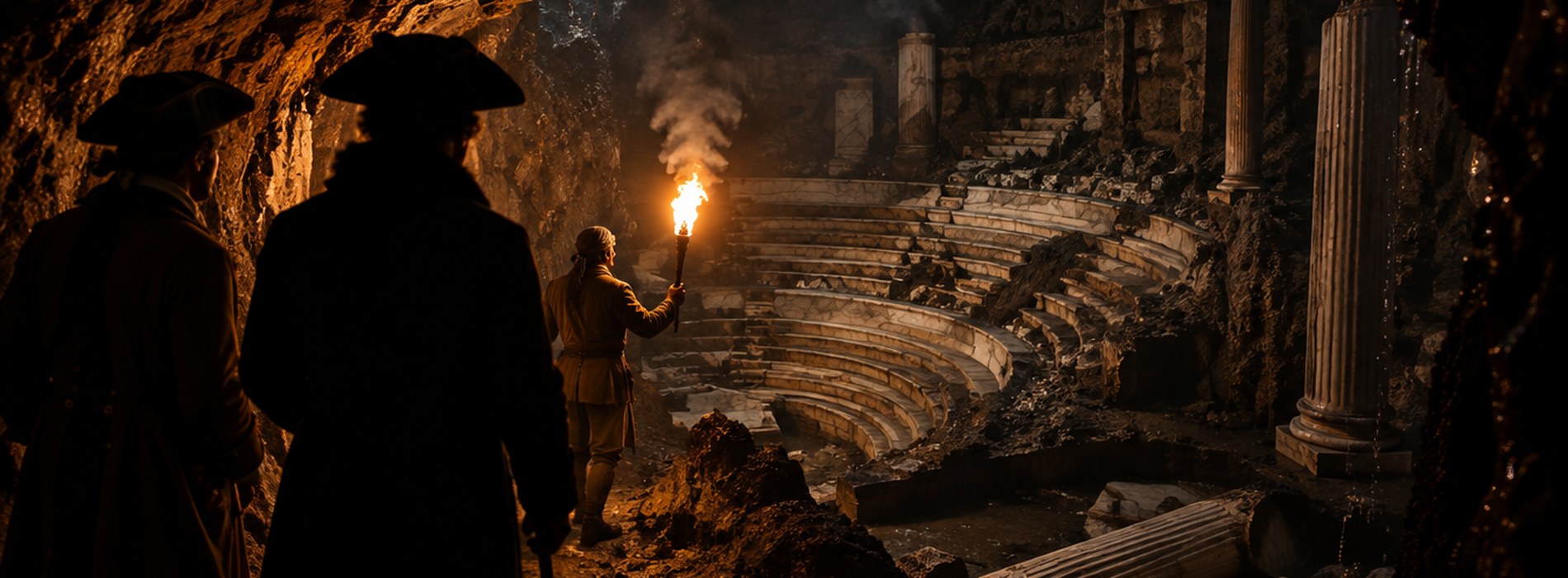
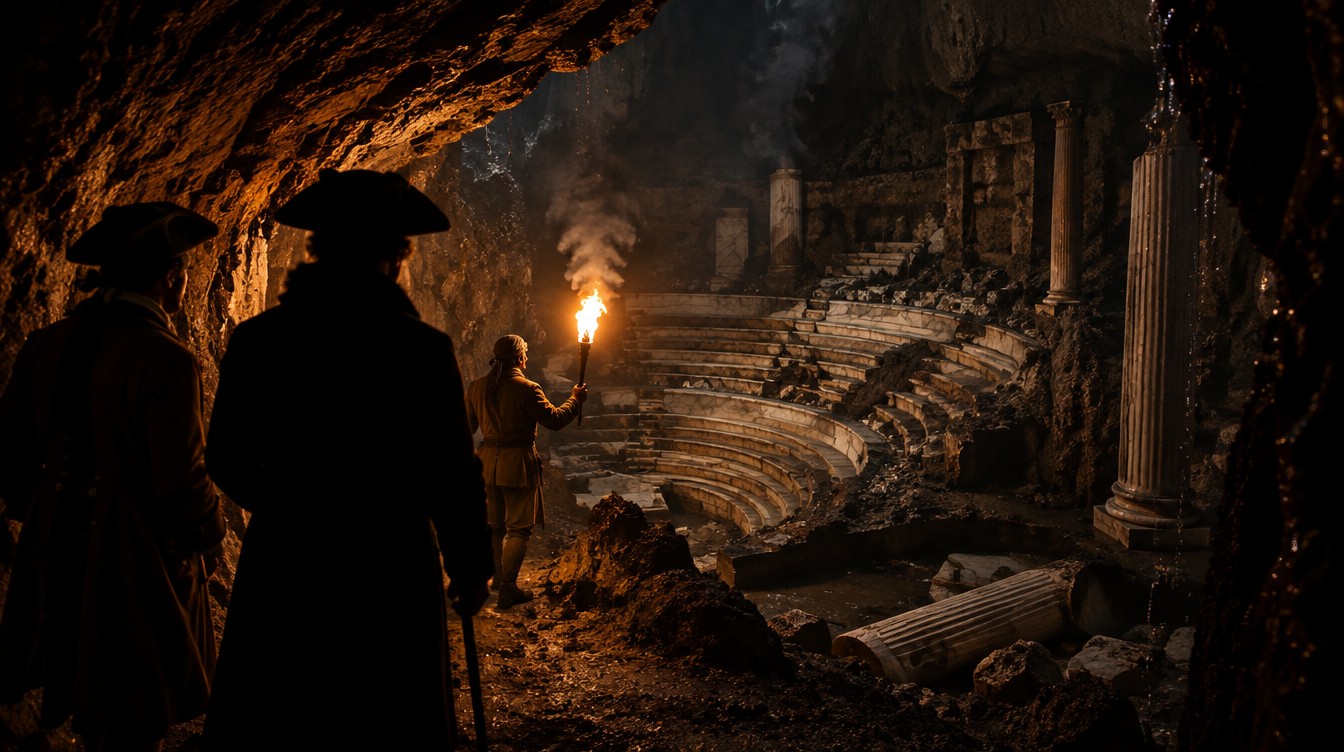
The city at the foot of Vesuvius lies buried under sixty feet of material. One descends sixty steps and, by torchlight, admires the theatre that once stood under the open sky; Goethe regrets that the excavation was not carried out methodically, by German miners.
Naples, 18 March 1787
We must not any longer put off our visit to Herculaneum, and the Museum of Portici, where the curiosities which have been dug out of it are collected and preserved. That ancient city, lying at the foot of Vesuvius, was entirely covered with lava, which subsequent eruptions successively raised so high, that the buildings are at present sixty feet below the surface. The city was discovered by some men coming upon a marble pavement, as they were digging a well. It is a great pity that the excavation was not executed systematically by German miners; for it is admitted that the work, which was carried on at random, and with the hope of plunder, has spoilt many a noble monument of ancient art. After descending sixty steps into a pit, by torch-light you gaze in admiration at the theatre which once stood beneath the open sky, and listen to the guide recounting all that was found there, and carried off.
Original German text · Neapel, den 18. März 1787.
Nun durften wir nicht länger säumen, Herkulanum und die ausgegrabene Sammlung in Portici zu sehen. Jene alte Stadt, am Fuße des Vesuvs liegend, war vollkommen mit Lava bedeckt, die sich durch nachfolgende Ausbrüche erhöhte, so daß die Gebäude jetzt sechzig Fuß unter der Erde liegen. Man entdeckte sie, indem man einen Brunnen grub und auf getäfelte Marmorfußböden traf. Jammerschade, daß die Ausgrabung nicht durch deutsche Bergleute recht planmäßig geschehen; denn gewiß ist bei einem zufällig räuberischen Nachwühlen manches edle Altertum vergeudet worden. Man steigt sechzig Stufen hinunter in eine Gruft, wo man das ehmals unter freiem Himmel stehende Theater bei Fackelschein anstaunt und sich erzählen läßt, was alles da gefunden und hinaufgeschafft worden.
Today
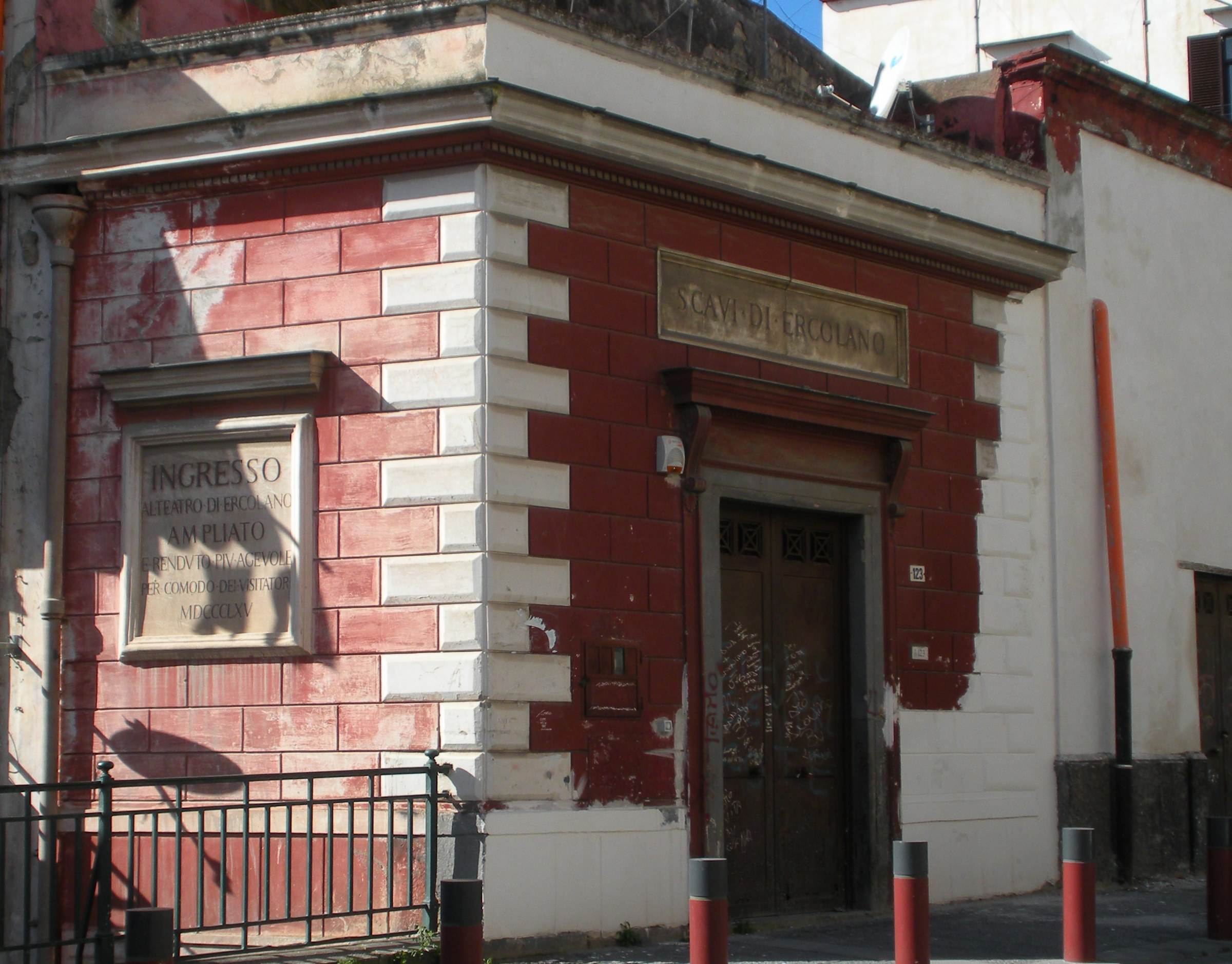
The ancient theatre of Herculaneum, visited underground with its entrance on Corso Resina, outside the open-air excavations.
Where: Teatro antico di Ercolano, Corso Resina, 80056 Ercolano (NA)
Works and documents
AI reconstruction
Sources
J.W. Goethe, Italienische Reise, original German text (public domain).
Translated by A.J.W. Morrison (Goethe’s Travels in Italy, London, Bell; public domain).


