


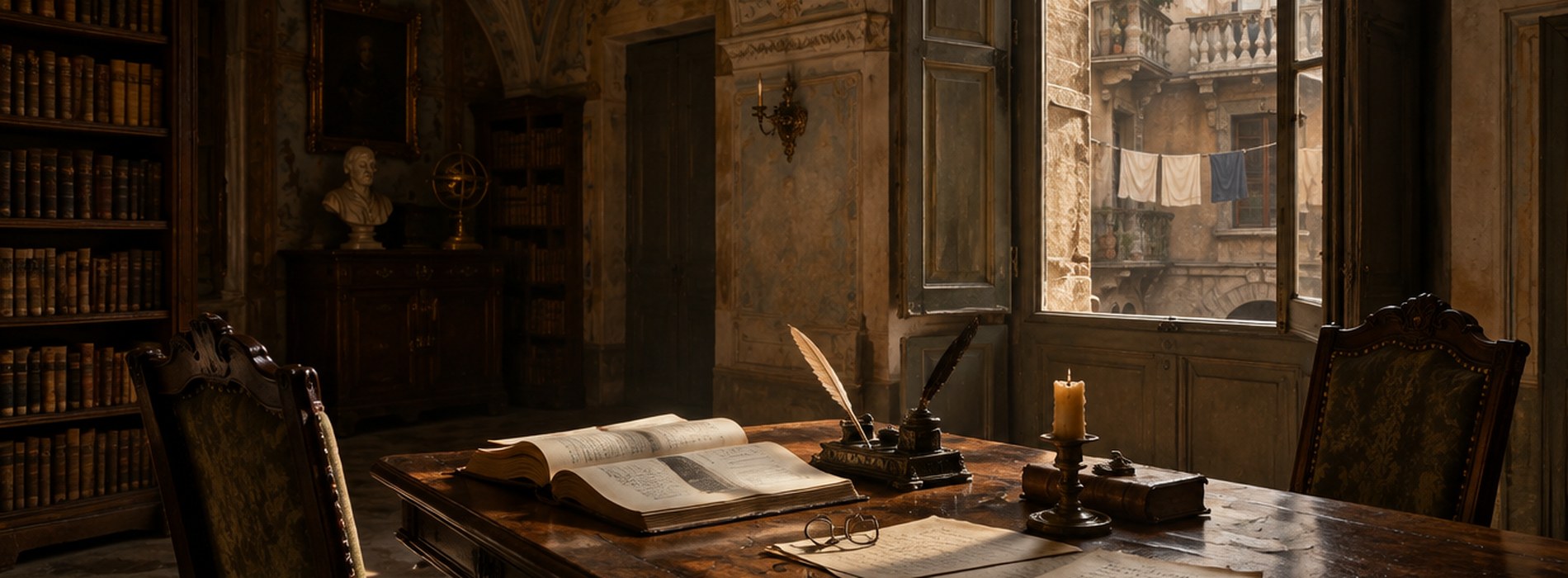
Naples · Gaetano Filangieri and Vico
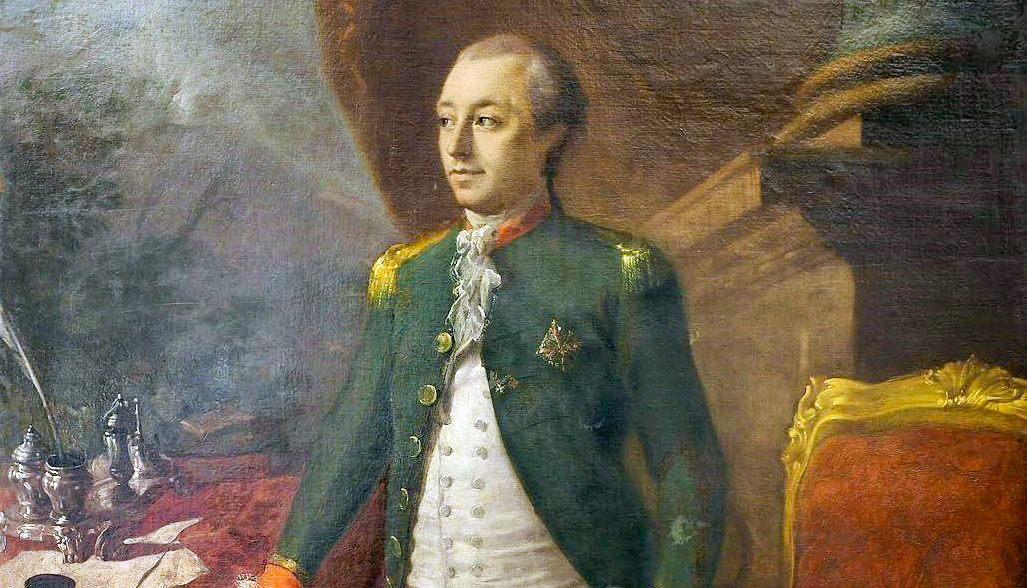
The portrait of Cavaliere Filangieri, author of the Science of Legislation: soldier, cavalier and man of the world, tempered by fine moral feeling. He introduces Goethe to Giambattista Vico, the «patriarch» of the Neapolitan jurists. On 9 March, at the Filangieris’, the talkative little lady who invites him to dinner.
Naples, 5 March 1787
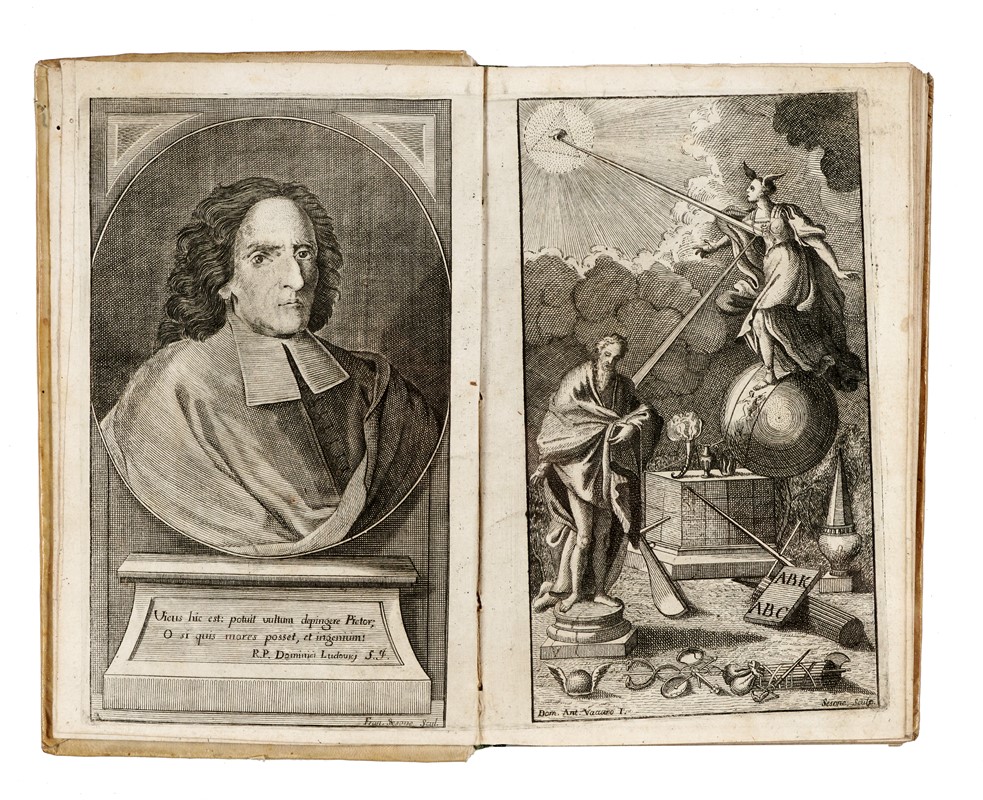
I made to-day the acquaintance of an excellent individual, and I must briefly give you a general description of him. It is the Chevalier Filangieri, famous for his work on legislation. He belongs to those noble young men who wish to promote the happiness and the moderate liberty of mankind. In his bearing you recognise at once the soldier, the chevalier, and the man of the world; but this appearance is softened by an expression of tender moral sensibility, which is diffused over his whole countenance, and shines forth most agreeably in his character and conversation; he is, moreover, heartily attached to his sovereign and country, even though he cannot approve of all that goes on. He is also oppressed with a fear of Joseph II. The idea of a despot, even though it only floats as a phantom in the air, excites the apprehensions of every noble-minded man. He spoke to me without reserve, of what Naples had to fear from him; but in particular he was delighted to speak of Montesquieu, Beccaria, and of some of his own writings—all in the same spirit of the best will, and of a heart full of youthful enthusiasm to do good. And yet he may one day be classed with the Thirty. He has also made me acquainted with an old writer, from whose inexhaustible depths these new Italian friends of legislation derive intense encouragement and edification. He is called Giambattista Vico, and is preferred even to Montesquieu. After a hasty perusal of his book, which was lent to me as a sacred deposit, I laid it down, saying to myself, Here are sybilline anticipations of good and right, which once must, or ought to be, realised, drawn apparently from a serious contemplation both of the past and of the present. It is well when a nation possesses such a forefather: the Germans will one day receive a similar codex from Hamann.
Original German text · Neapel, den 5. März 1787.
Von einem trefflichen Manne, den ich diese Tage kennen gelernt, muß ich kürzlich das Allgemeinste erwähnen. Es ist Ritter Filangieri, bekannt durch sein Werk über die Gesetzgebung. Er gehört zu den ehrwürdigen jungen Männern, welche das Glück der Menschen und eine löbliche Freiheit derselben im Auge behalten. An seinem Betragen kann man den Soldaten, den Ritter und Weltmann erkennen, gemildert ist jedoch dieser Anstand durch den Ausdruck eines zarten sittlichen Gefühls, welches, über die ganze Person verbreitet, aus Wort und Wesen gar anmutig hervorleuchtet. Auch er ist seinem Könige und dessen Königreich im Herzen verbündet, wenn er auch nicht alles billigt, was geschieht; aber auch er ist gedrückt durch die Furcht vor Joseph dem Zweiten. Das Bild eines Despoten, wenn es auch nur in der Luft schwebt, ist edlen Menschen schon fürchterlich. Er sprach mit mir ganz offen, was Neapel von jenem zu fürchten habe. Er unterhält sich gern über Montesquieu, Beccaria, auch über seine eigenen Schriften, alles in demselben Geiste des besten Wollens und einer herzlichen jugendlichen Lust, das Gute zu wirken. Er mag noch in den Dreißigen stehen.
Gar bald machte er mich mit einem alten Schriftsteller bekannt, an dessen unergründlicher Tiefe sich diese neuern italienischen Gesetzfreunde höchlich erquicken und erbauen, er heißt Johann Baptista Vico, sie ziehen ihn dem Montesquieu vor. Bei einem flüchtigen Überblick des Buches, das sie mir als ein Heiligtum mitteilten, wollte mir scheinen, hier seien sibyllinische Vorahnungen des Guten und Rechten, das einst kommen soll oder sollte, gegründet auf ernste Betrachtungen des Überlieferten und des Lebens. Es ist gar schön, wenn ein Volk solch einen Ältervater besitzt; den Deutschen wird einst Hamann ein ähnlicher Kodex werden.
Naples, 9 March 1787
This is the pleasant part of travelling, that even ordinary matters, by their novelty and unexpectedness, often acquire the appearance of an adventure. As I came back from Capo di Monte, I paid an evening visit to Filangieri, and saw sitting on the sofa, by the side of the mistress of the house, a lady whose external appearance seemed to agree but little with the familiarity and easy manner she indulged in. In a light, striped, silk gown of very ordinary texture, and a most singular cap, by way of head-dress, but of a pretty figure, she looked like some poor dressmaker who, taken up with the care of adorning the persons of others, had little time to bestow on her own external appearance; such people are so accustomed to expect their labours to be remunerated, that they seem to have no idea of working gratis for themselves. She did not allow her gossip to be at all checked by my arrival, but went on talking of a number of ridiculous adventures which had happened to her that day, or which had been occasioned by her own brusquerie and impetuosity.
The lady of the house wished to help me to get in a word or two, and spoke of the beautiful site of Capo di Monte, and of the treasures there. Upon this the lively lady sprang up with a good high jump from the sofa, and as she stood on her feet seemed still prettier than before. She took leave, and running to the door, said, as she passed me, “The Filangieri are coming one of these days to dine with me—I hope to see you also.” She was gone before I could say yes. I now learnt that she was the Princess——, a near relative to the master of the house. The Filangieri were not rich, and lived in a becoming but moderate style; and such I presumed was the case with my little Princess, especially as such titles are anything but rare in Naples. I set down the name, and the day and hour, and left them, without any doubt but that I should be found at the right place in due time.
Original German text · Neapel, Freitag, den 9. März 1787.
Das ist das Angenehme auf Reisen, daß auch das Gewöhnliche durch Neuheit und Überraschung das Ansehen eines Abenteuers gewinnt. Als ich von Capo di Monte zurückkam, machte ich noch einen Abendbesuch bei Filangieri, wo ich auf dem Kanapee neben der Hausfrau ein Frauenzimmer sitzend fand, deren äußeres mir nicht zu dem vertraulichen Betragen zu passen schien, dem sie sich ganz ohne Zwang hingab. In einem leichten, gestreiften, seidenen Fähnchen, den Kopf wunderlich aufgeputzt, sah die kleine, niedliche Figur einer Putzmacherin ähnlich, die, für die Zierde anderer sorgend, ihrem eigenen Aussehen wenig Aufmerksamkeit schenkt. Sie sind so gewohnt, ihre Arbeit bezahlt zu sehen, daß sie nicht begreifen, wie sie für sich selbst etwas gratis tun sollen. Durch meinen Eintritt ließ sie sich in ihrem Plaudern nicht stören und brachte eine Menge possierliche Geschichten vor, welche ihr dieser Tage begegnet oder vielmehr durch ihre Strudeleien veranlaßt worden.
Die Dame vom Hause wollte mir auch zum Wort verhelfen, sprach über die herrliche Lage von Capo di Monte und die Schätze daselbst. Das muntere Weibchen dagegen sprang in die Höhe und war, auf ihren Füßen stehend, noch artiger als zuvor. Sie empfahl sich, rannte nach der Türe und sagte mir im Vorbeigehen: “Filangieris kommen diese Tage zu mir zu Tische, ich hoffe, Sie auch zu sehen!” Fort war sie, ehe ich noch zusagen konnte. Nun vernahm ich, es sei die Prinzessin ***, mit dem Hause nah verwandt. Filangieris waren nicht reich und lebten in anständiger Einschränkung. So dacht’ ich mir das Prinzeßchen auch, da ohnehin solche hohe Titel in Neapel nicht selten sind. Ich merkte mir den Namen, Tag und Stunde und zweifelte nicht, mich am rechten Orte zu gehöriger Zeit einzufinden.
Today
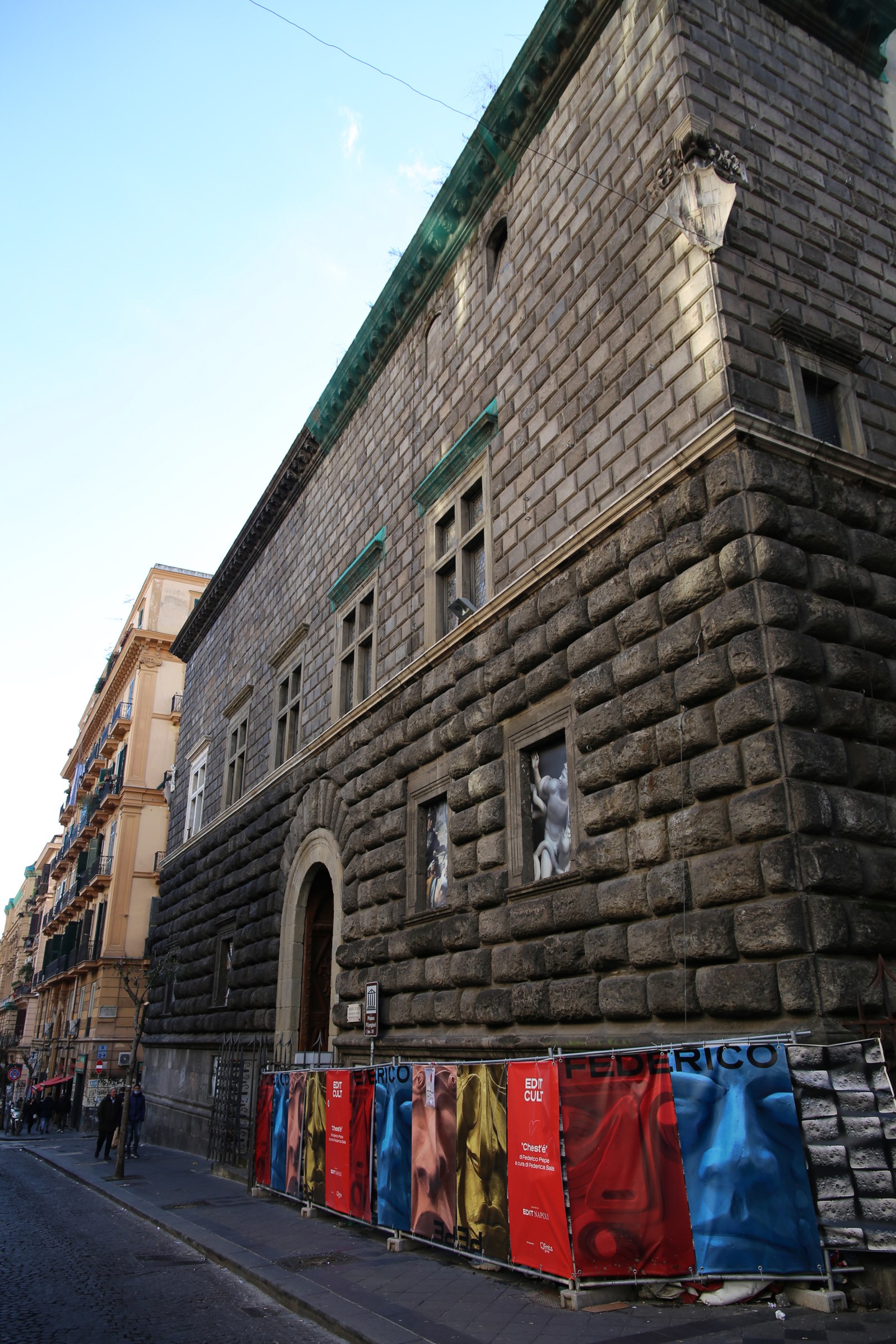
The diary does not say where the Filangieris lived. Benedetto Croce (1903), on information from the family, places them in the ancestral palace of the eldest brother, Cesare Filangieri, Prince of Arianiello, at the Largo Arianiello. The Museo Civico Gaetano Filangieri on Via Duomo (Palazzo Como) bears the family name but is not that house.
Where: Museo Civico Gaetano Filangieri, Via Duomo 288, 80138 Napoli
Works and documents
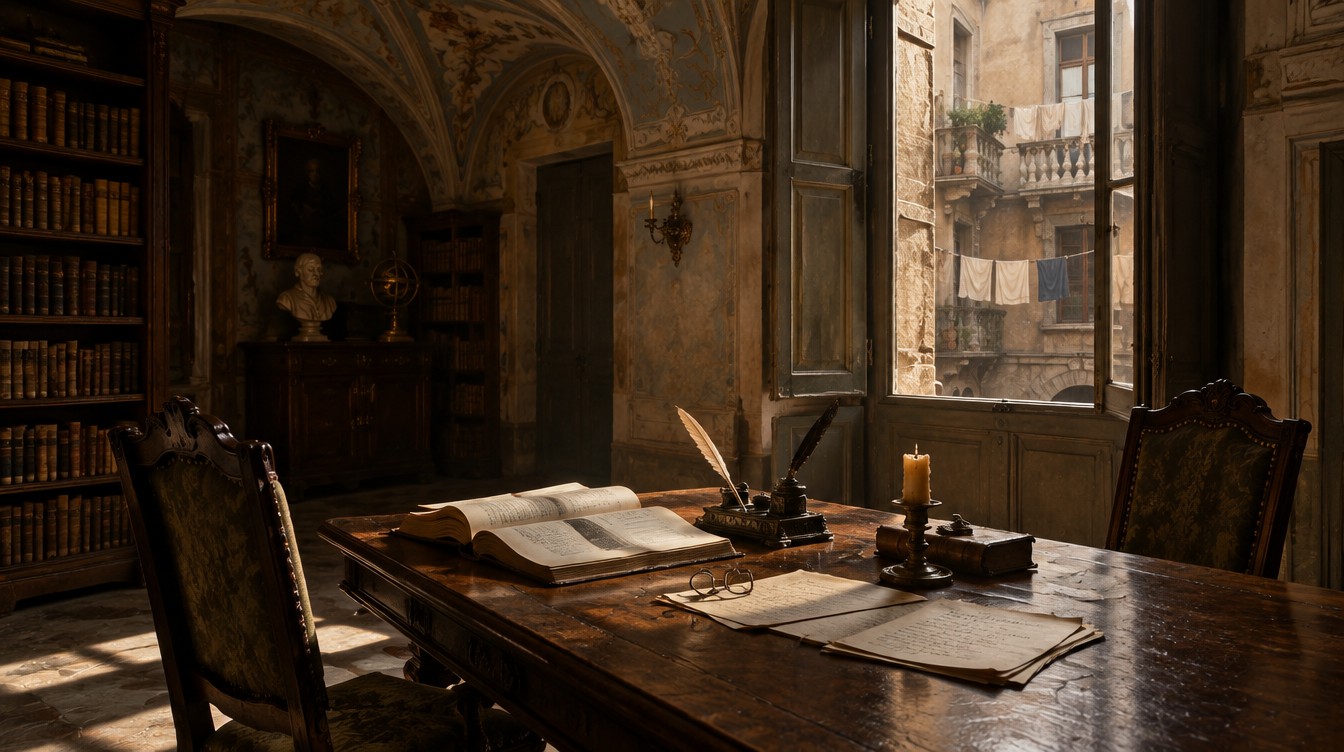
AI reconstruction
Videos
Further reading
Sources
J.W. Goethe, Italienische Reise, original German text (public domain).
Translated by A.J.W. Morrison (Goethe’s Travels in Italy, London, Bell; public domain).


