


Pompeii · The mummified city
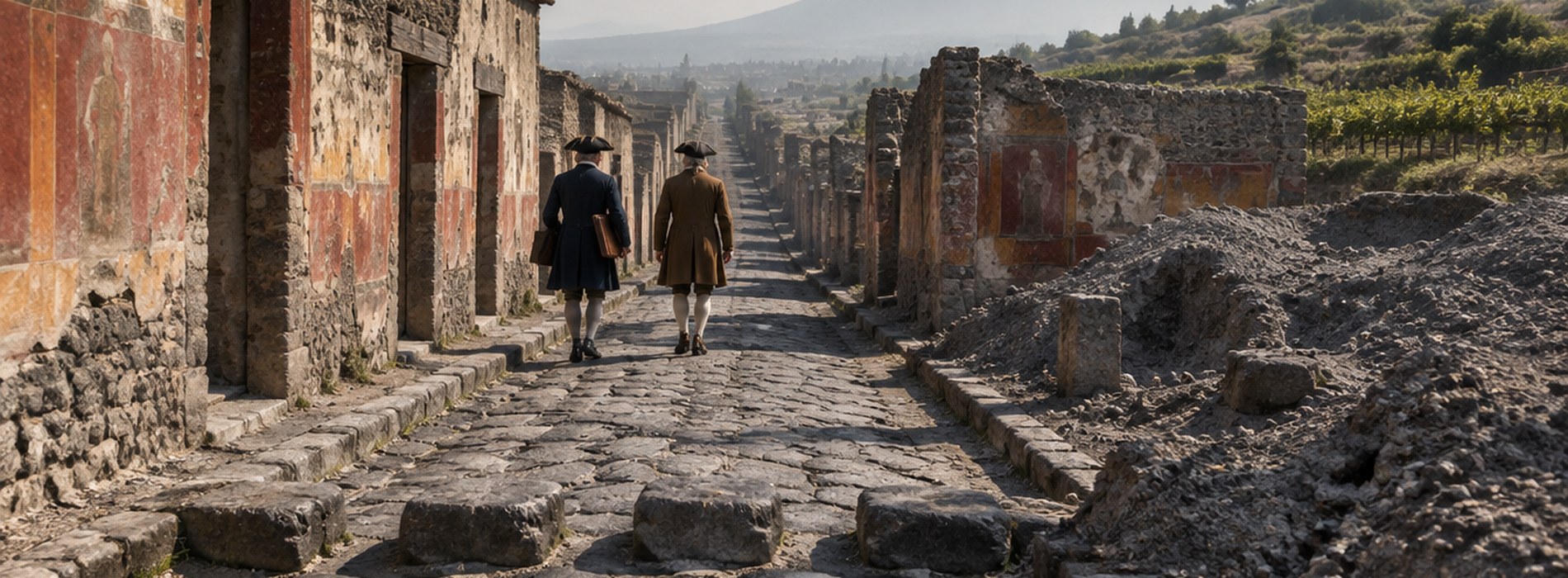
With Tischbein at Pompeii: straight streets, windowless houses, public buildings like models, yet walls painted with a taste that belongs to a whole people. Goethe reflects on the ash that fell like a cloud; two days later he writes that there has been much calamity in the world, but little that has given posterity so much pleasure.
Naples, 11 March 1787
As my stay in Naples cannot be long, I take the most remote points first of all—the near throw themselves, as it were, in one’s way. I have been with Tischbein to Pompeii, and on our road all those glorious prospects which were already well known to us from many a landscape drawing, lay right and left, dazzling us by their number and unbroken succession.
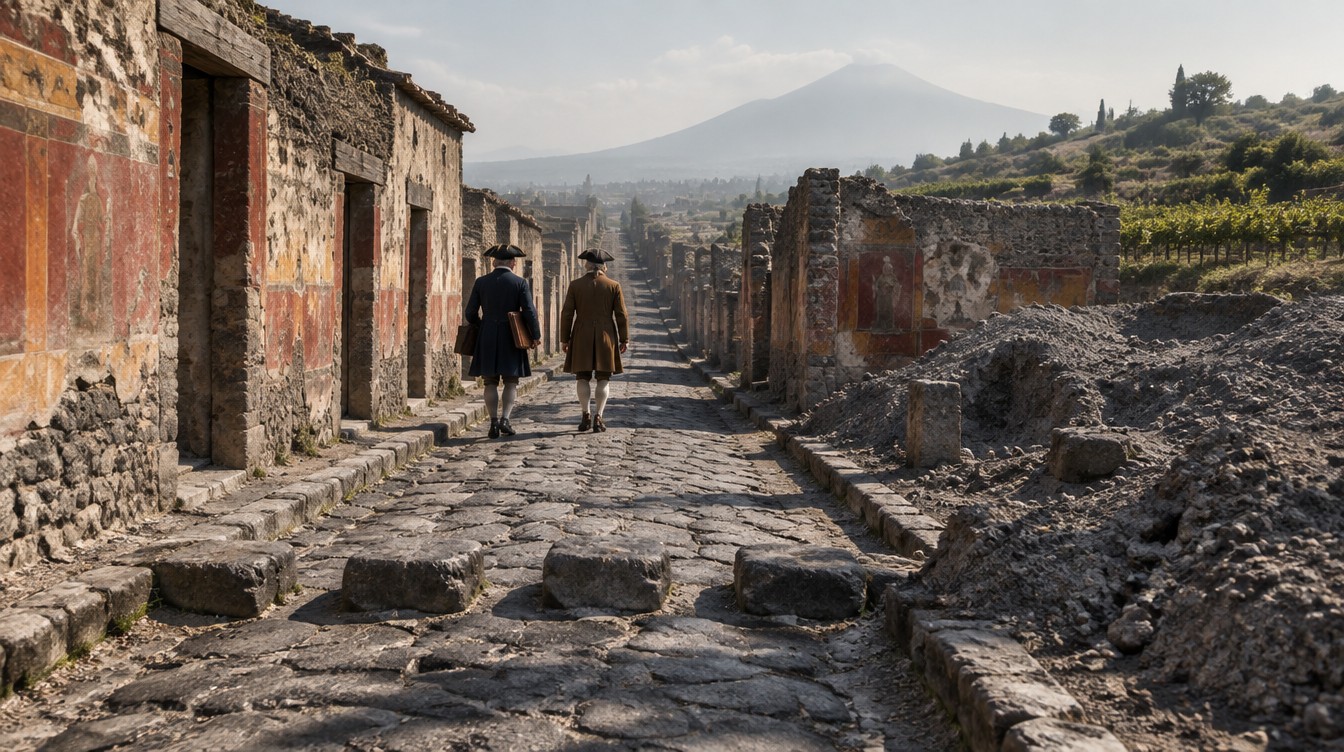
Pompeii amazes one by its narrowness and littleness; confined streets, but perfectly straight, and furnished on both sides with a foot pavement; little houses without windows, the rooms being lit only by the doors, which opened on the atrium and the galleries. Even the public edifices, the tomb at the gate, a temple, and also a villa in its neighbourhood, are like models and dolls’ houses, rather than real buildings. The rooms, corridors, galleries and all, are painted with bright and cheerful colours, the wall surfaces uniform; in the middle some elaborate painting (most of these have been removed); on the borders and at the corners, light tasteful arabesques, terminating in the pretty figures of nymphs or children; while in others, from out of garlands of flowers, beasts, wild and tame, are issuing. Thus does the city, which first of all the hot shower of stones and ashes overwhelmed, and afterwards the excavators plundered, still bear witness, even in its present utterly desolate state, to a taste for painting and the arts common to the whole people, of which the most enthusiastic dilettante of the present day has neither idea nor feeling, and so misses not.
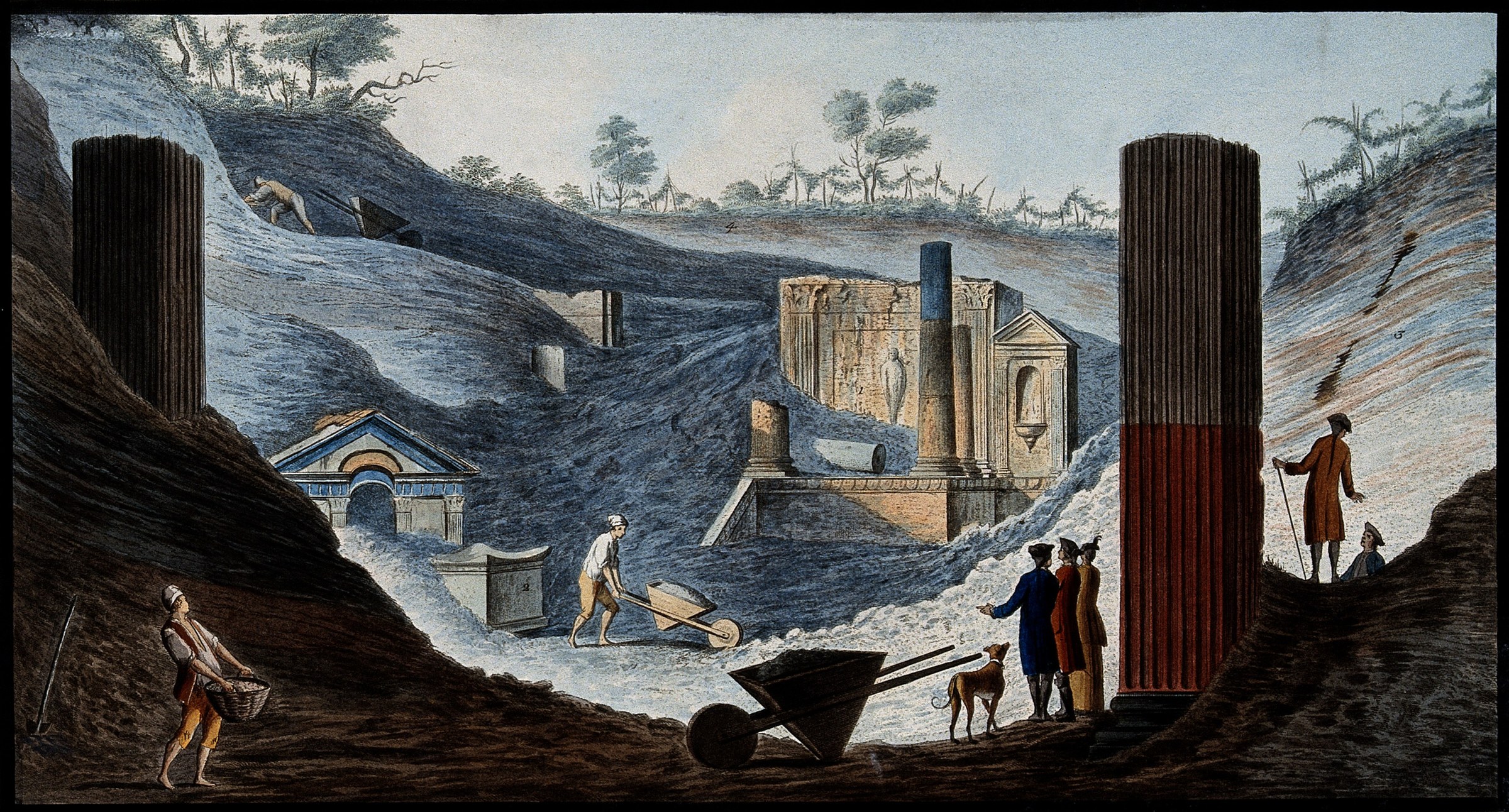
When one considers the distance of this town from Vesuvius, it is clear that the volcanic matter which overwhelmed it could not have been carried hither either by any sudden impetus of the mountain, or by the wind. We must rather suppose that these stones and ashes had been floating for a time in the air, like clouds, until at last they fell upon the doomed city.
In order to form a clear and precise idea of this event, one has only to think of a mountain village buried in snow. The spaces between the houses, and indeed the crushed houses themselves, were filled up; however, it is not improbable that some of the mason-work may, at different points, have peeped above the surface, and in this way have excited the notice of those by whom the hill was broken up for vineyards and gardens. And, no doubt, many an owner, on digging up his own portion, must have made valuable gleanings. Several rooms were found quite empty, and in the corner of one a heap of ashes was observed, under which a quantity of household articles and works of art was concealed.
Original German text · Neapel, Sonntag, den 11. März 1787
Da mein Aufenthalt in Neapel nicht lange dauern wird, so nehme ich gleich die entfernteren Punkte zuerst, das Nähere gibt sich. Mit Tischbein fuhr ich nach Pompeji, da wir denn alle die herrlichen Ansichten links und rechts neben uns liegen sahen, welche, durch so manche landschaftliche Zeichnung uns wohlbekannt, nunmehr in ihrem zusammenhängenden Glanze erschienen. Pompeji setzt jedermann wegen seiner Enge und Kleinheit in Verwunderung. Schmale Straßen, obgleich grade und an der Seite mit Schrittplatten versehen, kleine Häuser ohne Fenster, aus den Höfen und offenen Galerien die Zimmer nur durch die Türen erleuchtet. Selbst öffentliche Werke, die Bank am Tor, der Tempel, sodann auch eine Villa in der Nähe, mehr Modell und Puppenschrank als Gebäude. Diese Zimmer, Gänge und Galerien aber aufs heiterste gemalt, die Wandflächen einförmig, in der Mitte ein ausführliches Gemälde, jetzt meist ausgebrochen, an Kanten und Enden leichte und geschmackvolle Arabesken, aus welchen sich auch wohl niedliche Kinder- und Nymphengestalten entwickeln, wenn an einer andern Stelle aus mächtigen Blumengewinden wilde und zahme Tiere hervordringen. Und so deutet der jetzige ganz wüste Zustand einer erst durch Steinund Aschenregen bedeckten, dann aber durch die Aufgrabenden geplünderten Stadt auf eine Kunstund Bilderlust eines ganzen Volkes, von der jetzo der eifrigste Liebhaber weder Begriff, noch Gefühl, noch Bedürfnis hat.
Bedenkt man die Entfernung dieses Orts vom Vesuv, so kann die bedeckende vulkanische Masse weder durch ein Schleudern noch durch einen Windstoß hierher getrieben sein; man muß sich vielmehr vorstellen, daß diese Steine und Asche eine Zeitlang wolkenartig in der Luft geschwebt, bis sie endlich über diesem unglücklichen Orte niedergegangen.
Wenn man sich nun dieses Ereignis noch mehr versinnlichen will, so denke man allenfalls ein eingeschneites Bergdorf. Die Räume zwischen den Gebäuden, ja die zerdrückten Gebäude selbst wurden ausgefüllt, allein Mauerwerk mochte hier und da noch herausstehen, als früher oder später der Hügel zu Weinbergen und Gärten benutzt wurde. So hat nun gewiß mancher Eigentümer, auf seinem Anteil niedergrabend, eine bedeutende Vorlese gehalten. Mehrere Zimmer fand man leer und in der Ecke des einen einen Haufen Asche, der mancherlei kleines Hausgeräte und Kunstarbeiten versteckte.
Naples, 13 March 1787
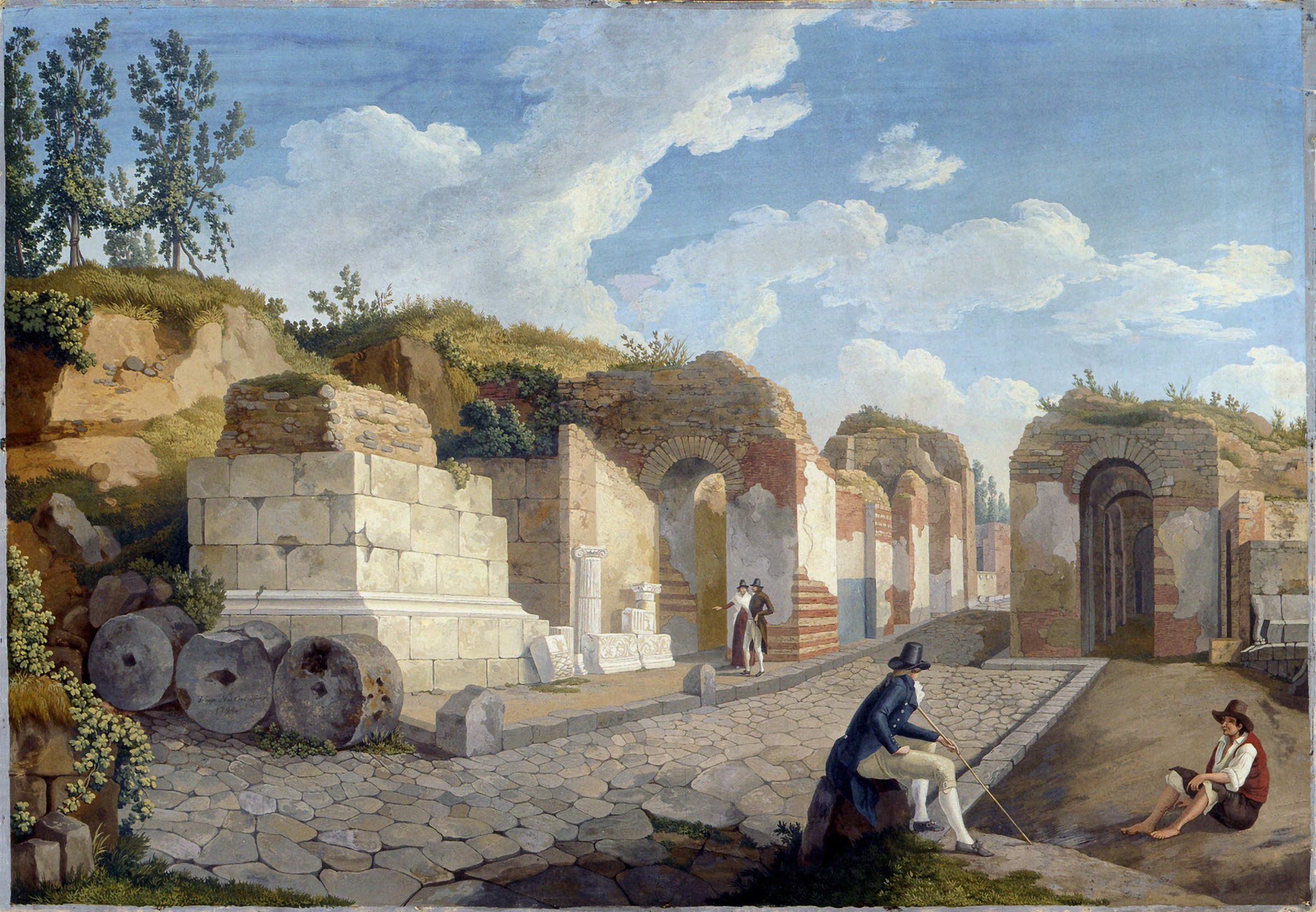
On Sunday we were in Pompeii. Many a calamity has happened in the world, but never one that has caused so much entertainment to posterity as this one. I scarcely know of anything that is more interesting. The houses are small and close together, but within they are all most exquisitely painted. The gate of the city is remarkable, with the tombs close to it. The tomb of a priestess, a semicircular bench, with a stone back, on which was the inscription cut in large characters. Over the back you have a sight of the sea and the setting sun—a glorious spot, worthy of the beautiful idea.
Original German text · Neapel, den 13. März 1787.
Sonntag waren wir in Pompeji. – Es ist viel Unheil in der Welt geschehen, aber wenig, das den Nachkommen so viel Freude gemacht hätte. Ich weiß nicht leicht etwas Interessanteres. Die Häuser sind klein und eng, aber alle inwendig aufs zierlichste gemalt. Das Stadttor merkwürdig, mit den Gräbern gleich daran. Das Grab einer Priesterin als Bank im Halbzirkel mit steinerner Lehne, daran die Inschrift mit großen Buchstaben eingegraben. Über die Lehne hinaus sieht man das Meer und die untergehende Sonne. Ein herrlicher Platz, des schönen Gedankens wert.
Today
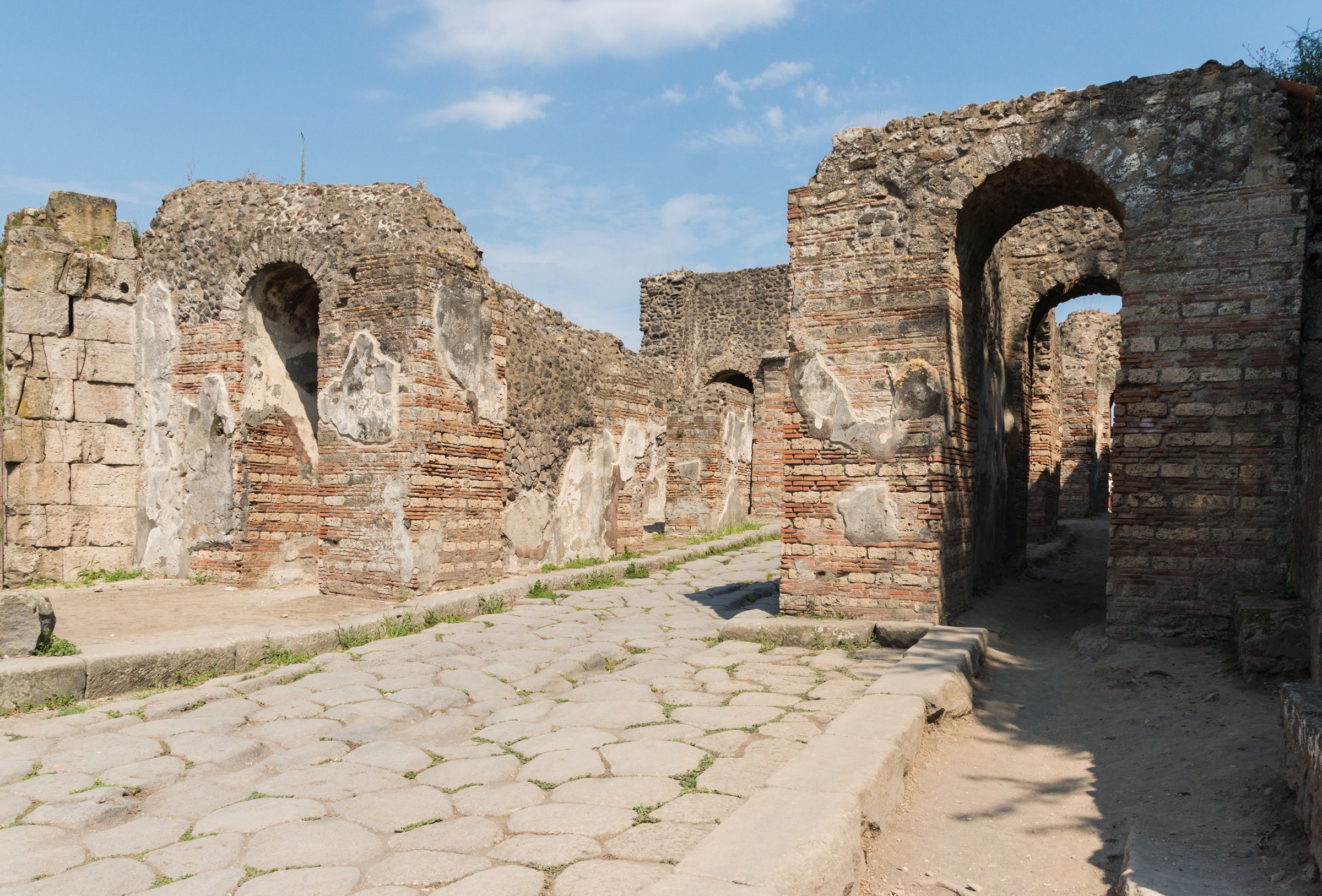
Archaeological Park of Pompeii: the Herculaneum Gate, the Street of Tombs and the tomb of Mamia; the Temple of Isis.
Where: Parco Archeologico di Pompei, Via Villa dei Misteri 2, 80045 Pompei (NA)
Works and documents
AI reconstruction
Sources
J.W. Goethe, Italienische Reise, original German text (public domain).
Translated by A.J.W. Morrison (Goethe’s Travels in Italy, London, Bell; public domain).


