


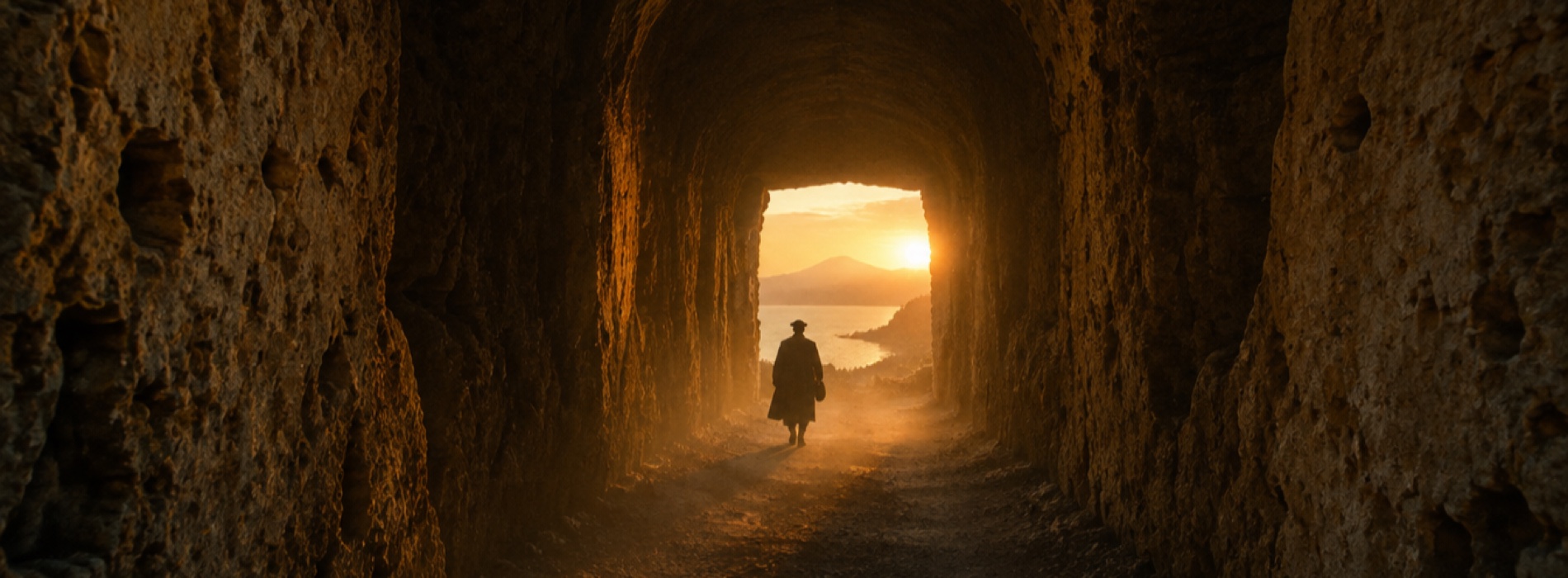
Naples · The Posillipo Grotto
On the evening of 27 February Goethe enters the Posillipo grotto as the setting sun shines through it. He forgives all who lose their minds over Naples and remembers his father, who could never be wholly unhappy because his thoughts kept returning to Naples.
Naples, 27 February 1787
Yesterday I kept quietly at home, in order to get rid of a slight bodily ailment. To-day has been a regular carouse, and the time passed rapidly while we visited the most glorious of objects. Let man talk, describe and paint as he may—to be here is more than all. The shore, the creeks, and the bay, Vesuvius, the city, the suburbs, the castles, the atmosphere! In the evening, too, we went into the Grotto of Posilippo, while the setting sun was shining into it from the other side. I can pardon all who lose their senses in Naples, and remember with emotion my father, who retained to the last an indelible impression of those objects which to-day I have cast eyes upon for the first time. Just as it is said, that people who have once seen a ghost, are never afterwards seen to smile, so in the opposite sense it may be said of him, that he never could become perfectly miserable, so long as he remembered Naples. According to my fashion, I am quite still and calm, and when anything happens too absurd, only make large-large eyes.
Original German text · Neapel, den 27. Februar 1787
Gestern bracht’ ich den Tag in Ruhe zu, um eine kleine körperliche Unbequemlichkeit erst abzuwarten, heute ward geschwelgt und die Zeit mit Anschauung der herrlichsten Gegenstände zugebracht. Man sage, erzähle, male, was man will, hier ist mehr als alles. Die Ufer, Buchten und Busen des Meeres, der Vesuv, die Stadt, die Vorstädte, die Kastelle, die Lusträume! – Wir sind auch noch abends in die Grotte des Posilipo gegangen, da eben die untergehende Sonne zur andern Seite hereinschien. Ich verzieh es allen, die in Neapel von Sinnen kommen, und erinnerte mich mit Rührung meines Vaters, der einen unauslöschlichen Eindruck besonders von denen Gegenständen, die ich heut zum erstenmal sah, erhalten hatte. Und wie man sagt, daß einer, dem ein Gespenst erschienen, nicht wieder froh wird, so konnte man umgekehrt von ihm sagen, daß er nie ganz unglücklich werden konnte, weil er sich immer wieder nach Neapel dachte. Ich bin nun nach meiner Art ganz stille und mache nur, wenn’s gar zu toll wird, große, große Augen.
Today
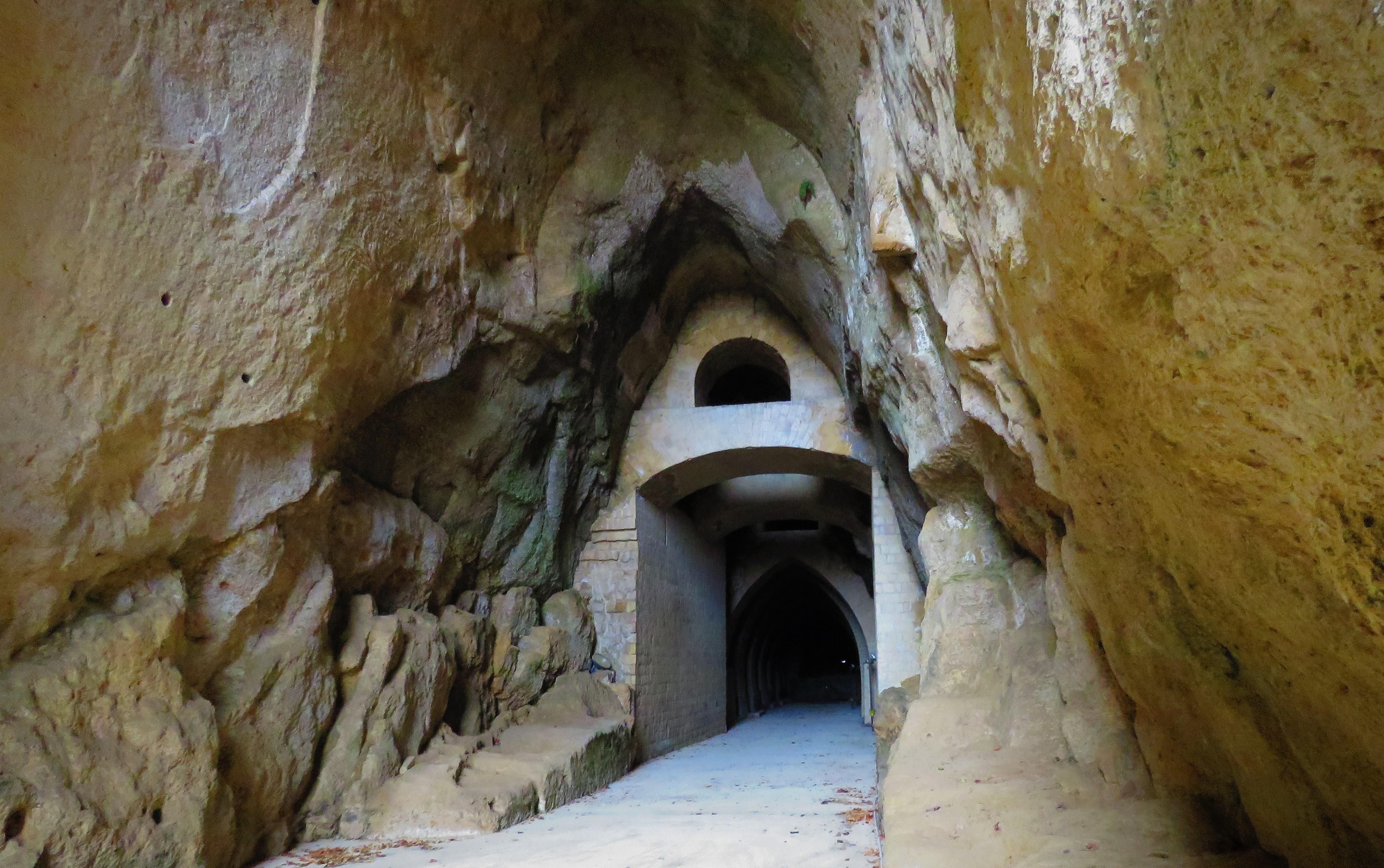
The Crypta Neapolitana, a Roman tunnel between Mergellina and Fuorigrotta, can be seen from the Parco Vergiliano at Piedigrotta; the tunnel itself is closed.
Where: Parco Vergiliano, Salita della Grotta 20, 80122 Napoli
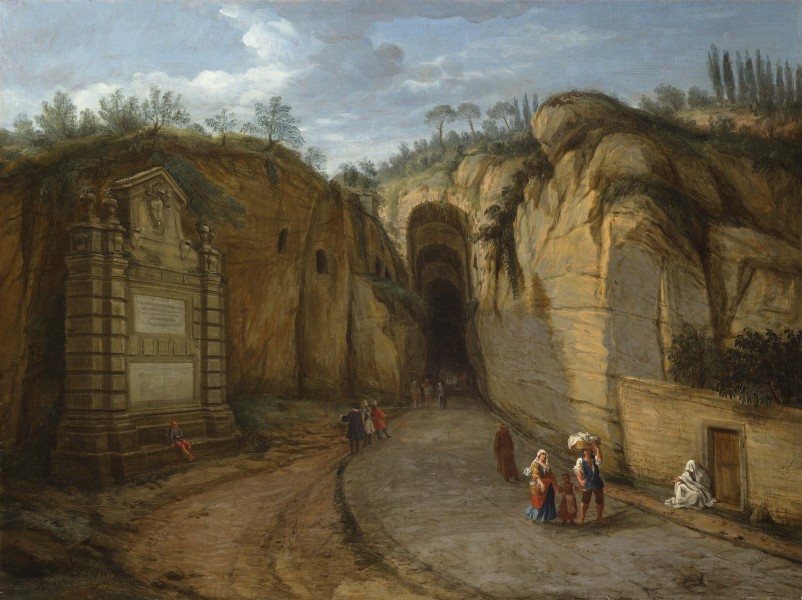
Works and documents
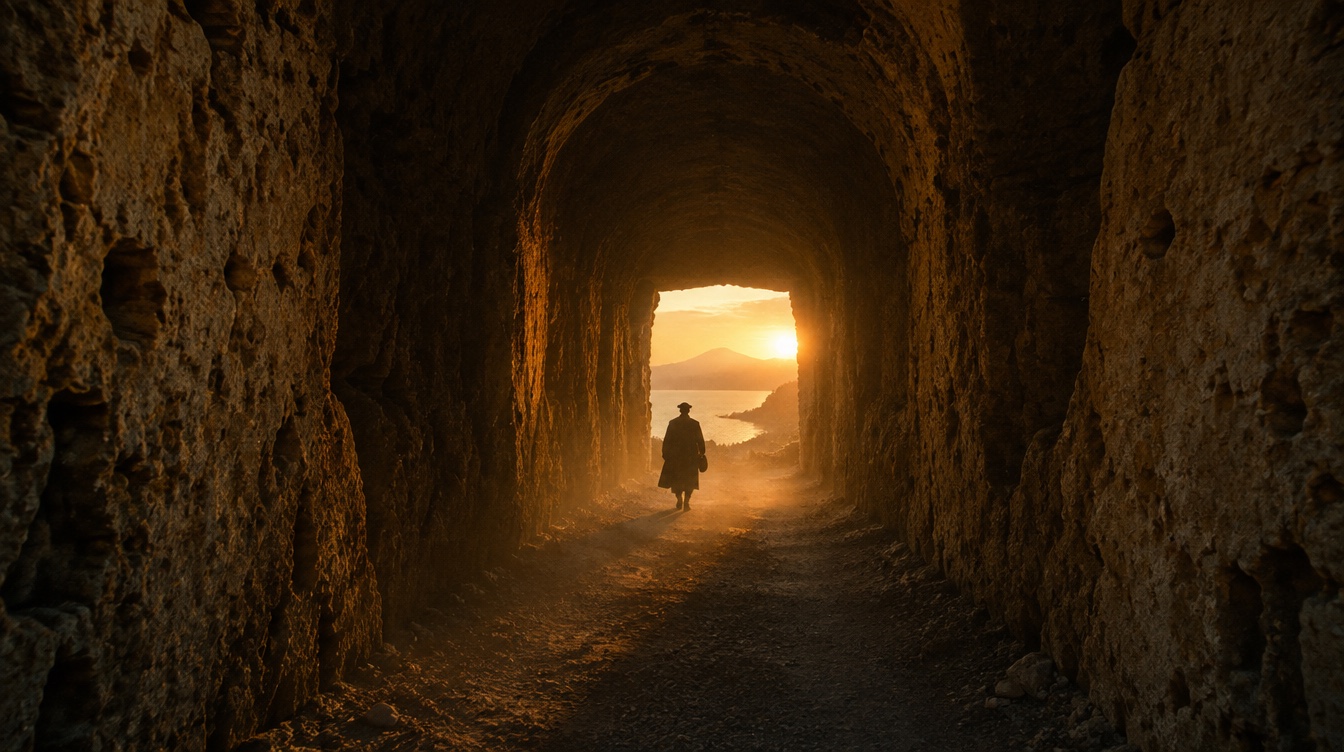
AI reconstruction
Further reading
Sources
J.W. Goethe, Italienische Reise, original German text (public domain).
Translated by A.J.W. Morrison (Goethe’s Travels in Italy, London, Bell; public domain).


