


Vesuvius · The first ascent
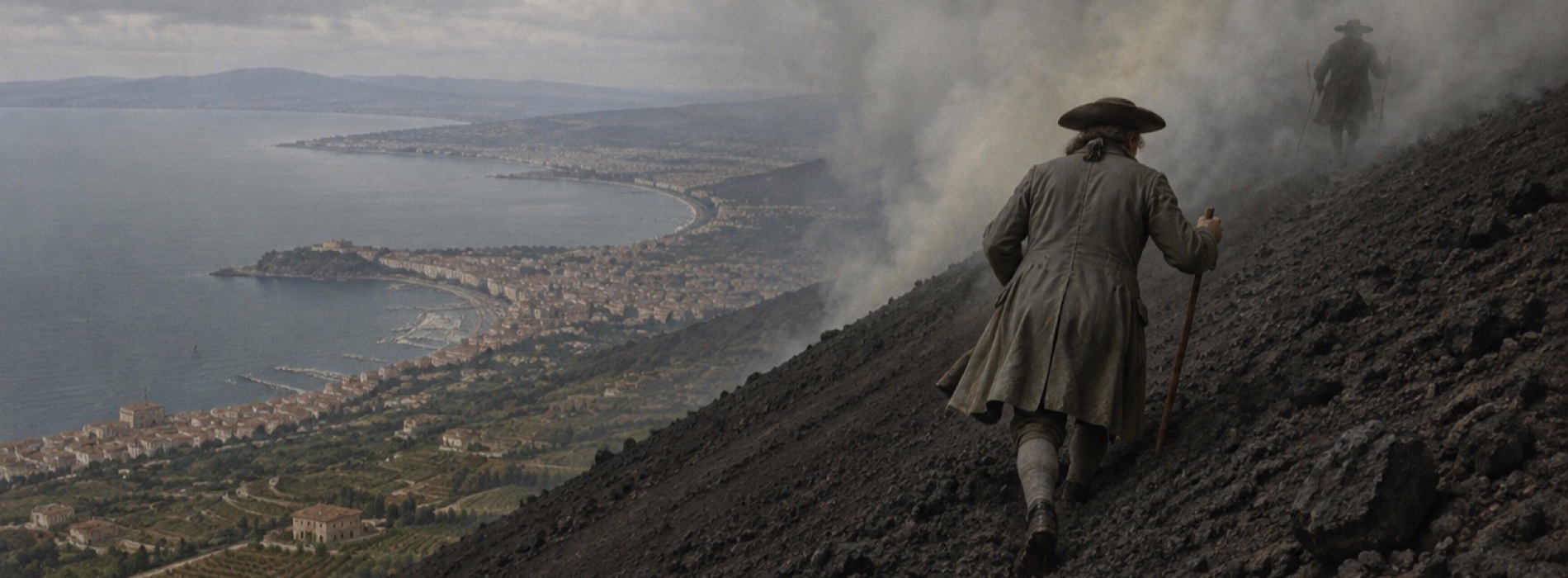
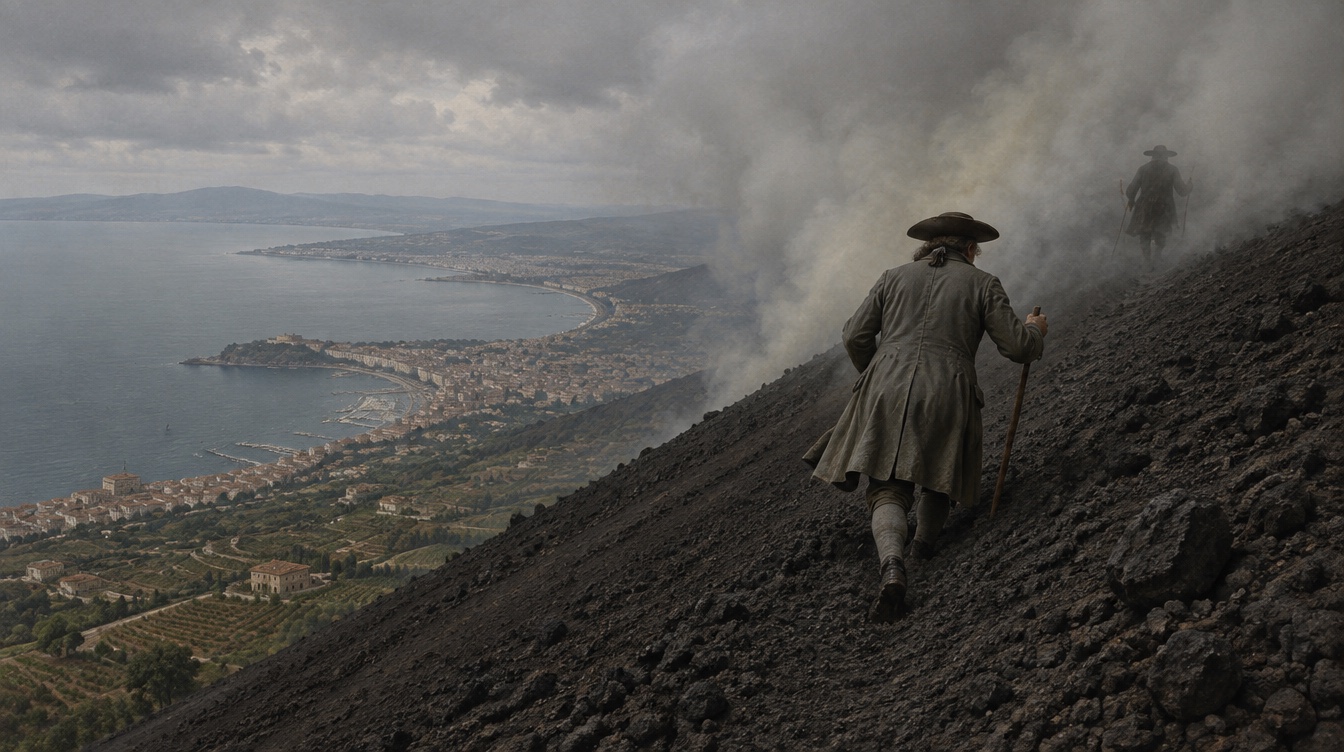
On 2 March, under a gloomy sky, from Resina by mule and then on foot over the lava of 1771 up to the filled-in crater. In the smoke Goethe can no longer see his own shoes and turns back: he has reconnoitred the mountain in order to lay siege to it, and brings back a hypothesis on the sublimation of volcanic exhalations.
Naples, 2 March 1787
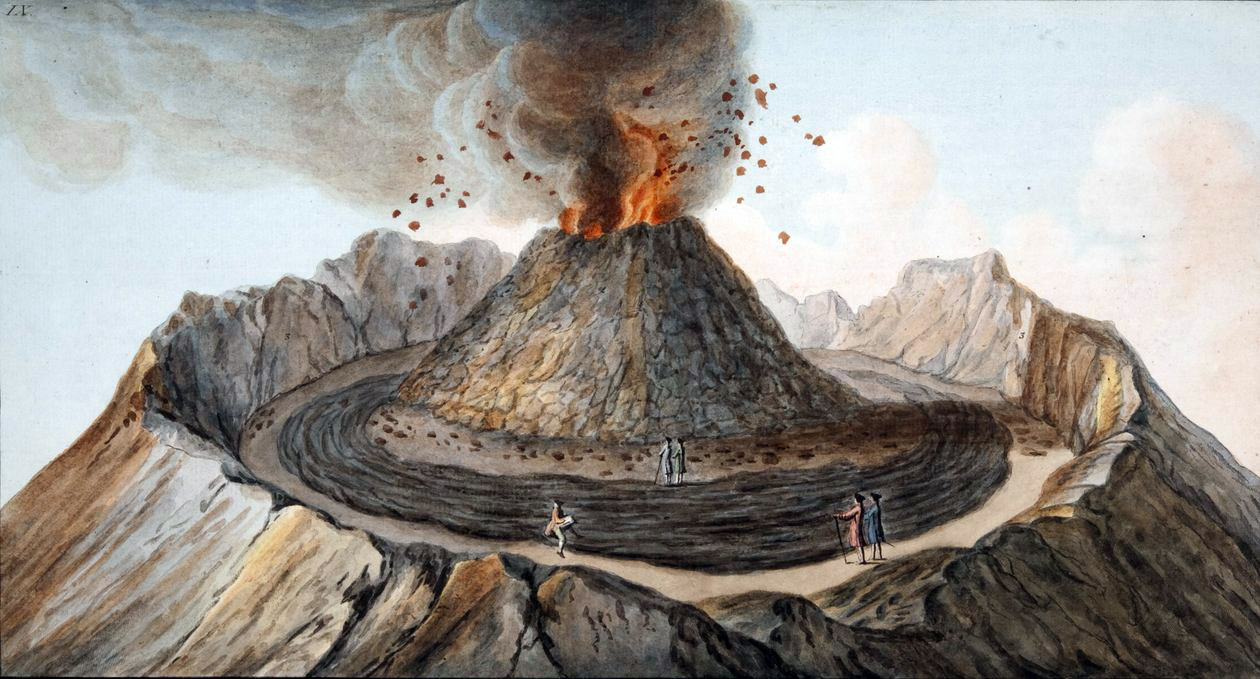
Thursday I ascended Vesuvius, although the weather was unsettled, and the summit of the mountain surrounded by clouds. I took a carriage as far as Resina, and then, on the back of a mule, began the ascent, having vineyards on both sides. Next, on foot, I crossed the lava of the year ’71, on the surface of which a fine but compact moss was already growing; then upwards on the side of the lava. The hut of the hermit on the height, was on my left hand. After this we climbed the Ash-hill, which is wearisome walking; two-thirds of the summit were enveloped in clouds. At last we reached the ancient crater, now filled up, where we found recent lava, only two months and fourteen days old, and also a slight streak of only five days, which was, however, already cold. Passing over these, we next ascended a height which had been thrown up by volcanic action; it was smoking from all its points. As the smoke rolled away from us, I essayed to approach the crater; scarcely, however, had we taken fifty steps in the steam, when it became so dense that I could scarcely see my shoes. It was to no purpose that we held snuff continually before our nostrils. My guide had disappeared; and the footing on the lava lately thrown up was very unsteady. I therefore thought it right to turn round, and to reserve the sight for a finer day, and for less of smoke. However, I now know how difficult it is to breathe in such an atmosphere.
Otherwise, the mountain was quite still. There was no flame, no roaring, no stones thrown up—all which it usually does at most times. I reconnoitered it well, with the intention of regularly storming it as soon as the weather shall improve.
The specimens of lava that I found, were mostly of well-known kinds. I noticed, however, a phenomenon which appeared to me extremely strange, which I intend to examine again still more closely, and also to consult connoisseurs and collectors upon it. It is a stalactite incrustation of a part of the volcanic funnel, which has been thrown down, and now rears itself in the centre of the old choked-up crater. This mass of solid greyish stalactite appears to have been formed by the sublimation of the very finest volcanic evaporation, without the co-operation of either moisture or fusion. It will furnish occasion for further thinking.
Original German text · Neapel, den 2. März 1787
Den 2. März bestieg ich den Vesuv, obgleich bei trübem Wetter und umwölktem Gipfel. Fahrend gelangt’ ich nach Resina, sodann auf einem Maultiere den Berg zwischen Weingärten hinauf; nun zu Fuß über die Lava vom Jahre Einundsiebenzig, die schon feines, aber festes Moos auf sich erzeugt hatte; dann an der Seite der Lava her. Die Hütte des Einsiedlers blieb mir links auf der Höhe. Ferner den Aschenberg hinauf, welches eine sauere Arbeit ist. Zwei Dritteile dieses Gipfels waren mit Wolken bedeckt. Endlich erreichten wir den alten, nun ausgefüllten Krater, fanden die neuen Laven von zwei Monaten vierzehn Tagen, ja, eine schwache von fünf Tagen schon erkaltet. Wir stiegen über sie an einem erst aufgeworfenen vulkanischen Hügel hinauf, er dampfte aus allen Enden. Der Rauch zog von uns weg, und ich wollte nach dem Krater gehn. Wir waren ungefähr funfzig Schritte in den Dampf hinein, als er so stark wurde, daß ich kaum meine Schuhe sehen konnte. Das Schnupftuch vorgehalten half nichts, der Führer war mir auch verschwunden, die Tritte auf den ausgeworfenen Lavabröckchen unsicher, ich fand für gut, umzukehren und mir den gewünschten Anblick auf einen heitern Tag und verminderten Rauch zu sparen. Indes weiß ich doch auch, wie schlecht es sich in solcher Atmosphäre Atem holt.
Übrigens war der Berg ganz still. Weder Flamme, noch Brausen, noch Steinwurf, wie er doch die ganze Zeit her trieb. Ich habe ihn nun rekognosziert, um ihn förmlich, sobald das Wetter gut werden will, zu belagern.
Die Laven, die ich fand, waren mir meist bekannte Gegenstände. Ein Phänomen hab’ ich aber entdeckt, das mir sehr merkwürdig schien und das ich näher untersuchen, nach welchem ich mich bei Kennern und Sammlern erkundigen will. Es ist eine tropfsteinförmige Bekleidung einer vulkanischen Esse, die ehemals zugewölbt war, jetzt aber aufgeschlagen ist und aus dem alten, nun ausgefüllten Krater herausragt. Dieses feste, grauliche, tropfsteinförmige Gestein scheint mir durch Sublimation der allerfeinsten vulkanischen Ausdünstungen ohne Mitwirkung von Feuchtigkeit und ohne Schmelzung gebildet worden zu sein; es gibt zu weitern Gedanken Gelegenheit.
Naples, 3 March 1787
Here you have a few leaves, as reporters of the entertainment I have met with in this place; also a corner of the cover of your letter, stained with smoke, in testimony of its having been with me on Vesuvius. You must not, however, fancy, either in your waking thoughts or in your dreams, that I am surrounded by perils; be assured that wherever I venture, there is no more danger than on the road to Belvedere. The earth is everywhere the Lord’s; may be well said in reference to such objects. I never seek adventure out of a mere rage for singularity; but even because I am most cool, and can catch at a glance, the peculiarities of any object, I may well do and venture more than many others. The passage to Sicily is anything but dangerous. A few days ago, the frigate sailed for Palermo with a favorable breeze from the north, and, leaving Capri on the right, has, no doubt, accomplished the voyage in six-and-thirty hours. In all such expeditions, one finds the danger to be far less in reality than, at a distance, one is apt to imagine.
Original German text · Neapel, den 3. März.
Hier schick’ ich einige gedrängte Blätter als Nachricht von dem Einstande, den ich hier gegeben. Auch ein an der Ecke angeschmauchtes Kuvert eures letzten Briefes zum Zeugnis, daß er mit auf dem Vesuv gewesen. Doch muß ich euch nicht, weder im Traume noch im Wachen, von Gefahr umgeben erscheinen; seid versichert, da, wo ich gehe, ist nicht mehr Gefahr als auf der Chaussee nach Belvedere. Die Erde ist überall des Herrn! kann man wohl bei dieser Gelegenheit sagen. Ich suche keine Abenteuer aus Vorwitz noch Sonderbarkeit, aber weil ich meist klar bin und dem Gegenstand bald seine Eigentümlichkeit abgewinne, so kann ich mehr tun und wagen als ein anderer. Nach Sizilien ist’s nichts weniger als gefährlich. Vor einigen Tagen fuhr die Fregatte nach Palermo mit günstigem Nordostwind ab, sie ließ Capri rechts und hat gewiß den Weg in sechsunddreißig Stunden zurückgelegt. Drüben sieht es auch in der Wirklichkeit nicht so gefährlich aus, als man es in der Ferne zu machen beliebt.
Naples, 9 March 1787
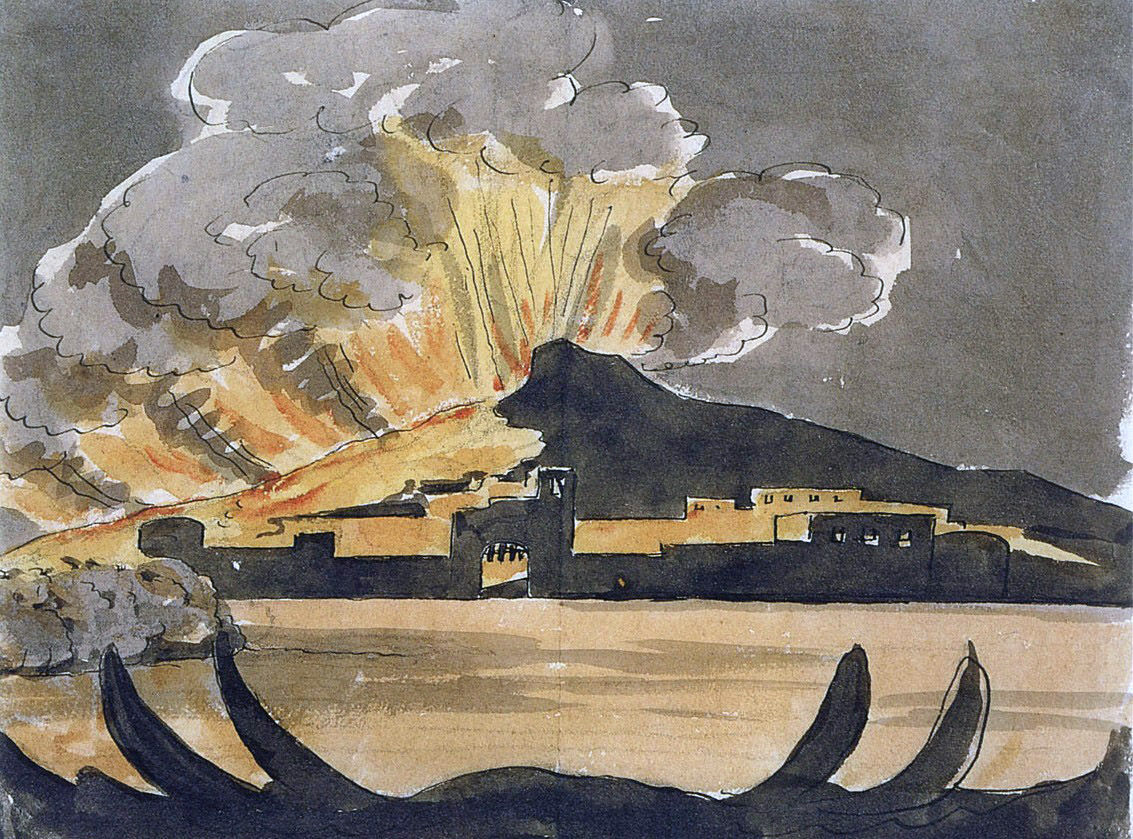
The weather here has become dull: a change is at hand. Spring is commencing, and we shall soon have some rainy days. The summit of Vesuvius has not been clear since I paid it a visit. These few last nights flames have been seen to issue from it; to-day it is keeping itself quiet, and therefore more violent eruptions are expected.
Original German text · Neapel, den 9. März.
Das Wetter hat sich verdunkelt, es ist im Wechseln, das Frühjahr tritt ein, und wir werden Regentage haben. Noch ist der Gipfel des Vesuvs nicht heiter geworden, seit ich droben war. Diese letzten Nächte sah man ihn manchmal flammen, jetzt hält er wieder inne, man erwartet stärkeren Ausbruch.
Today
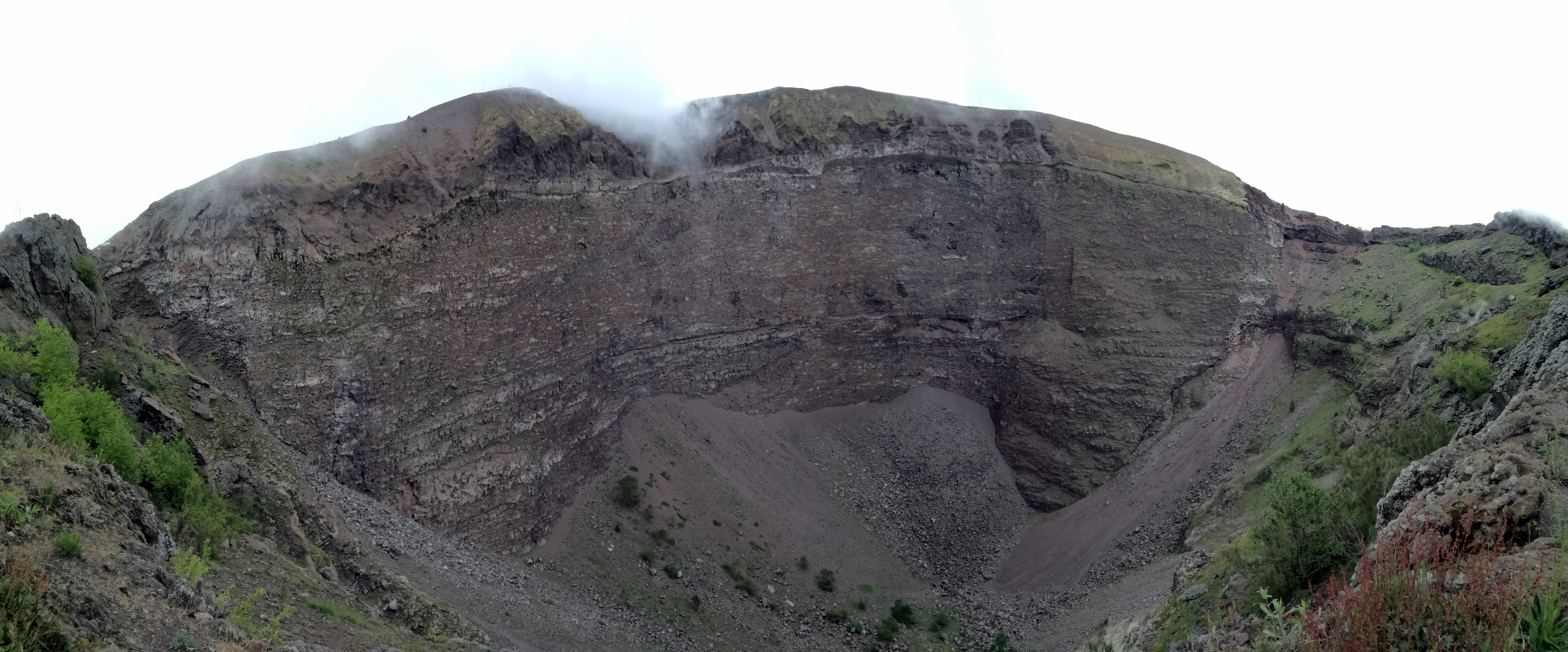
From Ercolano (the old Resina) to the Great Cone in the Vesuvius National Park; the hermit’s hut stood near today’s Vesuvius Observatory.
Where: Gran Cono del Vesuvio, Parco Nazionale del Vesuvio, Ercolano (NA)
Works and documents
AI reconstruction
Videos
Further reading
Sources
J.W. Goethe, Italienische Reise, original German text (public domain).
Translated by A.J.W. Morrison (Goethe’s Travels in Italy, London, Bell; public domain).


