


Garigliano · Sant’Agata
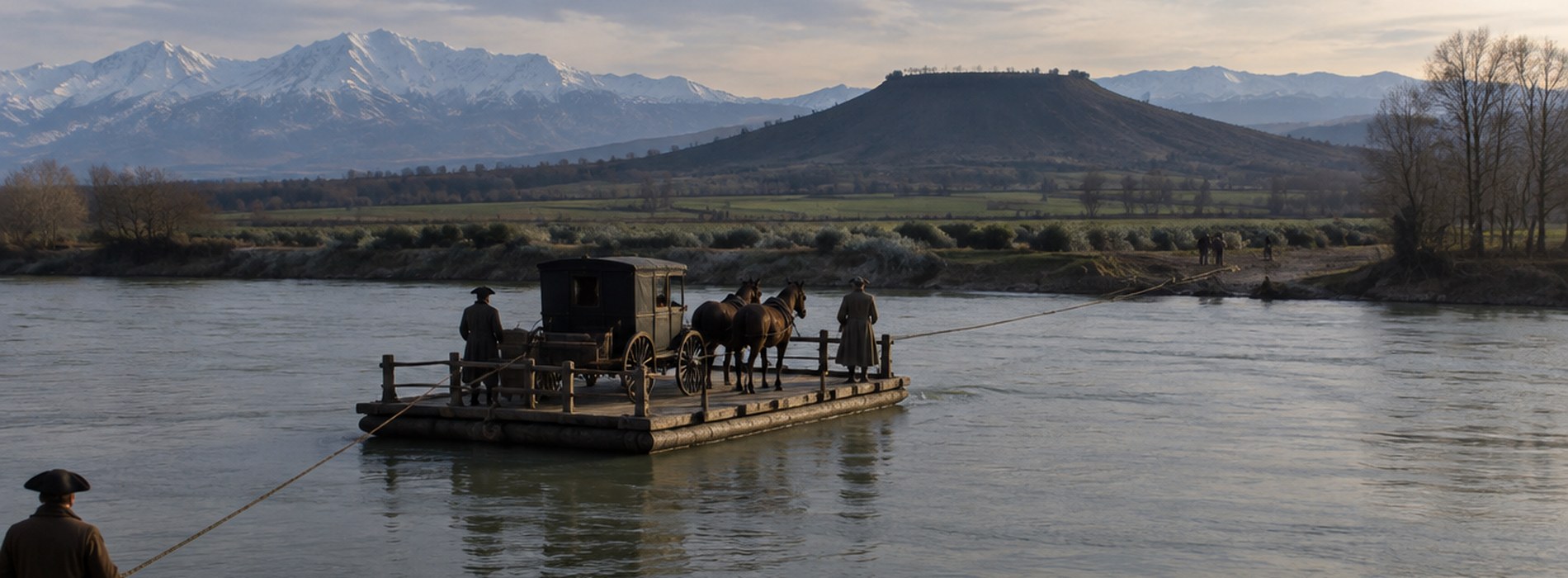
After crossing the Garigliano on the Via Appia, Goethe enters the land that is today Campania: fertile fields, the first hill of volcanic ash, mountains crowned with snow. At Sant’Agata the inn has a fine fire burning, but his own room is cold and has no glass in its windows.
S. Agata, 24 February 1787
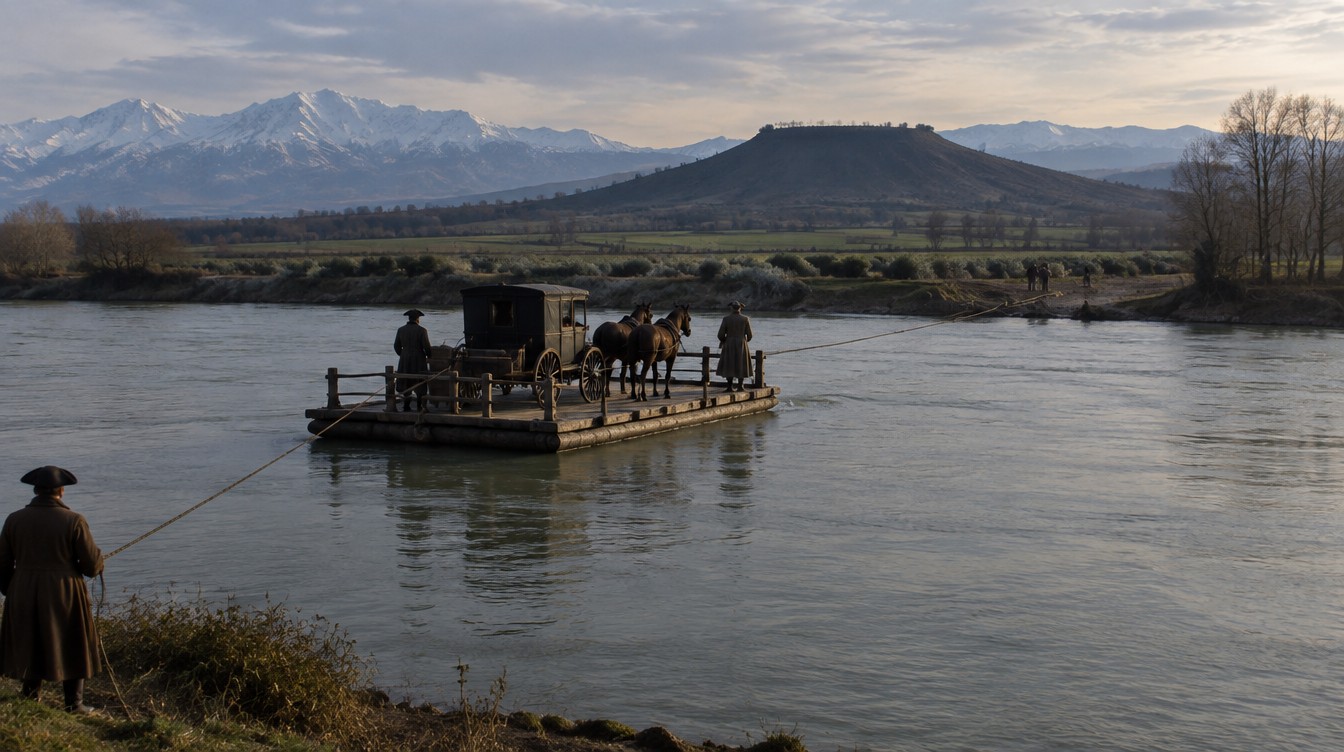
Next comes the ferry over the Garigliano; after crossing it one passes through tolerably fruitful districts, till we reach the mountains. Nothing striking. At length, the first hill of lava. Here begins an extensive and glorious district of hill and vale, over which the snowy summits are towering in the distance. On the nearest eminence lies a long town, which strikes the eye with an agreeable effect. In the valley lies S. Agata, a considerable inn, where a cheerful fire was burning in a chimney arranged as a cabinet; however, our room is cold—no window, only shutters, which I am just hastening to close.
Original German text · St. Agata, den 24. Februar 1787
Dann folgt die Überfahrt über den Fluß Garigliano. Man wandert sodann durch ziemlich fruchtbare Gegenden auf ein Gebirg’ los. Nichts Auffallendes. Endlich der erste vulkanische Aschenhügel. Hier beginnt eine große, herrliche Gegend von Bergen und Gründen, über welche zuletzt Schneegipfel hervorragen. Auf der nähern Höhe eine lange, wohl in die Augen fallende Stadt. In dem Tal liegt St. Agata, ein ansehnlicher Gasthof, wo ein lebhaftes Feuer in einem Kamin, das als Kabinett angelegt ist, brannte. Indessen ist unsere Stube kalt, keine Fenster, nur Läden, und ich eile, zu schließen.
Today
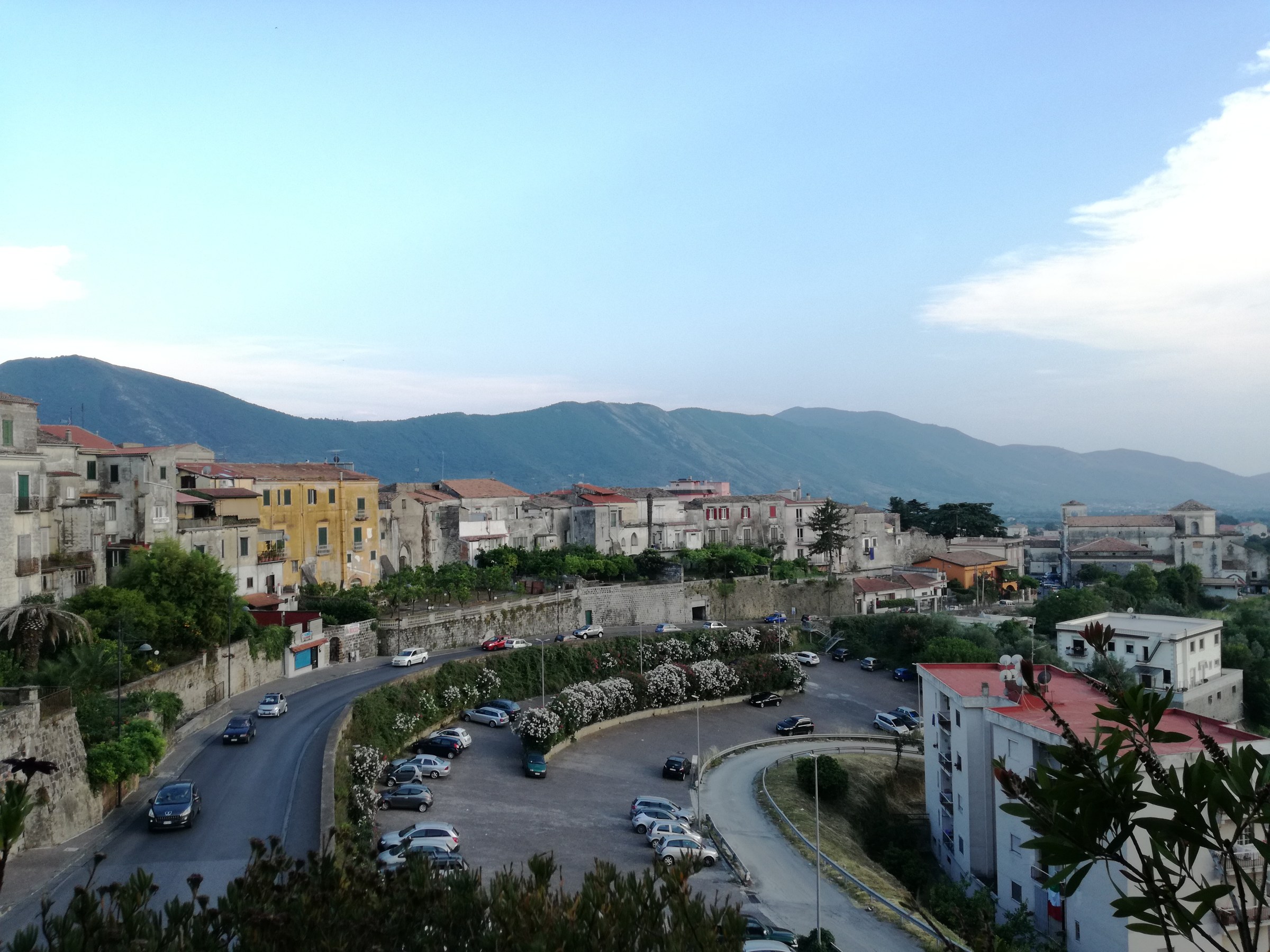
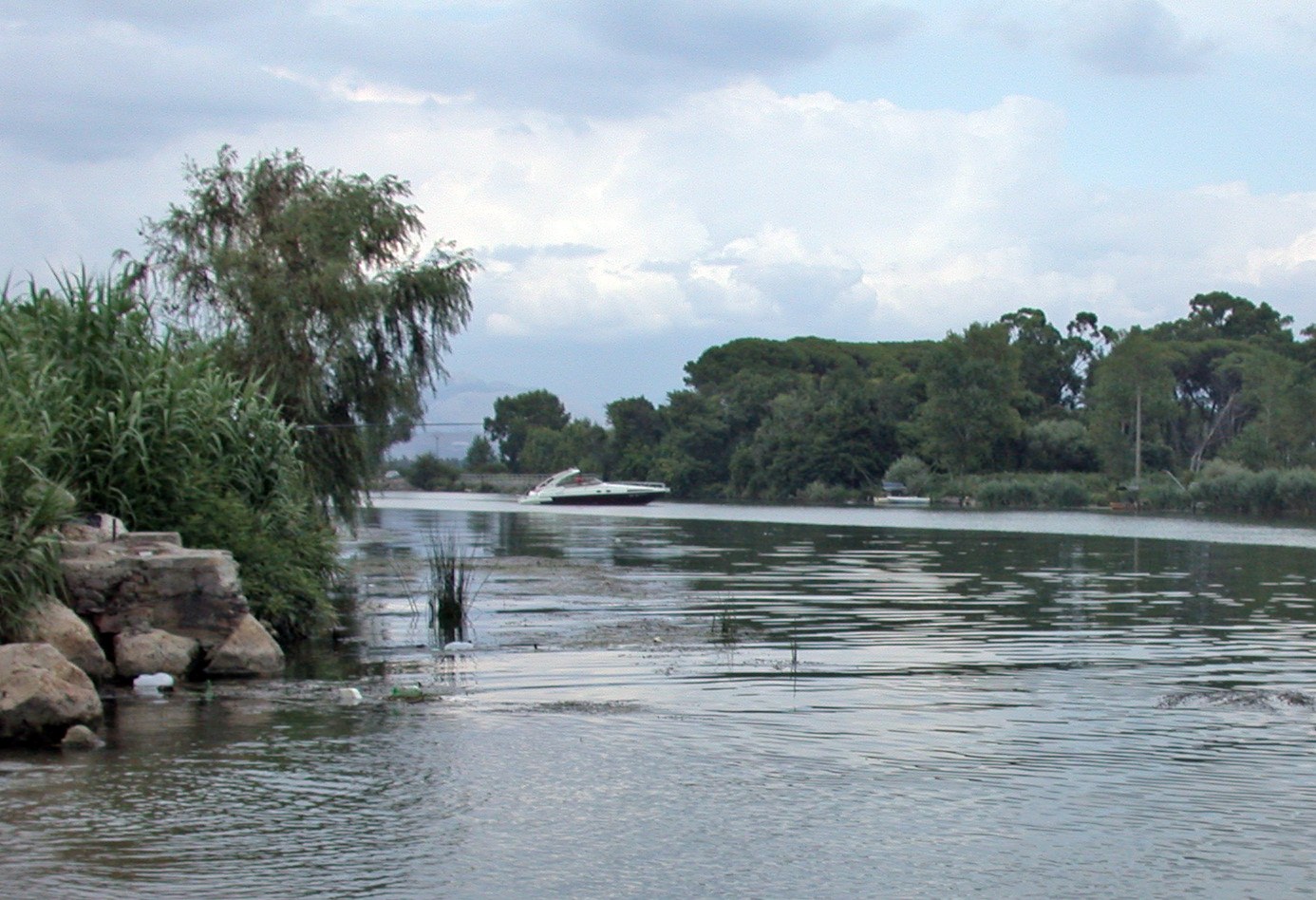
The Garigliano crossing is today the Real Ferdinando bridge on the SS7, on the border between Lazio and Campania; Sant’Agata is a hamlet of Sessa Aurunca on the Via Appia.
Where: Sant’Agata, Sessa Aurunca (CE)
AI reconstruction
Sources
J.W. Goethe, Italienische Reise, original German text (public domain).
Translated by A.J.W. Morrison (Goethe’s Travels in Italy, London, Bell; public domain).


