


Naples · The barrier, Kniep’s farewell coffee
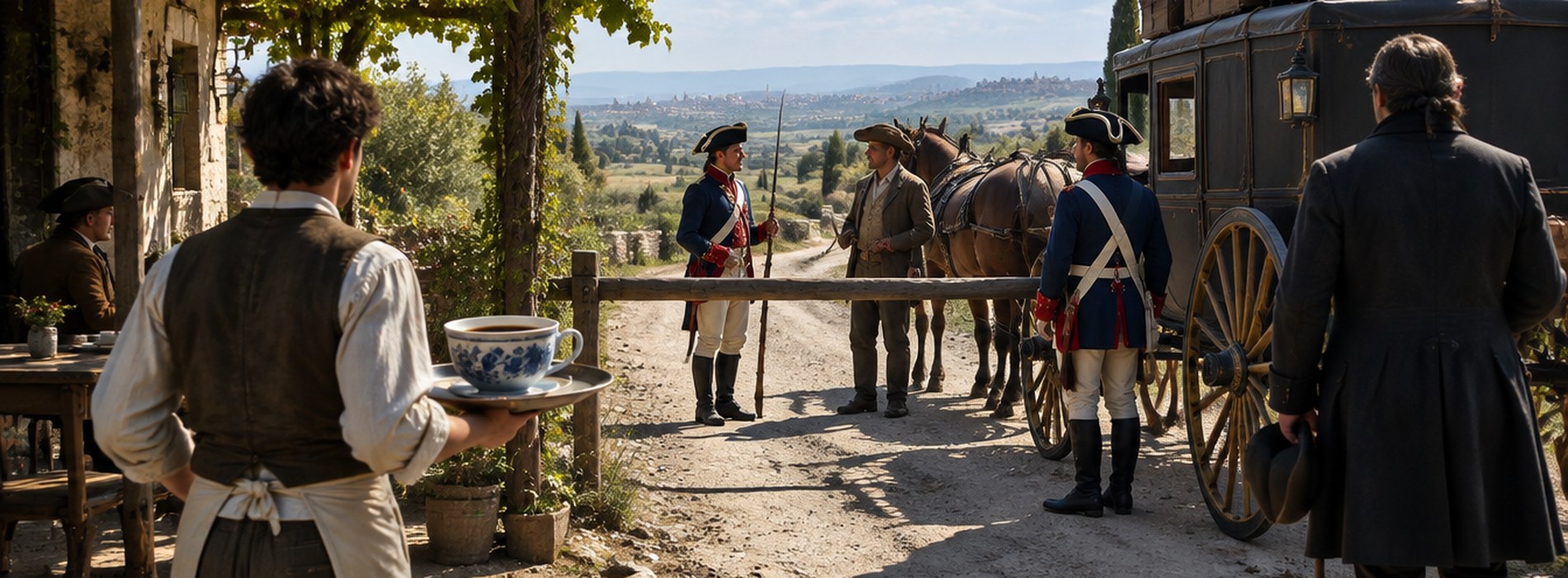
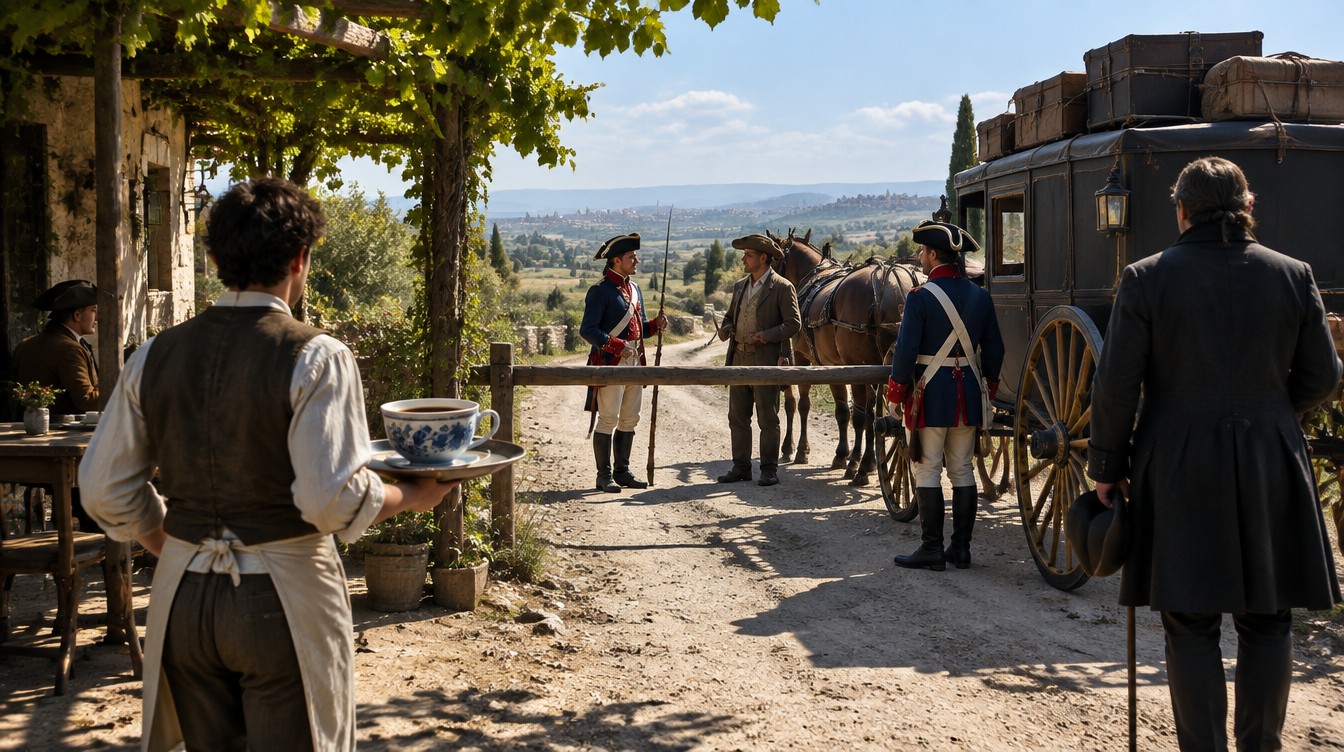
Goethe drives for the last time through the endless life of the city. At the last police barrier, while the customs men deal with the coachman, Kniep steps out of a coffee house with the largest Chinese cup, full of black coffee, on a tray. They part as seldom people part who were brought together by chance for a short time.
Naples, 3 June 1787
And so then, half-stunned, I drove through the endless life of this incomparable town, probably never to see it again; yet with a feeling of satisfaction that I had left behind nothing to repent or grieve over. I thought of the good Kniep, and vowed even in the distance to do my best for him.
At the outermost police-barriers of the suburb I was disturbed for a moment by a check-keeper, who, looking with frendliness into my face at once sprang off again. The Custom-house officers had not yet finished business with my vetturino when, from the door of the coffee-house, with the biggest chinese cup of black coffee on a waiter, out stepped Kniep. He came slowly up to the carriage door with a hearty earnestness which well became him. I was astonished and touched; such a mark of acknowledgment had not its match. “You have,” he said, “shown me so much goodness and kindness to bless me all the days of my life that I wanted to give you some token of the thanks I owe you.”
Words always failing me in such emergencies, I could only answer laconically that by his labours he had made me his debtor, and that by turning to good account our common treasures he would only bind me ever the closer to him.
We parted in a way persons seldom part whom accident has drawn together for a short time. It would, perhaps, be much the best rule in life for people when they meet to say out bluntly what they want of each other. That done, both sides are satisfied, and anything over and above then looks like the pure spontaneous gift of the heart.
Original German text · Neapel, Sonntag, den 3. Juni 1787. Dreieinigkeitsfest.
Und so fuhr ich denn durch das unendliche Leben dieser unvergleichlichen Stadt, die ich wahrscheinlich nicht wiedersehen sollte, halb betäubt hinaus; vergnügt jedoch, daß weder Reue noch Schmerz hinter mir blieb. Ich dachte an den guten Kniep und gelobte ihm auch in der Ferne meine beste Vorsorge.
An den äußersten Polizeischranken der Vorstadt störte mich einen Augenblick ein Marqueur, der mir freundlich ins Gesicht sah, aber schnell wieder hinwegsprang. Die Zollmänner waren noch nicht mit dem Vetturin fertig geworden, als aus der Kaffeebudentüre, die größte chinesische Tasse voll schwarzen Kaffee auf einem Präsentierteller tragend, Kniep heraustrat. Er nahte sich dem Wagenschlag langsam mit einem Ernst, der, von Herzen gehend, ihn sehr gut kleidete. Ich war erstaunt und gerührt, eine solche erkenntliche Aufmerksamkeit hat nicht ihresgleichen. “Sie haben”, sagte er, “mir so viel Liebes und Gutes, auf mein ganzes Leben Wirksames erzeigt, daß ich Ihnen hier ein Gleichnis anbieten möchte, was ich Ihnen verdanke.”
Da ich in solchen Gelegenheiten ohnehin keine Sprache habe, so brachte ich nur sehr lakonisch vor, daß er durch seine Tätigkeit mich schon zum Schuldner gemacht und durch Benutzung und Bearbeitung unserer gemeinsamen Schätze mich noch immer mehr verbinden werde.
Wir schieden, wie Personen selten voneinander scheiden, die sich zufällig auf kurze Zeit verbunden. Vielleicht hätte man viel mehr Dank und Vorteil vom Leben, wenn man sich wechselsweise gerade heraus spräche, was man voneinander erwartet. Ist das geleistet, so sind beide Teile zufrieden, und das Gemütliche, was das Erste und Letzte von allem ist, erscheint als reine Zugabe.
Today
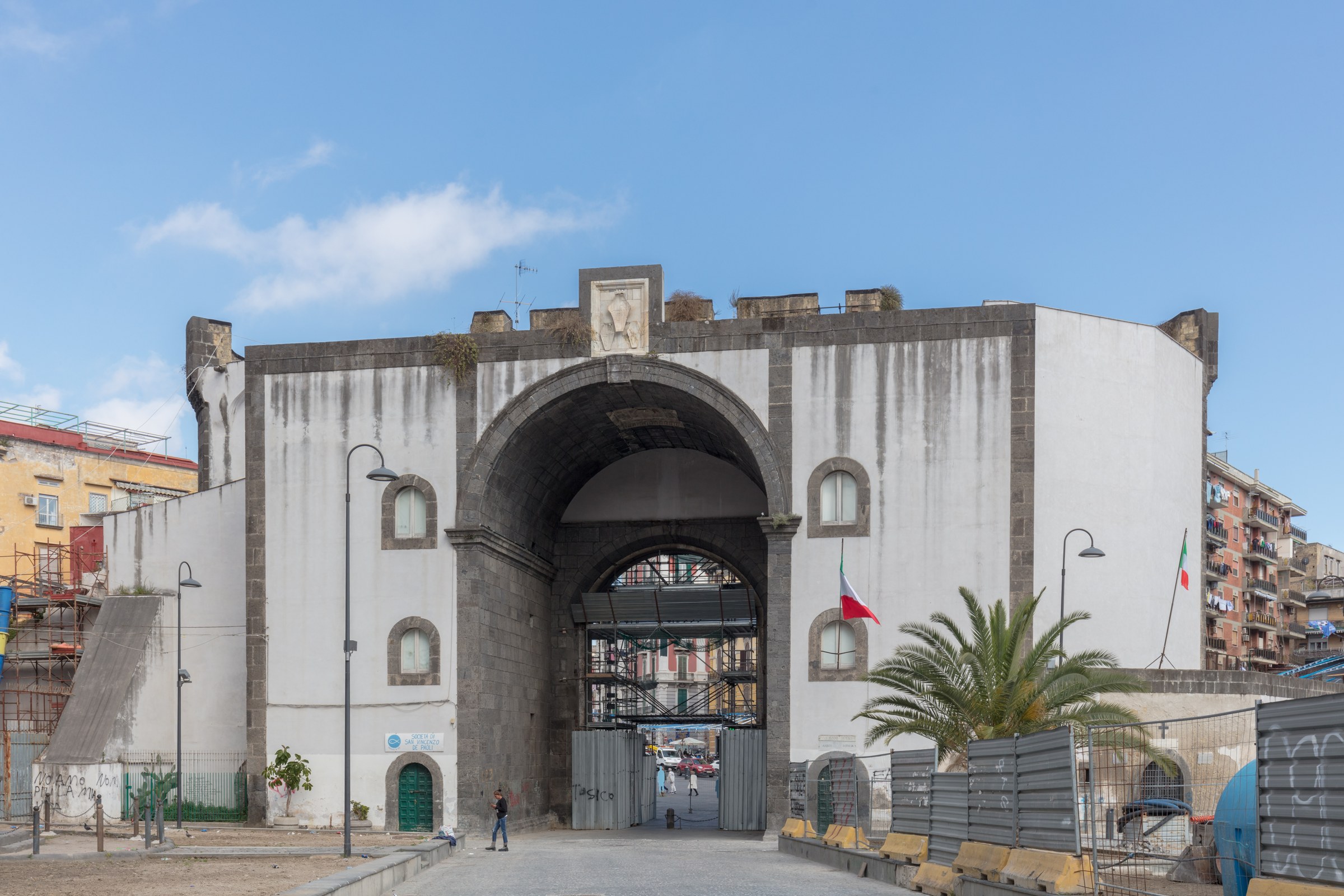
The last barrier on the road to Capua and Rome has not been identified (hypothesis: the customs post towards Capodichino).
Where: Napoli
Works and documents
AI reconstruction
Further reading
Sources
J.W. Goethe, Italienische Reise, original German text (public domain).
Translated by A.J.W. Morrison and Charles Nisbet (Goethe’s Travels in Italy, London, George Bell and Sons, 1885; public domain).


