


Portici · The Herculaneum Museum
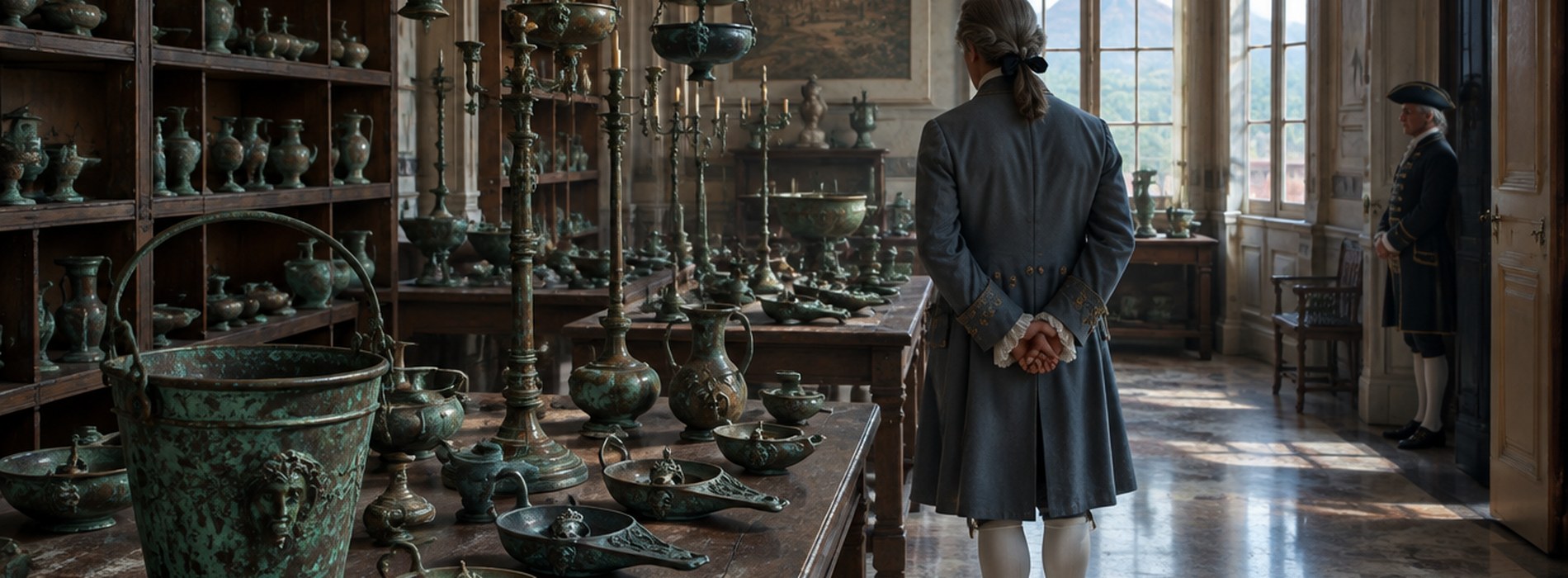
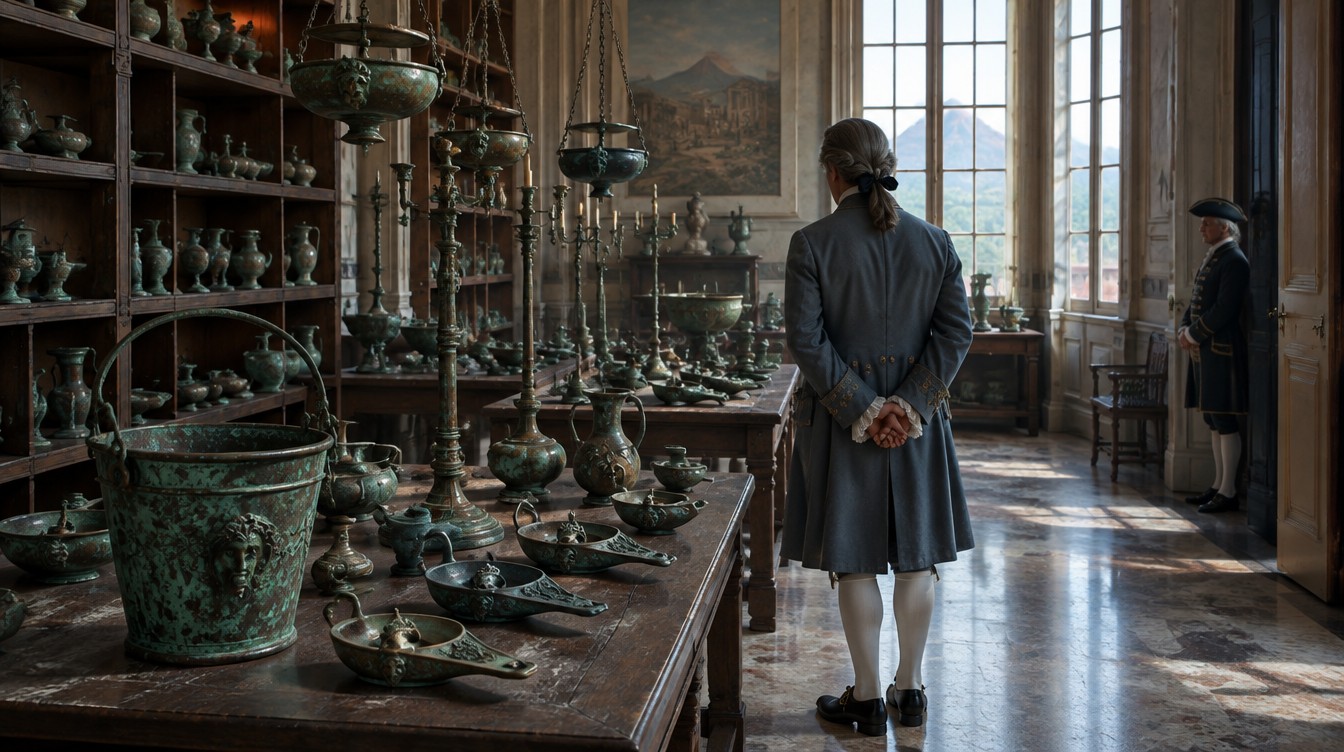
At the Portici museum drawing and note-taking are forbidden, and perhaps for that reason one looks all the better. The small houses of Pompeii now seem filled with everyday objects turned into art: a bucket whose rim rises into a handle, lamps with masks and tendrils, candelabra, hanging lamps.
Naples, 18 March 1787
We entered the museum well recommended, and were well received; nevertheless we were not allowed to take any drawings. Perhaps on this account we paid the more attention to what we saw, and the more vividly transported ourselves into those long-passed times, when all these things surrounded their living owners, and ministered to the use and enjoyment of life. The little houses and rooms of Pompeii now appeared to me at once more spacious and more confined—more confined, because I fancied them to myself crammed full of so many precious objects: more spacious, because these very objects could not have been furnished merely as necessaries, but, being decorated with the most graceful and ingenious devices of the imitative arts, while they delighted the taste, must also have enlarged the mind far beyond what the amplest house-room could ever have done.
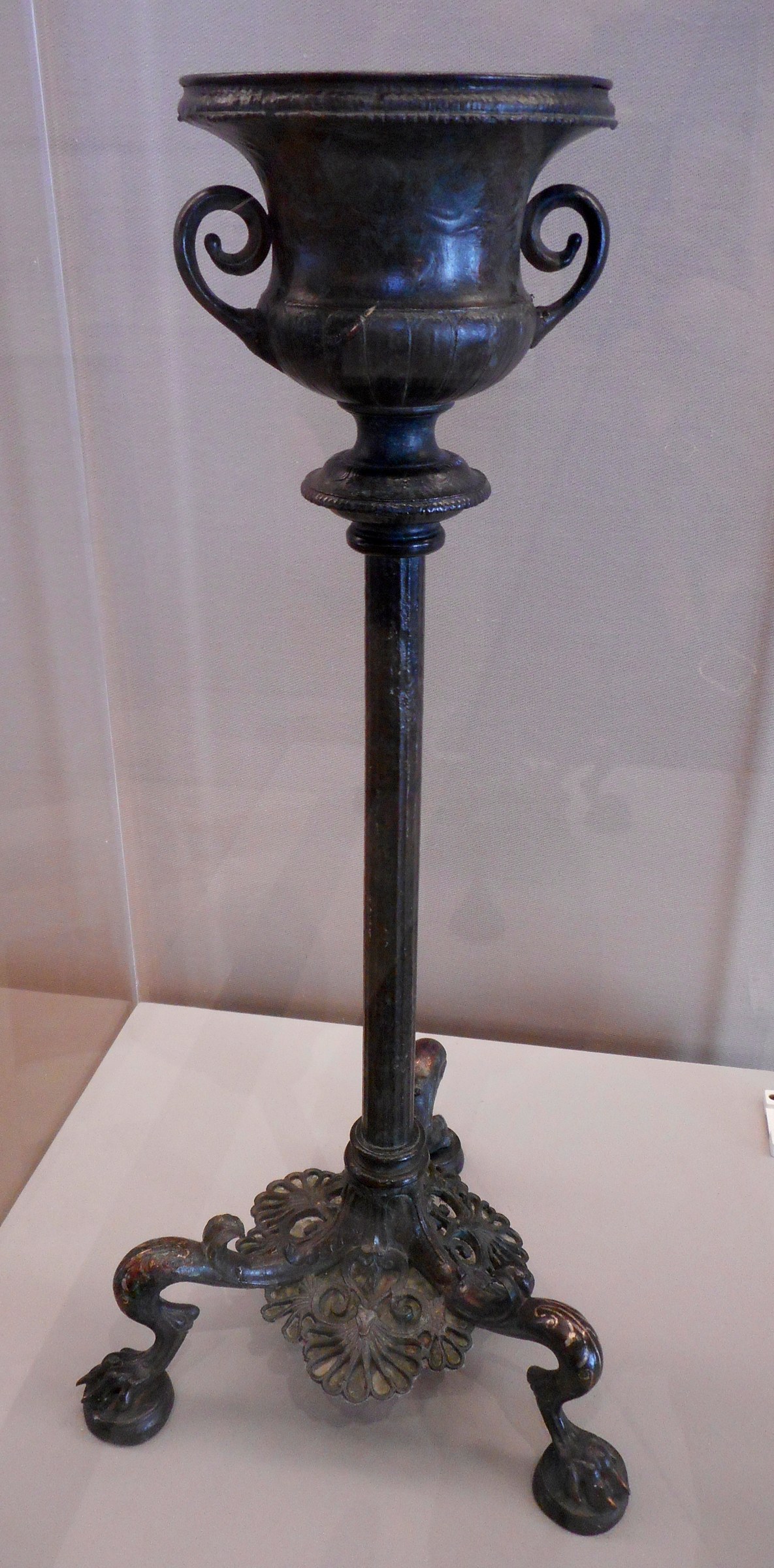
One sees here, for instance, a nobly-shaped pail, mounted at the top with a highly-ornamented edge. When you examine it more closely, you find that this rim rises on two sides, and so furnishes convenient handles by which the vessel may be lifted. The lamps, according to the number of their wicks, are ornamented with masks and mountings, so that each burner illuminates a genuine figure of art. We also saw some high and gracefully slender stands of iron for holding lamps, the pendant burners being suspended with figures of all kinds, which display a wonderful fertility of invention; and as, in order to please and delight the eye, they sway and oscillate, the effect surpasses all description.
In the hope of being able to pay a second visit, we followed the usher from room to room, and snatched all the delight and instruction that was possible from a cursory view.
Original German text · Neapel, den 18. März 1787.
In das Museum traten wir wohl empfohlen und wohl empfangen. Doch war auch uns irgend etwas aufzuzeichnen nicht erlaubt. Vielleicht gaben wir nur desto besser acht und versetzten uns desto lebhafter in die verschwundene Zeit, wo alle diese Dinge zu lebendigem Gebrauch und Genuß um die Eigentümer umherstanden. Jene kleinen Häuser und Zimmer in Pompeji erschienen mir nun zugleich enger und weiter; enger, weil ich sie mir von so viel würdigen Gegenständen vollgedrängt dachte, weiter, weil gerade diese Gegenstände nicht bloß als notdürftig vorhanden, sondern durch bildende Kunst aufs geistreichste und anmutigste verziert und belebt den Sinn erfreuen und erweitern, wie es die größte Hausgeräumigkeit nicht tun könnte.
Man sieht z. B. einen herrlich geformten Eimer, oben mit dem zierlichsten Rande, näher beschaut schlägt sich dieser Rand von zwei Seiten in die Höhe, man faßt die verbundenen Halbkreise als Handhabe und trägt das Gefäß auf das bequemste. Die Lampen sind nach Anzahl ihrer Dochte mit Masken und Rankenwerk verziert, so daß jede Flamme ein wirkliches Kunstgebilde erleuchtet. Hohe, schlanke, eherne Gestelle sind bestimmt, die Lampen zu tragen, aufzuhängende Lampen hingegen mit allerlei geistreich gedachten Figuren behängt, welche die Absicht, zu gefallen und zu ergötzen, sobald sie schaukeln und baumeln, sogar übertreffen.
In Hoffnung, wiederzukehren, folgten wir den Vorzeigenden von Zimmer zu Zimmer und haschten, wie es der Moment erlaubte, Ergötzung und Belehrung weg, so gut es sich schicken wollte.
Today
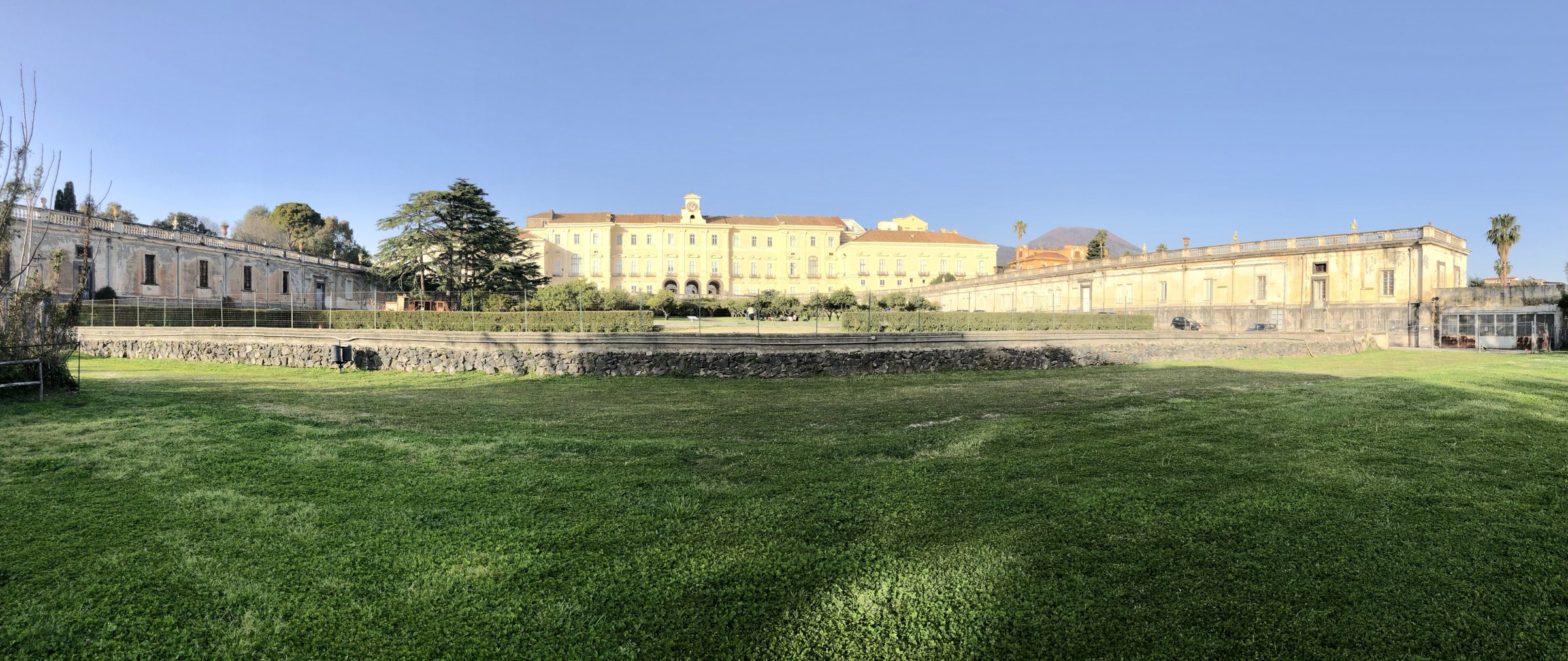
The Royal Palace of Portici, home of the Herculanense Museum in the eighteenth century; the finds are now in the National Archaeological Museum of Naples.
Where: Reggia di Portici, Via Università 100, 80055 Portici (NA)
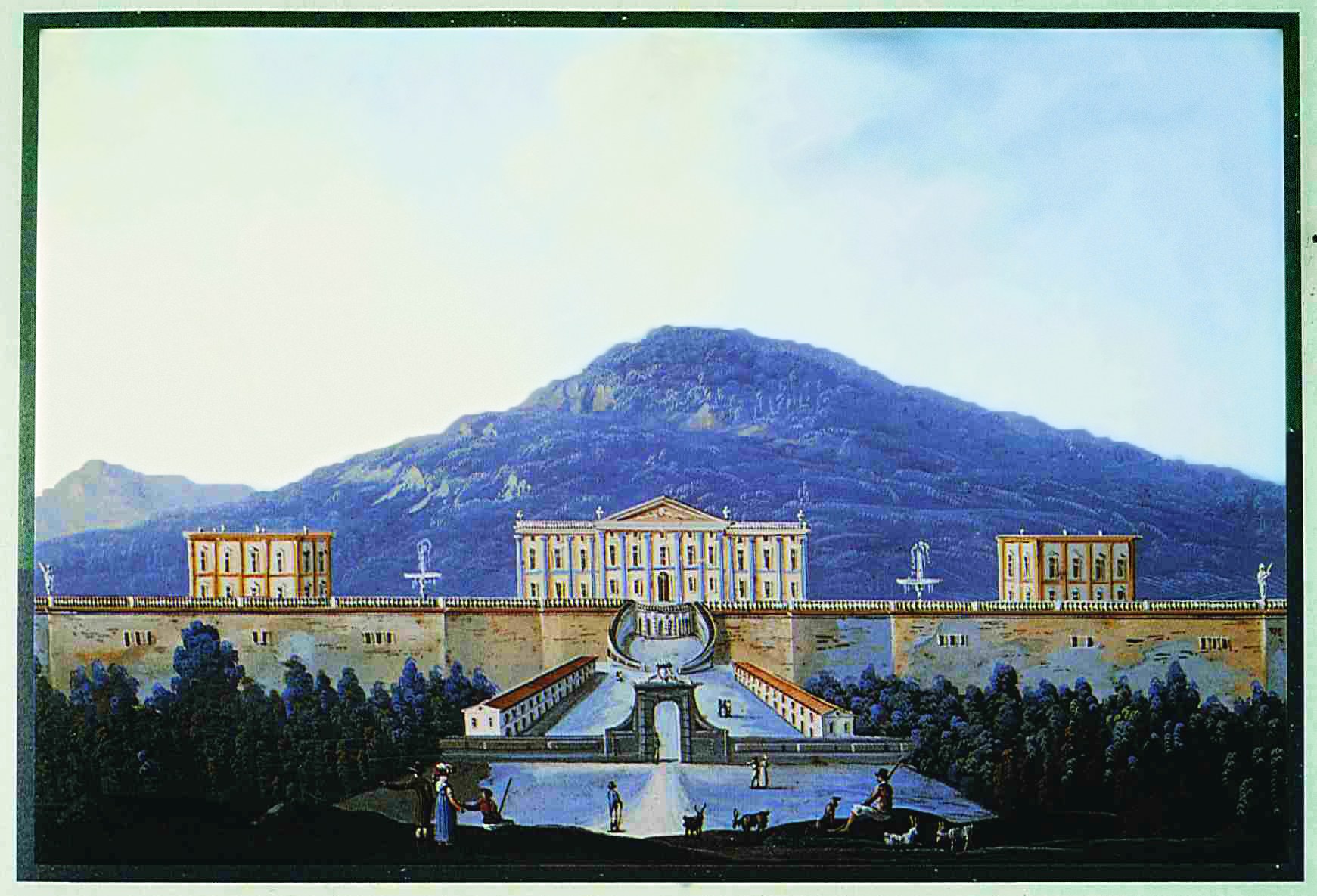
Works and documents
AI reconstruction
Sources
J.W. Goethe, Italienische Reise, original German text (public domain).
Translated by A.J.W. Morrison (Goethe’s Travels in Italy, London, Bell; public domain).


