


Capua · The plain and the arrival in Naples
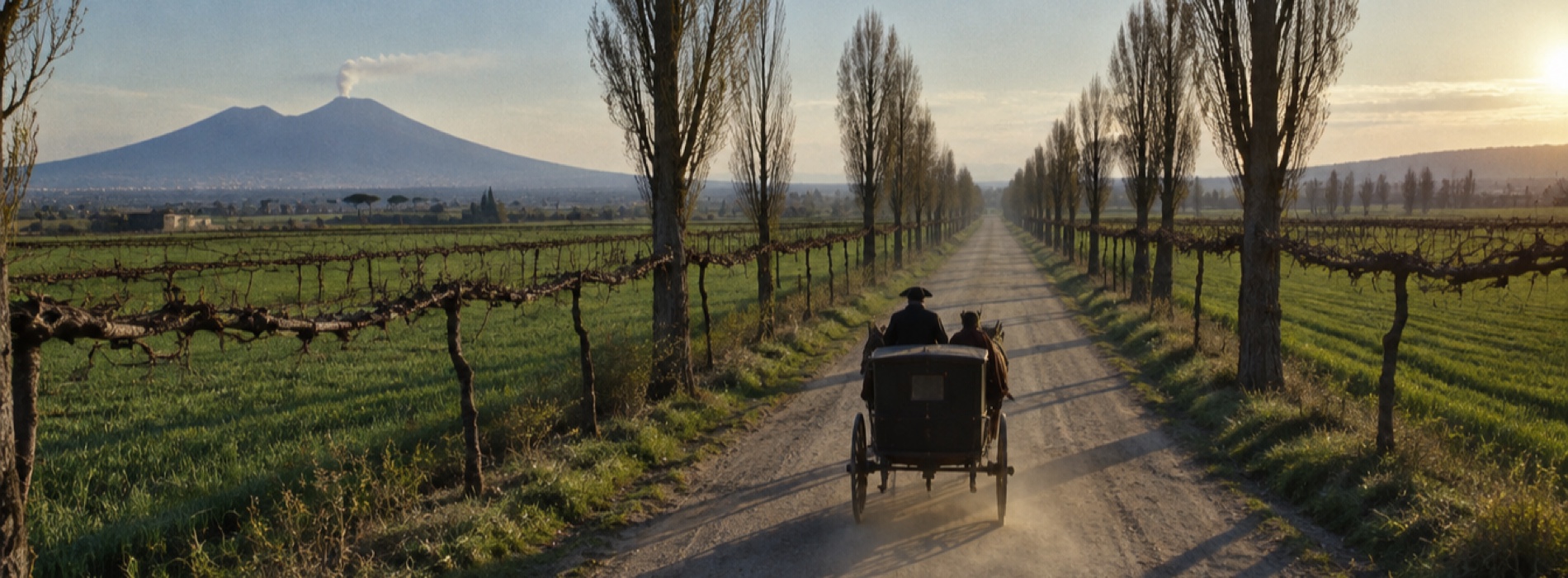
A halt at Capua, then the broad road through wheat «like a carpet», poplars and vines strung like nets, with smoking Vesuvius always on the left. On arrival Goethe finds himself «really in a different country». On 16 March, from Caserta, he visits the remains of ancient Capua.
Naples, 25 February 1787
And here we are happily arrived at last, and with good omens enough. Of our day’s journey thus much only. We left S. Agata with sunrise, a violent north-east wind blowing on our backs, which continued the whole day through. It was not till noon that it was master of the clouds. We suffered much from the cold.
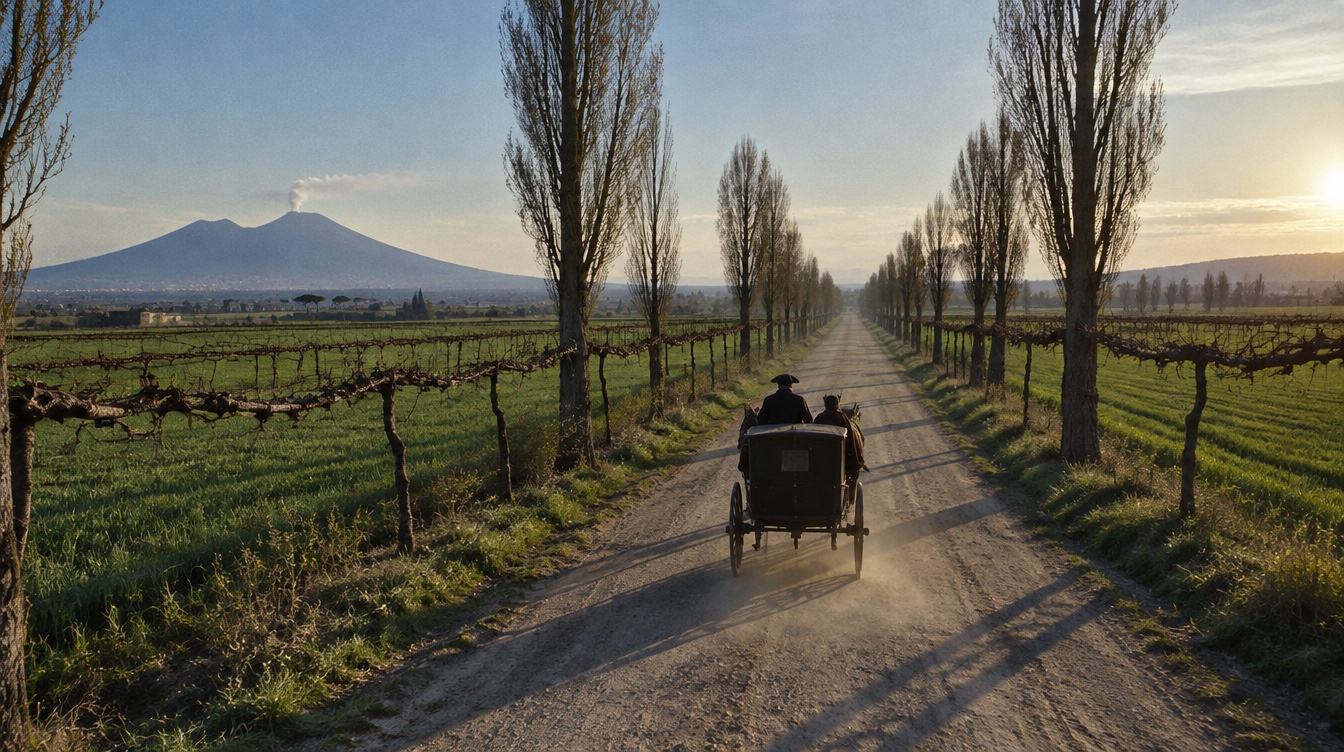
Our road again lay among and over volcanic hills, among which I did not notice many limestone rocks. At last we reached the plains of Capua, and shortly afterwards Capua itself, where we halted at noon. In the afternoon a beautiful but flat region lay stretched before us; the road is broad, and runs through fields of green corn, so even that it looked like a carpet, and was at least a span high. Along the fields are planted rows of poplars, from which the branches are lopped to a great height, that the vines may run up them; this is the case all the way to Naples. The soil is excellent, light, loose, and well worked. The vine stocks are of extraordinary strength and height, and their shoots hang in festoons like nets from tree to tree.
Vesuvius was all the while on our left with a strong smoke, and I felt a quiet joy to think that at last I beheld with my own eyes this most, remarkable object. The sky became clearer and clearer, and at length the sun shone quite hot into our narrow rolling lodging. The atmosphere was perfectly clear and bright as we approached Naples, and we now found ourselves, in truth, in quite another world. The houses, with flat roofs, at once bespeak a different climate; inwardly, perhaps, they may not be very comfortable. Every one is in the streets, or sitting in the sun as long as it shines. The Neapolitan believes himself to be in possession of Paradise, and entertains a very melancholy opinion of our northern lands. Sempre neve, caso di legno, gran ignoranza, ma danari assai. Such is the picture they draw of our condition. Interpreted for the benefit of all our German folk, it means—Always snow, wooden houses, great ignorance, but money enough.
Naples at first sight leaves a free, cheerful, and lively impression; numberless beings are passing and repassing each other: the king is gone hunting, the queen promising; and so things could not be better.
Original German text · Neapel, den 25. Februar 1787
Endlich auch hier glücklich und mit guten Vorbedeutungen angekommen. Von der Tagesreise nur so viel: St. Agata verließen wir mit Sonnenaufgang, der Wind blies heftig hinter uns her, und dieser Nordost hielt den ganzen Tag an. Erst Nachmittag ward er Herr von den Wolken; wir litten von Kälte.
Unser Weg ging wieder durch und über vulkanische Hügel, wo ich nur noch wenige Kalkfelsen zu bemerken glaubte. Endlich erreichten wir die Plaine von Capua, bald darnach Capua selbst, wo wir Mittag hielten. Nachmittag tat sich ein schönes, flaches Feld vor uns auf. Die Chaussee geht breit zwischen grünen Weizenfeldern durch, der Weizen ist wie ein Teppich und wohl spannenhoch. Pappeln sind reihenweis auf den Feldern gepflanzt, hoch ausgezweigt und Wein hinangezogen. So geht es bis Neapel hinein. Ein klarer, herrlich lockerer Boden und gut bearbeitet. Die Weinstöcke von ungewöhnlicher Stärke und Höhe, die Ranken wie Netze von Pappel zu Pappel schwebend.
Der Vesuv blieb uns immer zur linken Seite, gewaltsam dampfend, und ich war still für mich erfreut, daß ich diesen merkwürdigen Gegenstand endlich auch mit Augen sah. Der Himmel ward immer klärer, und zuletzt schien die Sonne recht heiß in unsere enge rollende Wohnung. Bei ganz rein heller Atmosphäre kamen wir Neapel näher; und nun fanden wir uns wirklich in einem andern Lande. Die Gebäude mit flachen Dächern deuten auf eine andere Himmelsgegend, inwendig mögen sie nicht sehr freundlich sein. Alles ist auf der Straße, sitzt in der Sonne, so lange sie scheinen will. Der Neapolitaner glaubt, im Besitz des Paradieses zu sein, und hat von den nördlichen Ländern einen sehr traurigen Begriff: “Sempre neve, case di legno, gran ignoranza, ma danari assai.” Solch ein Bild machen sie sich von unserm Zustande. Zur Erbauung sämtlicher deutschen Völkerschaften heißt diese Charakteristik übersetzt: “Immer Schnee, hölzerne Häuser, große Unwissenheit; aber Geld genug.”
Neapel selbst kündigt sich froh, frei und lebhaft an, unzählige Menschen rennen durcheinander, der König ist auf der Jagd, die Königin guter Hoffnung, und so kann’s nicht besser gehn.
Caserta, 16 March 1787
I have paid a visit to the ruins of ancient Capua, and all that is connected with it.
In this country one first begins to have a true idea of what vegetation is, and why man tills the fields. The flax here is already near to blossoming, and the wheat a span and a-half high. Around Caserta the land is perfectly level, the fields worked as clean and as fine as the beds of a garden. All of them are planted with poplars, and from tree to tree the vine spreads; and yet, notwithstanding this shade, the soil below produces the finest and most abundant crops possible. What will they be when the spring shall come in power! Hitherto we have had very cold winds, and there has been snow on the mountains.
Original German text · Caserta, den 16. März 1787.
Die Reste des alten Capua und was sich daran knüpft, hab’ ich nun von hier aus auch besucht.
In dieser Gegend lernt man erst verstehen, was Vegetation ist und warum man den Acker baut. Der Lein ist schon nah am Blühen und der Weizen anderthalb Spannen hoch. Um Caserta das Land völlig eben, die Acker so gleich und klar gearbeitet wie Gartenbeete. Alles mit Pappeln besetzt, an denen sich die Rebe hinaufschlingt, und ungeachtet solcher Beschattung trägt der Boden noch die vollkommenste Frucht. Wenn nun erst das Frühjahr mit Gewalt eintritt! Bisher haben wir bei schöner Sonne sehr kalte Winde gehabt, das macht der Schnee in den Bergen.
Today
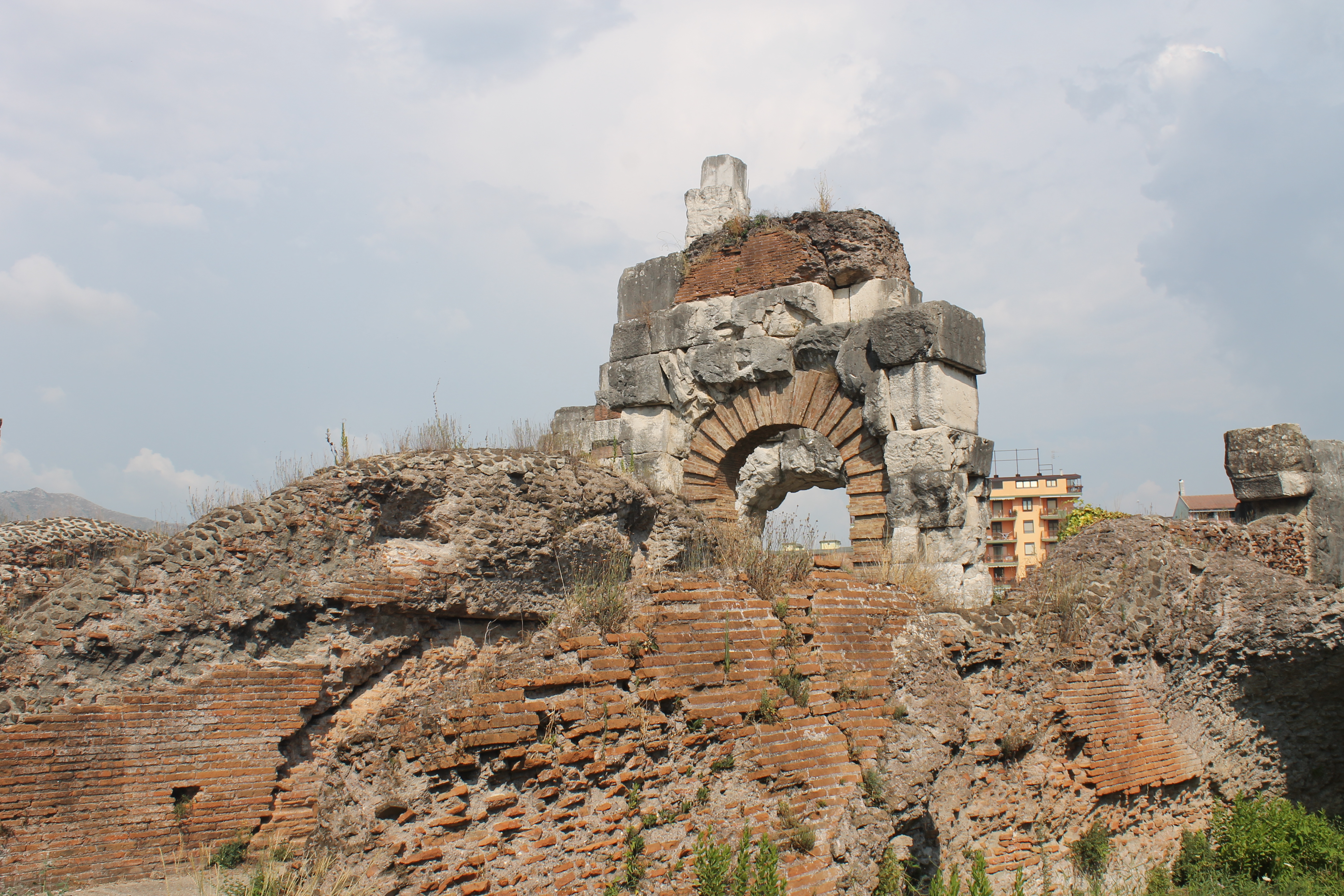
Capua keeps its historic centre on the Via Appia; the «ancient Capua» visited on 16 March is Santa Maria Capua Vetere, with its Campanian amphitheatre.
Where: Capua (CE)
AI reconstruction
Videos
Further reading
Sources
J.W. Goethe, Italienische Reise, original German text (public domain).
Translated by A.J.W. Morrison (Goethe’s Travels in Italy, London, Bell; public domain).


