


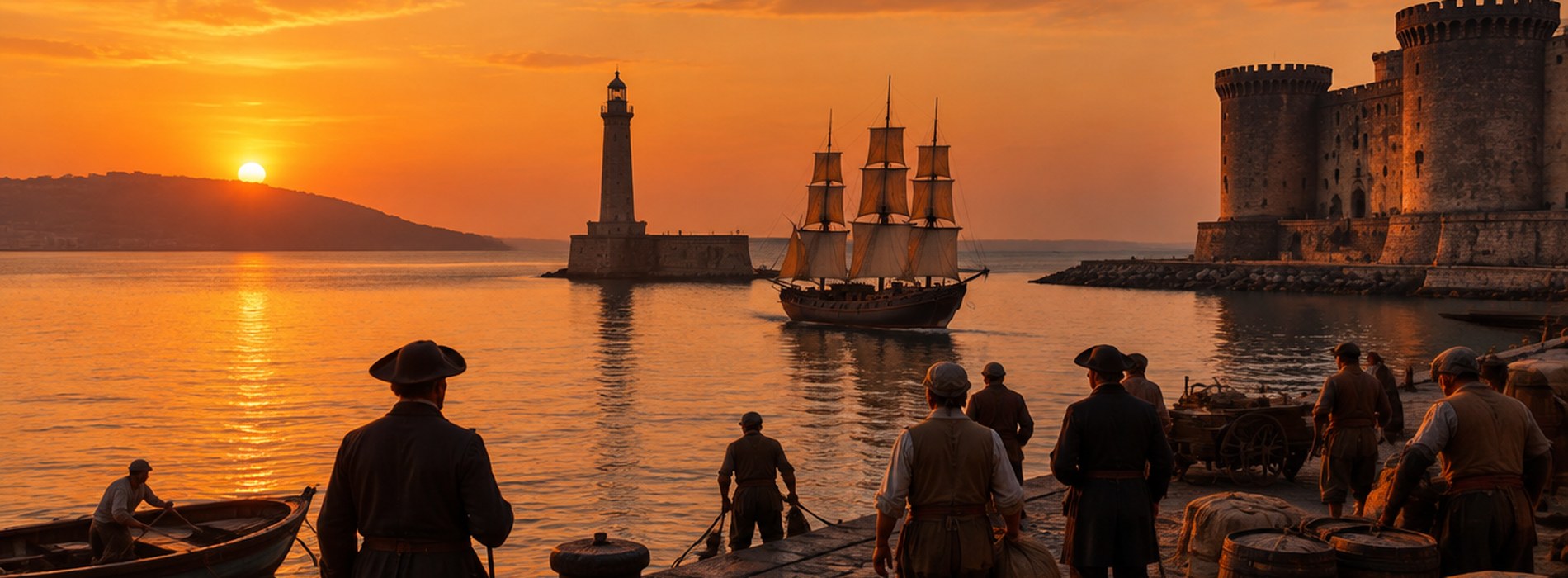
Naples · The Molo, departure and return
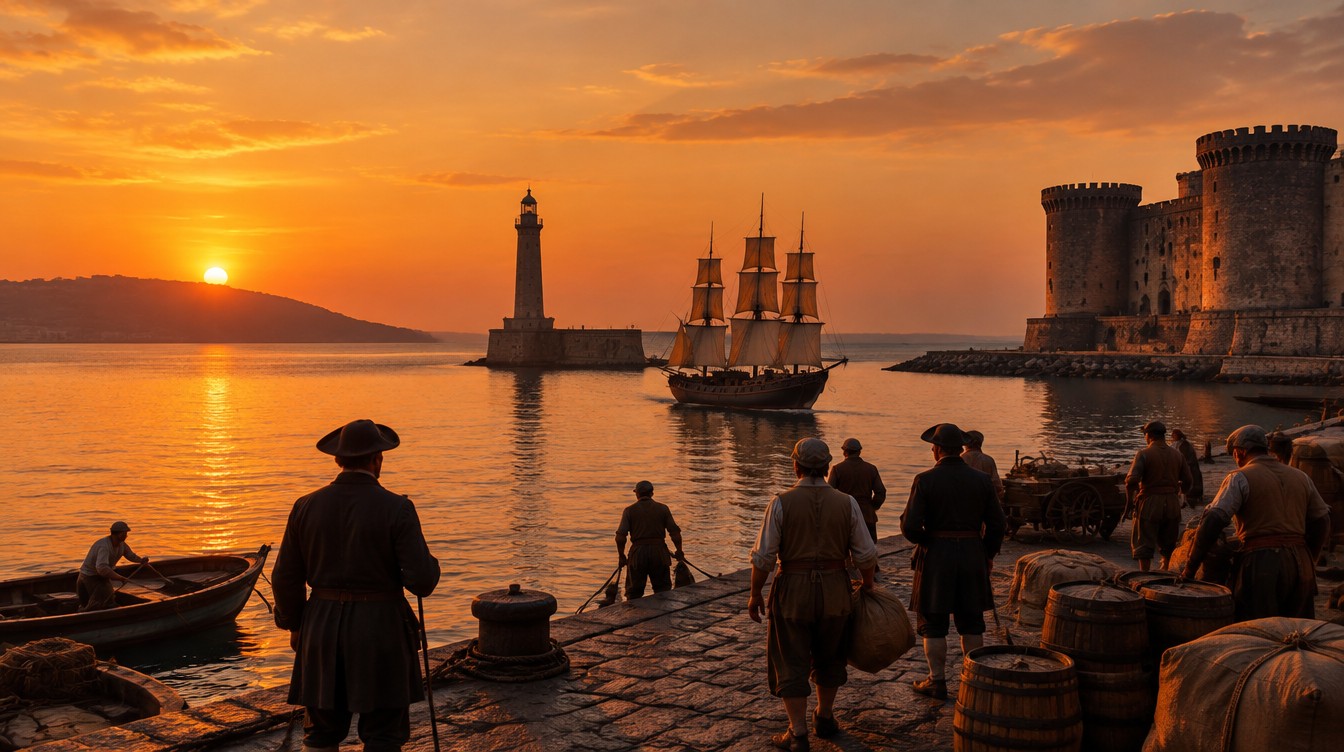
The corvette built in America, the cabin, the bills and farewells; the Marchese Berio eager to meet the author of Werther. On 29 March they sail at sunset with a troupe of singers and dancers. In mid-May the return: the gulf in morning light, a Greek priest exclaiming that this too is a city, porters running with the trunks towards Moriconi.
Naples, 26 March 1787
To-morrow this letter will leave this for you. On Thursday, the 29th, I go to Palermo in the corvette, which formerly, in my ignorance of sea matters, I promoted to the rank of a frigate. The doubt whether I should go or remain made me unsettled even in the use of my stay here; now I have made up my mind, things go on better. For my mental state this journey is salutary–indeed necessary. I see Sicily pointing to Africa, and to Asia, and to the wonderful, whither so many rays of the world’s history are directed: even to stand still is no trifle!
I have treated Naples quite in its own style. I have been anything but industrious. And yet I have seen a great deal, and formed a pretty general idea of the land, its inhabitants, and condition. On my return there is much that I shall have to go over again; indeed, only “go over,” for by the 29th of June I must be in Rome again. As I have missed the Holy Week, I must not fail to be present at the festivities of St. Peter’s Day. My Sicilian expedition must not altogether draw me off from my original plans.
The day before yesterday we had a violent storm, with thunder, lightning, and rain. Now it is again clear; a glorious Tramontane is blowing; if it lasts, we shall have a rapid passage.
Yesterday I went with my fellow-traveller to see the vessel, and to take our cabin. A sea voyage is utterly out of the pale of my ideas; this short trip, which will probably be a mere coasting one, will help my imagination, and enlarge my world. The captain is a young lively fellow; the ship trim and clean, built in America, and a good sailer.
Here every spot begins to look green; Sicily, they tell me, I shall find still more so. By the time you get this letter I shall be on my return, leaving Trinacria behind me. Such is man; he is always either anticipating or recalling; I have not yet been there; and yet I now am, in thought, back again with you! However, for the confusion of this letter I am not to blame. Every moment I am interrupted, and yet I would, if possible, fill this sheet to the very corner.
Just now I have had a visit from a Marchese Berio, a young man who appears to be well informed. He was anxious to make the acquaintance of the author of “Werther.” Generally, indeed, the people here evince a great desire for, and delight in, learning and accomplishments. Only they are too happy to go the right way to acquire them. Had I more time, I would willingly devote it to observing the Neapolitans. These four weeks–what are they, compared with the endless variety of life?
Now, fare you well. On these travels I have learnt one thing at least–how to travel well; whether I am learning to live, I know not. The men who pretend to understand that art, are, in nature and manner, too widely different from me, for setting up any claim to such a talent.
Farewell, and love me as sincerely as I from my heart remember you.
Original German text · Neapel, den 26. März 1787.
Morgen geht dieser Brief von hier zu euch. Donnerstag den 29. geh’ ich mit der Korvette, die ich, des Seewesens unkundig, in meinem vorigen Briefe zum Rang einer Fregatte erhob, endlich nach Palermo. Der Zweifel, ob ich reisen oder bleiben sollte, machte einen Teil meines hiesigen Aufenthaltes unruhig; nun, da ich entschlossen bin, geht es besser. Für meine Sinnesart ist diese Reise heilsam, ja notwendig. Sizilien deutet mir nach Asien und Afrika, und auf dem wundersamen Punkte, wohin so viele Radien der Weltgeschichte gerichtet sind, selbst zu stehen, ist keine Kleinigkeit.
Neapel habe ich nach seiner eignen Art behandelt; ich war nichts weniger als fleißig, doch hab’ ich viel gesehen und mir einen allgemeinen Begriff von dem Lande, seinen Einwohnern und Zuständen gebildet. Bei der Wiederkehr soll manches nachgeholt werden; freilich nur manches, denn vor dem 29. Juni muß ich wieder in Rom sein. Hab’ ich die heilige Woche versäumt, so will ich dort wenigstens den St. -Peters-Tag feiern. Meine sizilianische Reise darf mich nicht allzuweit von meiner ersten Absicht weglenken.
Vorgestern hatten wir ein gewaltiges Wetter mit Donner, Blitz und Regengüssen; jetzt hat sich’s wieder ausgehellt, eine herrliche Tramontane weht herüber; bleibt sie beständig, so haben wir die schnellste Fahrt.
Gestern war ich mit meinem Gefährten, unser Schiff zu besehen und das Kämmerchen zu besuchen, das uns aufnehmen soll. Eine Seereise fehlte mir ganz in meinen Begriffen; diese kleine Überfahrt, vielleicht eine Küstenumschiffung wird meiner Einbildungskraft nachhelfen und mir die Welt erweitern. Der Kapitän ist ein junger, munterer Mann, das Schiff gar zierlich und nett, in Amerika gebaut, ein guter Segler.
Hier fängt nun alles an, grün zu werden, in Sizilien find’ ich es noch weiter. Wenn ihr diesen Brief erhaltet, bin ich auf der Rückreise und habe Trinakrien hinter mir. So ist der Mensch: immer springt er in Gedanken vor- und rückwärts; ich war noch nicht dort und bin schon wieder bei euch. Doch an der Verworrenheit dieses Briefes bin ich nicht schuld; jeden Augenblick werd’ ich unterbrochen und möchte doch gern dieses Blatt zu Ende schreiben.
Soeben besuchte mich ein Marchese Berio, ein junger Mann, der viel zu wissen scheint. Er wollte den Verfasser des “Werther” doch auch kennen lernen. Überhaupt ist hier großer Drang und Lust nach Bildung und Wissen. Sie sind nur zu glücklich, um auf den rechten Weg zu kommen. Hätte ich nur mehr Zeit, so wollt’ ich ihnen gern meine Zeit geben. Diese vier Wochen – was waren die gegen das ungeheure Leben! Nun gehabt euch wohl! Reisen lern’ ich wohl auf dieser Reise, ob ich leben lerne, weiß ich nicht. Die Menschen, die es zu verstehen scheinen, sind in Art und Wesen zu sehr von mir verschieden, als daß ich auf dieses Talent sollte Anspruch machen können.
Lebet wohl und liebt mich, wie ich eurer von Herzen gedenke.
Naples, 28 March 1787
These few days have been entirely passed in packing and leave-taking; with making all necessary arrangements, and paying bills; looking for missing articles, and with preparations of all kinds. I set the time down as lost.
The Prince of Walbeck has, just at my departure, unsettled me again. For he has been talking of nothing less than that I should arrange, on my return, to go with him to Greece and Dalmatia. When one enters once into the world, and gives way to it, it is necessary to be very cautious, lest one should be carried away, not to say driven mad by it. I am utterly incapable of adding another syllable.
Original German text · Neapel, den 28. März 1787.
Diese Tage gehen mir nun gänzlich mit Einpacken und Abschiednehmen, mit Besorgen und Bezahlen, Nachholen und Vorbereiten, sie gehen mir völlig verloren.
Der Fürst von Waldeck beunruhigte mich noch beim Abschied, denn er sprach von nichts weniger, als daß ich bei meiner Rückkehr mich einrichten sollte, mit ihm nach Griechenland und Dalmatien zu gehen. Wenn man sich einmal in die Welt macht und sich mit der Welt einläßt, so mag man sich ja hüten, daß man nicht entrückt oder wohl gar verrückt wird. Zu keiner Silbe weiter bin ich fähig.
Naples, 29 March 1787
For some days the weather has been very unsettled; to-day, (the appointed time for our sailing), it is again as fine as possible. A favourable north wind, a bright sunny sky, beneath which one wishes oneself in the wide world! Now I bid an affectionate farewell to all my friends in Weimar and Gotha. Your love accompanies me; for wherever I am I feel my need of you. Last night I dreamt I was again among old familiar faces. It seems as if I could not unload my boat of pheasants’ feathers any where but among you. May it be well loaded.
Original German text · Neapel, den 29. März 1787.
Seit einigen Tagen machte sich das Wetter ungewiß, heute, am bestimmten Tage der Abfahrt, ist es so schön als möglich. Die günstigste Tramontane, ein klarer Sonnenhimmel, unter dem man sich in die weite Welt wünscht. Nun sag’ ich noch allen Freunden in Weimar und Gotha ein treues Lebewohl! Eure Liebe begleite mich, denn ich möchte ihrer wohl immer bedürfen. Heute nacht träumte ich mich wieder in meinen Geschäften. Es ist denn doch, als wenn ich mein Fasanenschiff nirgends als bei euch ausladen könnte. Möge es nur erst recht stattlich geladen sein!
At sea, 29 March 1787
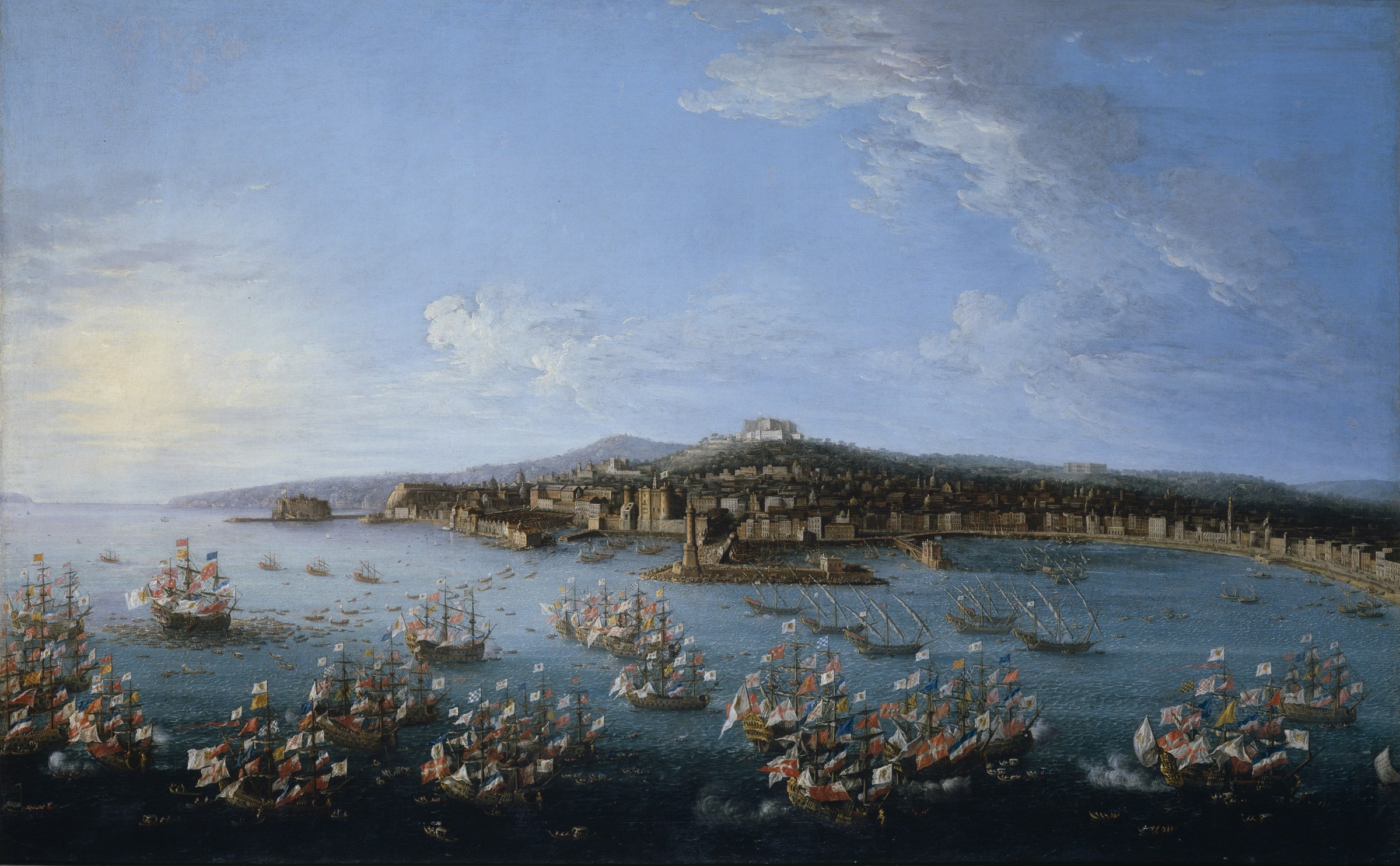
A fresh and favourable breeze from the north-east is not blowing this time, as it did at the last sailing of the packet. But, unfortunately, a direct head-wind comes from the opposite quarter, the south-west–and so we are experiencing to our cost how much the traveller by sea depends upon the caprice of the wind and weather. Out of all patience, we whiled away the morning either on the shore or in the coffee-house; at last, at noon we went on board, and the weather being extremely fine, we enjoyed the most glorious of views. The corvette lay at anchor near to the Mole. With an unclouded sun the atmosphere was hazy, giving to the rocky walls of Sorrento, which were in the shade, a tint of most beautiful blue. Naples, with its living multitudes, lay in the full sunshine, and glittered brilliantly with countless tints. It was not until sunset that the vessel began slowly to move from her moorings; then the wind which was contrary drove us over to Posilippo, and its promontory. All night long the ship went quietly on its way. She is a swift sailer, and was built in America, and is well fitted with cabins and berths. The passengers cheerful, but not boisterous. Opera-singers and dancers, consigned to Palermo.
Original German text · Seefahrt, Donnerstag, den 29. März.
Nicht wie bei dem letzten Abgange des Paketboots wehte diesmal ein förderlicher frischer Nordost, sondern leider von der Gegenseite ein lauer Südwest, der allerhinderlichste; und so erfuhren wir denn, wie der Seefahrer vom Eigensinne des Wetters und Windes abhängt. Ungeduldig verbrachten wir den Morgen bald am Ufer, bald im Kaffeehaus; endlich bestiegen wir zu Mittag das Schiff und genossen beim schönsten Wetter des herrlichsten Anblicks. Unfern vom Molo lag die Korvette vor Anker. Bei klarer Sonne eine dunstreiche Atmosphäre, daher die beschatteten Felsenwände von Sorrent vom schönsten Blau. Das beleuchtete, lebendige Neapel glänzte von allen Farben. Erst mit Sonnenuntergang bewegte sich das Schiff, jedoch nur langsam, von der Stelle, der Widerwind schob uns nach dem Posilipo und dessen Spitze hinüber. Die ganze Nacht ging das Schiff ruhig fort. Es war in Amerika gebaut, schnellsegelnd, inwendig mit artigen Kämmerchen und einzelnen Lagerstätten eingerichtet. Die Gesellschaft anständig munter: Operisten und Tänzer, nach Palermo verschrieben.
Naples, 14 May 1787
When on the fourth day of our voyage, I awoke early in the morning, I found myself quite fresh and well, just as I had been at the same period of the passage from Naples; so that on a longer voyage I may hope to get off free, after paying to the sea a three days’ tribute of sickness.
From the deck I saw with no little delight the island of Capri, at a tolerable distance on our lee, and perceived that the vessel was holding such a course as afforded a hope of our being able ere long to enter the gulf, which, indeed, we very soon afterwards accomplished. And now, after passing a hard night, we had the satisfaction of seeing the same objects as had charmed us so greatly the evening before, in a reversed light. We soon left this dangerous insular rock far behind us. While yesterday we had admired the right hand coast from a distance, now we had straight before us the castle and the city, with Posilippo on the left, together with the tongues of land which run out into the sea towards Procida and Ischia. Everyone was on deck; foremost among them was a Greek priest, enthusiastic in the praises of his own dear East; but who, when the Neapolitans on board, who were rapturously greeting their glorious country, asked him what he thought of Naples, as compared with Constantinople? very pathetically replied, “Anche questa è una città!” (This, too, is a city.)
We reached the harbour just at the right time, when it was thronged with people. Scarcely were our trunks and the rest of our baggage unshipped and put on shore ere they were seized by two lusty porters, who, scarcely giving us time to say that we were going to put up at Moriconi’s, ran off with the load as if with a prize, so that we had difficulty in keeping them in view as they darted through the crowded streets and bustling piazzas. Kniep kept his portfolio under his arm, and we consoled ourselves with thinking that the drawings at least were safe, should these porters, less honest than the poor Neapolitan devils, strip us of all that even the very breakers had spared.
Original German text · Montag, den 14. Mai 1787.
Als ich früh am vierten Tage unserer Fahrt erwachte, befand ich mich frisch und gesund, so wie ich auch bei der Überfahrt zu eben dieser Epoche gewesen war; so daß ich also auf einer längern Seereise wahrscheinlich mit einer dreitägigen Unpäßlichkeit meinen Tribut würde bezahlt haben.
Vom Verdeck sah ich mit Vergnügen die Insel Capri in ziemlicher Entfernung zur Seite liegen und unser Schiff in solcher Richtung, daß wir hoffen konnten, in den Golf hineinzufahren, welches denn auch bald geschah. Nun hatten wir die Freude, nach einer ausgestandenen harten Nacht dieselben Gegenstände, die uns abends vorher entzückt hatten, in entgegengesetztem Lichte zu bewundern. Bald ließen wir jene gefährliche Felseninsel hinter uns. Hatten wir gestern die rechte Seite des Golfs von weitem bewundert, so erschienen nun auch die Kastelle und die Stadt gerade vor uns, sodann links der Posilipo und die Erdzungen, die sich bis gegen Procida und Ischia erstreckten. Alles war auf dem Verdeck, voran ein für seinen Orient sehr eingenommener griechischer Priester, der den Landesbewohnern, die ihr herrliches Vaterland mit Entzücken begrüßten, auf ihre Frage, wie sich denn Neapel zu Konstantinopel verhalte, sehr pathetisch antwortete: “Anche questa è una città!” – “Auch dieses ist eine Stadt!” – Wir langten zur rechten Zeit im Hafen an, umsummt von Menschen; es war der lebhafteste Augenblick des Tages. Kaum waren unsere Koffer und sonstigen Gerätschaften ausgeladen und standen am Ufer, als gleich zwei Lastträger sich derselben bemächtigten, und kaum hatten wir ausgesprochen, daß wir bei Moriconi logieren würden, so liefen sie mit dieser Last wie mit einer Beute davon, so daß wir ihnen durch die menschenreichen Straßen und über den bewegten Platz nicht mit den Augen folgen konnten. Kniep hatte das Portefeuille unter dem Arm, und wir hätten wenigstens die Zeichnungen gerettet, wenn jene Träger, weniger ehrlich als die neapolitanischen armen Teufel, uns um dasjenige gebracht hätten, was die Brandung verschont hatte.
Today
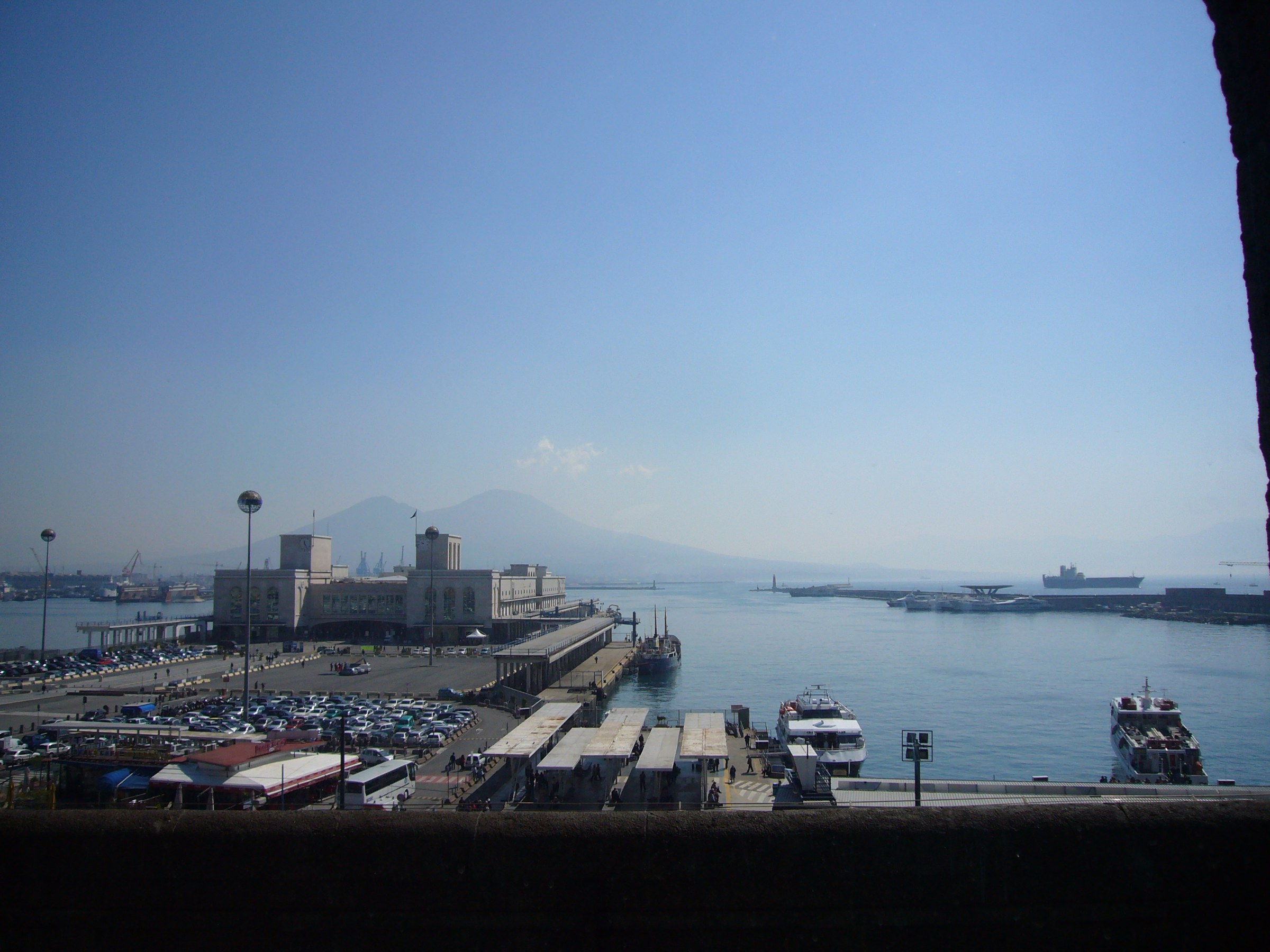
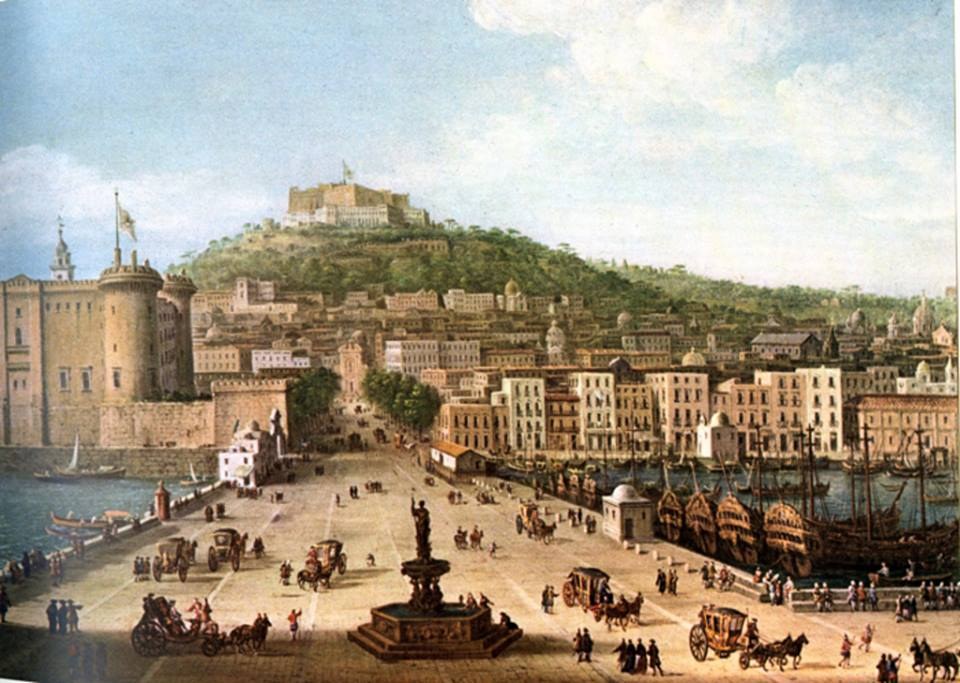
The Molo Grande with its lighthouse, in front of Castel Nuovo: today the area of the Molo Beverello and the Stazione Marittima.
Where: Molo Beverello, Via Acton, 80133 Napoli
Works and documents
AI reconstruction
Sources
J.W. Goethe, Italienische Reise, original German text (public domain).
Translated by A.J.W. Morrison (Goethe’s Travels in Italy, London, Bell; public domain).


