


Vesuvius · The second ascent
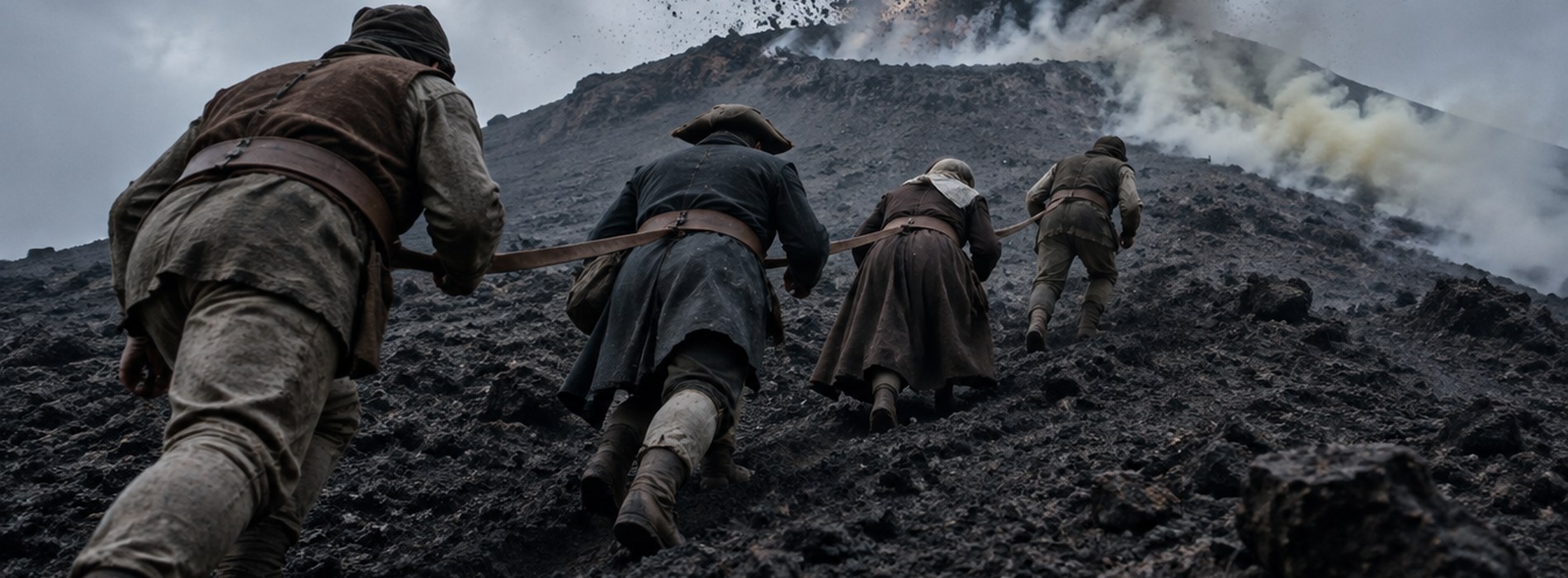
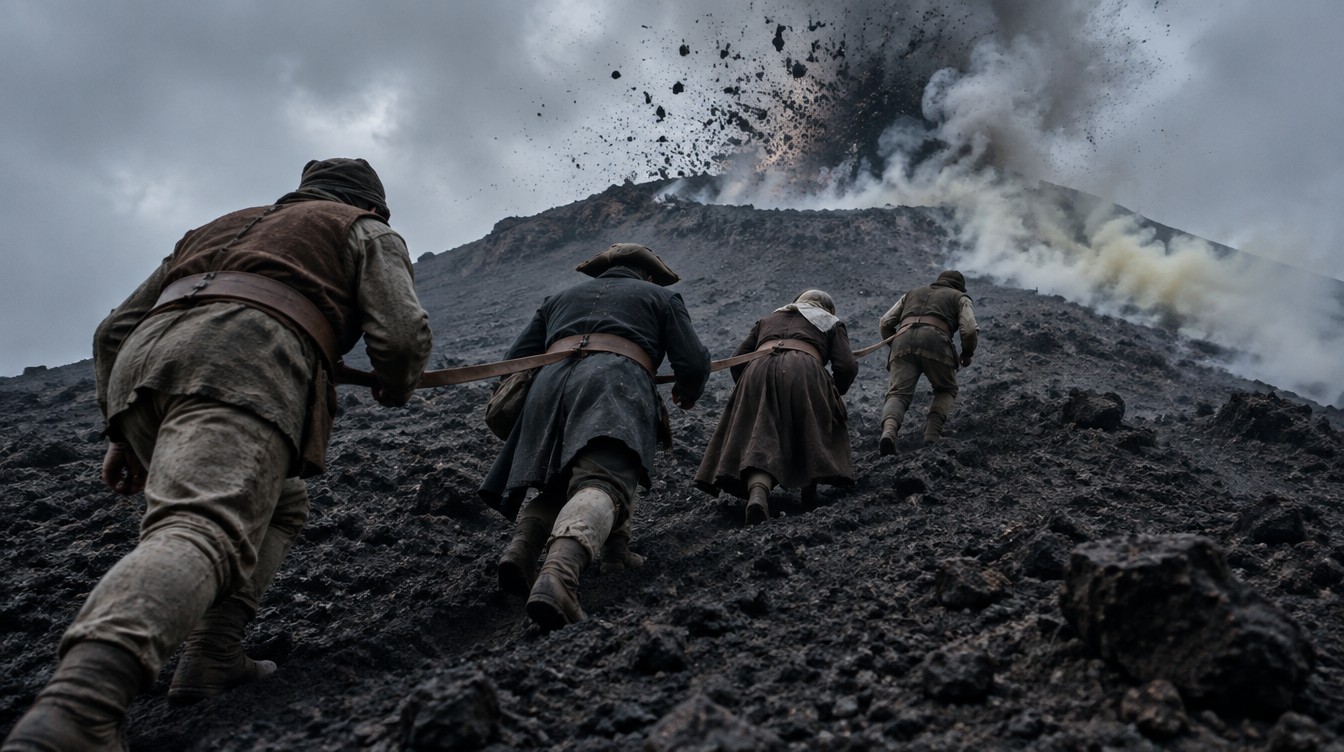
With Tischbein, who loathes the shapelessness of the volcano: two guides haul them up by a leather strap. Goethe times the pauses between eruptions and runs with the younger guide to the rim of the crater; the thunder surprises them and they come down covered in ash.
Naples, 6 March 1787
Most reluctantly, yet, for the sake of good-fellowship, Tischbein accompanied me to-day to Vesuvius. To him—the artist of form, who concerns himself with none but the most beautiful of human and animal shapes, and one also whose taste and judgment lead to humanise even the formless rock and landscape,—such a frightful and shapeless conglomeration of matter, which, moreover, is continually preying on itself, and proclaiming war against every idea of the beautiful, must have appeared utterly abominable.
We started in two caleches, as we did not trust ourselves to drive through the crowd and whirl of the city. The drivers kept up an incessant shouting at the top of their voice whenever donkeys with their loads of wood or rubbish, or rolling caleches met us, or else warning the porters with their burdens, or other pedestrians, whether children or old people to get out of the way. All the while, however, they drove at a sharp trot, without the least stop or check.
As you get into the remoter suburbs and gardens, the road soon begins to show signs of a Plutonic action. For as we had not had rain for a long time, the naturally evergreen leaves were covered with a thick gray and ashy dust; so that the glorious blue sky, and the scorching sun which shone down upon us, were the only signs that we were still among the living.
At the foot of the steep ascent, we were received by two guides, one old, the other young, but both active fellows. The first pulled me up the path, the other Tischbein,—pulled I say, for these guides are girded round the waist with a leathern belt, which the traveller takes hold of, and being drawn up by his guide, makes his way the easier with foot and staff. In this manner we reached the flat from which the cone rises: towards the north lay the ruins of the Somma.
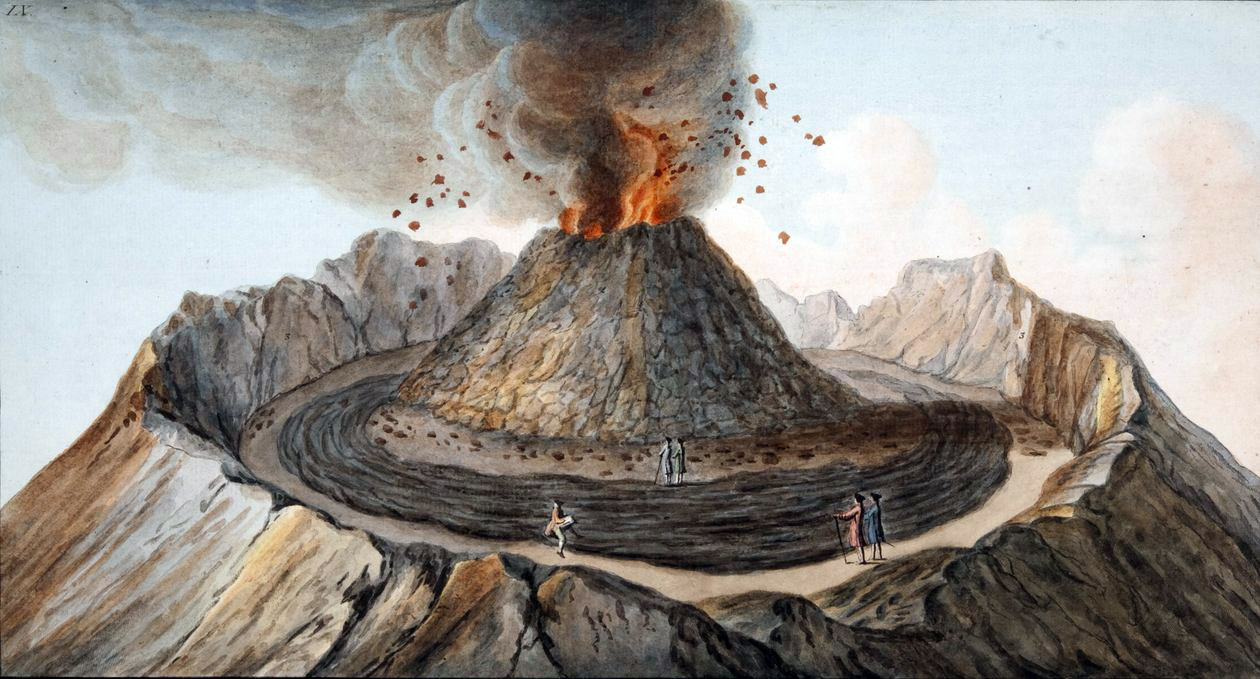
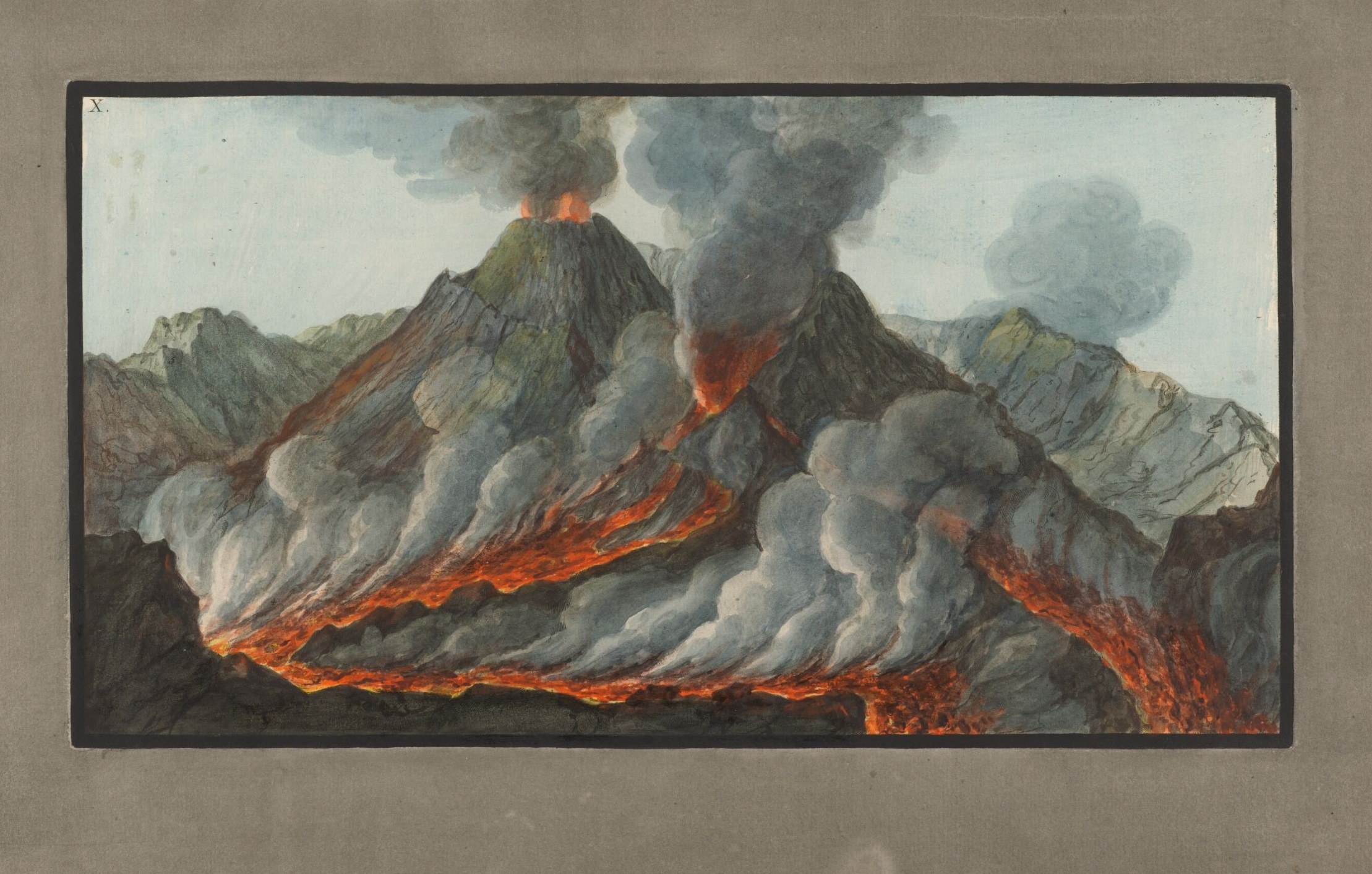
A glance westwards over the country beneath us, removed, as well as a bath could, all feeling of exhaustion and fatigue, and we now went round the ever-smoking cone, as it threw out its stones and ashes. Wherever the space allowed of our viewing it at a sufficient distance, it appeared a grand and elevating spectacle. In the first place, a violent thundering toned forth from its deepest abyss, then stones of larger and smaller sizes were showered into the air by thousands, and enveloped by clouds of ashes. The greatest part fell again into the gorge; the rest of the fragments, receiving a lateral inclination, and falling on the outside of the crater, made a marvellous rumbling noise. First of all the larger masses plumped against the side, and rebounded with a dull heavy sound; then the smaller came rattling down; and last of all, drizzled a shower of ashes. All this took place at regular intervals, which by slowly counting, we were able to measure pretty accurately.
Between the Somma, however, and the cone the space is narrow enough; moreover, several stones fell around us, and made the circuit anything but agreeable. Tischbein now felt more disgusted than ever with Vesuvius, as the monster, not content with being hateful, showed an inclination to become mischievous also.
As, however, the presence of danger generally exercises on man a kind of attraction, and calls forth a spirit of opposition in the human breast to defy it, I bethought myself that, in the interval of the eruptions, it would be possible to climb up the cone to the crater, and to get back before it broke out again. I held a council on this point with our guides under one of the overhanging rocks of the Somma, where, encamped in safety, we refreshed ourselves with the provisions we had brought with us. The younger guide was willing to run the risk with me; we stuffed our hats full of linen and silk handkerchiefs, and, staff in hand, we prepared to start, I holding on to his girdle.
The little stones were yet rattling around us, and the ashes still drizzling, as the stalwart youth hurried forth with me across the hot glowing rubble. We soon stood on the brink of the vast chasm, the smoke of which, although a gentle air was bearing it away from us, unfortunately veiled the interior of the crater, which smoked all round from a thousand crannies. At intervals, however, we caught sight through the smoke of the cracked walls of the rock. The view was neither instructive nor delightful; but for the very reason that one saw nothing, one lingered in the hope of catching a glimpse of something more; and so we forgot our slow counting. We were standing on a narrow ridge of the vast abyss: of a sudden the thunder pealed aloud; we ducked our heads involuntarily, as if that would have rescued us from the precipitated masses. The smaller stones soon rattled, and without considering that we had again an interval of cessation before us, and only too much rejoiced to have outstood the danger, we rushed down and reached the foot of the hill, together with the drizzling ashes, which pretty thickly covered our heads and shoulders.
Tischbein was heartily glad to see me again. After a little scolding and a little refreshment, I was able to give my especial attention to the old and new lava. And here the elder of the guides was able to instruct me accurately in the signs by which the age of the several strata was indicated. The older were already covered with ashes, and rendered quite smooth; the newer, especially those which had cooled slowly, presented a singular appearance. As, sliding along, they carried away with them the solid objects which lay on the surface, it necessarily happened that from time to time several would come into contact with each other, and these again being swept still further by the molten stream, and pushed one over the other, would eventually form a solid mass with wonderful jags and corners, still more strange even than the somewhat similarly formed piles of the icebergs. Among this fused and waste matter I found many great rocks, which, being struck with a hammer, present on the broken face a perfect resemblance to the primeval rock formation. The guides maintained that these were old lava from the lowest depths of the mountain, which are very often thrown up by the volcano.
Upon our return to Naples, we noticed some small houses of only one story, and of a remarkable appearance and singular build, without windows, and receiving all their light from the doors, which opened on the road. The inhabitants sit before them at the door from the morning to the night, when they at last retire to their holes.
The city, which in the evening is all of a tumult, though of a different kind from the day, extorted from me the wish that I might be able to stay here for some time, in order to sketch to the best of my powers the moving scene. It will not, however, be possible.
Original German text · Neapel, den 6. März 1787.
Obgleich ungern, doch aus treuer Geselligkeit, begleitete Tischbein mich heute auf den Vesuv. Ihm, dem bildenden Künstler, der sich nur immer mit den schönsten Menschen- und Tierformen beschäftigt, ja das Ungeformte selbst, Felsen und Landschaften, durch Sinn und Geschmack vermenschlicht, ihm wird eine solche furchtbare, ungestalte Aufhäufung, die sich immer wieder selbst verzehrt und allem Schönheitsgefühl den Krieg ankündigt, ganz abscheulich vorkommen.
Wir fuhren auf zwei Kalessen, weil wir uns als Selbstführer durch das Gewühl der Stadt nicht durchzuwinden getrauten. Der Fahrende schreit unaufhörlich: “Platz, Platz!”, damit Esel, Holz oder Kehricht Tragende, entgegenrollende Kalessen, lastschleppende oder frei wandelnde Menschen, Kinder und Greise sich vorsehen, ausweichen, ungehindert aber der scharfe Trab fortgesetzt werde.
Der Weg durch die äußersten Vorstädte und Gärten sollte schon auf etwas Plutonisches hindeuten. Denn da es lange nicht geregnet, waren von dickem, aschgrauem Staube die von Natur immergrünen Blätter überdeckt, alle Dächer, Gurtgesimse und was nur irgend eine Fläche bot, gleichfalls übergraut, so daß nur der herrliche blaue Himmel und die hereinscheinende mächtige Sonne ein Zeugnis gab, daß man unter den Lebendigen wandle.
Am Fuße des steilen Hanges empfingen uns zwei Führer, ein älterer und ein jüngerer, beides tüchtige Leute. Der erste schleppte mich, der zweite Tischbein den Berg hinauf. Sie schleppten, sage ich; denn ein solcher Führer umgürtet sich mit einem ledernen Riemen, in welchen der Reisende greift und, hinaufwärts gezogen, sich an einem Stabe auf seinen eigenen Füßen desto leichter emporhilft.
So erlangten wir die Fläche, über welcher sich der Kegelberg erhebt, gegen Norden die Trümmer der Somma.
Ein Blick westwärts über die Gegend nahm wie ein heilsames Bad alle Schmerzen der Anstrengung und alle Müdigkeit hinweg, und wir umkreisten nunmehr den immer qualmenden, Stein und Asche auswerfenden Kegelberg. Solange der Raum gestattete, in gehöriger Entfernung zu bleiben, war es ein großes, geisterhebendes Schauspiel. Erst ein gewaltsamer Donner, der aus dem tiefsten Schlunde hervortönte, sodann Steine, größere und kleinere, zu Tausenden in die Luft geschleudert, von Aschenwolken eingehüllt. Der größte Teil fiel in den Schlund zurück. Die andern, nach der Seite zu getriebenen Brocken, auf die Außenseite des Kegels niederfallend, machten ein wunderbares Geräusch: erst plumpten die schwereren und hupften mit dumpfem Getön an die Kegelseite hinab, die geringeren klapperten hinterdrein, und zuletzt rieselte die Asche nieder. Dieses alles geschah in regelmäßigen Pausen, die wir durch ein ruhiges Zählen sehr wohl abmessen konnten.
Zwischen der Somma und dem Kegelberge ward aber der Raum enge genug, schon fielen mehrere Steine um uns her und machten den Umgang unerfreulich. Tischbein fühlte sich nunmehr auf dem Berge noch verdrießlicher, da dieses Ungetüm, nicht zufrieden, häßlich zu sein, auch noch gefährlich werden wollte.
Wie aber durchaus eine gegenwärtige Gefahr etwas Reizendes hat und den Widerspruchsgeist im Menschen auffordert, ihr zu trotzen, so bedachte ich, daß es möglich sein müsse, in der Zwischenzeit von zwei Eruptionen den Kegelberg hinauf an den Schlund zu gelangen und auch in diesem Zeitraum den Rückweg zu gewinnen. Ich ratschlagte hierüber mit den Führern unter einem überhängenden Felsen der Somma, wo wir, in Sicherheit gelagert, uns an den mitgebrachten Vorräten erquickten. Der jüngere getraute sich, das Wagestück mit mir zu bestehen, unsere Hutköpfe fütterten wir mit leinenen und seidenen Tüchern, wir stellten uns bereit, die Stäbe in der Hand, ich seinen Gürtel fassend.
Noch klapperten die kleinen Steine um uns herum, noch rieselte die Asche, als der rüstige Jüngling mich schon über das glühende Gerölle hinaufriß. Hier standen wir an dem ungeheuren Rachen, dessen Rauch eine leise Luft von uns ablenkte, aber zugleich das Innere des Schlundes verhüllte, der ringsum aus tausend Ritzen dampfte. Durch einen Zwischenraum des Qualmes erblickte man hie und da geborstene Felsenwände. Der Anblick war weder unterrichtend noch erfreulich, aber eben deswegen, weil man nichts sah, verweilte man, um etwas herauszusehen. Das ruhige Zählen war versäumt, wir standen auf einem scharfen Rande vor dem ungeheuern Abgrund. Auf einmal erscholl der Donner, die furchtbare Ladung flog an uns vorbei, wir duckten uns unwillkürlich, als wenn uns das vor den niederstürzenden Massen gerettet hätte; die kleineren Steine klapperten schon, und wir, ohne zu bedenken, daß wir abermals eine Pause vor uns hatten, froh, die Gefahr überstanden zu haben, kamen mit der noch rieselnden Asche am Fuße des Kegels an, Hüte und Schultern genugsam eingeäschert.
Von Tischbein aufs freundlichste empfangen, gescholten und erquickt, konnte ich nun den älteren und neueren Laven eine besondere Aufmerksamkeit widmen. Der betagte Führer wußte genau die Jahrgänge zu bezeichnen. Ältere waren schon mit Asche bedeckt und ausgeglichen, neuere, besonders die langsam geflossenen, boten einen seltsamen Anblick; denn indem sie, fortschleichend, die auf ihrer Oberfläche erstarrten Massen eine Zeitlang mit sich hinschleppen, so muß es doch begegnen, daß diese von Zeit zu Zeit stocken, aber, von den Glutströmen noch fortbewegt, übereinander geschoben, wunderbar zackig erstarrt verharren, seltsamer als im ähnlichen Fall die übereinander getriebenen Eisschollen. Unter diesem geschmolzenen wüsten Wesen fanden sich auch große Blöcke, welche, angeschlagen, auf dem frischen Bruch einer Urgebirgsart völlig ähnlich sehen. Die Führer behaupteten, es seien alte Laven des tiefsten Grundes, welche der Berg manchmal auswerfe.
Auf unserer Rückkehr nach Neapel wurden mir kleine Häuser merkwürdig, einstöckig, sonderbar gebaut, ohne Fenster, die Zimmer nur durch die auf die Straße gehende Türe erleuchtet. Von früher Tageszeit bis in die Nacht sitzen die Bewohner davor, da sie sich denn zuletzt in ihre Höhlen zurückziehen.
Die auf eine etwas verschiedene Weise am Abend tumultuierende Stadt entlockte mir den Wunsch, einige Zeit hier verweilen zu können, um das bewegliche Bild nach Kräften zu entwerfen. Es wird mir nicht so wohl werden.
Today
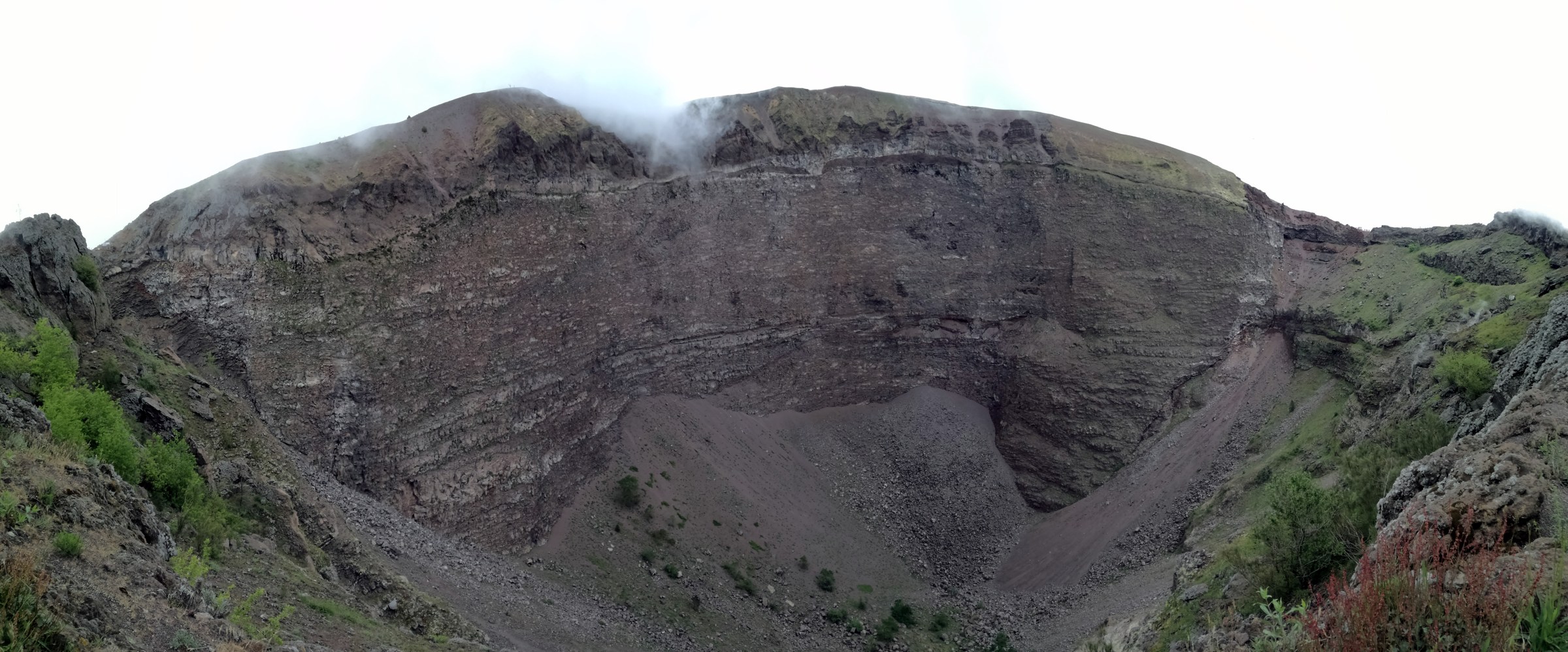
The Great Cone of Vesuvius; the plain at the foot of the cone, below the ruins of Monte Somma, is the Atrio del Cavallo (probable).
Where: Gran Cono del Vesuvio, Parco Nazionale del Vesuvio, Ercolano (NA)
Works and documents
AI reconstruction
Further reading
Sources
J.W. Goethe, Italienische Reise, original German text (public domain).
Translated by A.J.W. Morrison (Goethe’s Travels in Italy, London, Bell; public domain).


