


Naples · Via Toledo and the Molo
Boys soaking up the last warmth of a wheel-rim heated on the paving, the boundless crowd in which Goethe feels alone and calm, the blood of San Gennaro against the nearby inferno, a Pulcinella quarrelling with a monkey on the Molo and the fritter-makers of St Joseph’s Day: the people of Naples in March.
Naples, 12 March 1787
To-day, according to my custom, I have gone slowly through the city, noting several points, for a future description of it, of which unfortunately I cannot communicate anything to-day. All tends to this one conclusion: that a highly-favored land, which furnishes in abundance the chief necessaries of existence, produces men also of a happy disposition, who, without trouble or anxiety, trust to to-morrow to bring them what to-day has been wanting, and consequently live on in a lighthearted careless sort of life. Momentary gratification, moderate enjoyments, a passing sorrow, and a cheerful resignation!
The morning has been cold and damp, with a little rain. In my walk I came upon a spot where the great slabs of the pavement appeared swept quite clean. To my great surprise I saw, on this smooth and even spot, a number of ragged boys squatting in a circle, and spreading out their hands over the ground, as if to warm them. At first I took it to be some game that they were playing; when, however, I noticed the perfect seriousness and composure of their countenances, with an expression on it of a gratified want, I therefore put my brains to the utmost stretch, but they refused to enlighten me as I desired. I was, therefore, obliged to ask what it could be that had induced these little imps to take up this strange position, and had collected them in so regular a circle.
Upon this I was informed that a neighbouring smith had been heating the tire of a wheel, and that this is done in the following manner:—The iron tire is laid on the pavement, and around is as much oak chips as is considered sufficient to soften the iron to the required degree. The lighted wood burns away, the tire is riveted to the wheel, and the ashes carefully swept up. The little vagabonds take advantage of the heat communicated to the pavement, and do not leave the spot till they have drawn from it the last radiation of warmth. Similar instances of contentedness, and sharp-witted profiting by what otherwise would be wasted, occur here in great number. I notice in this people the most shrewd and active industry, not to make riches, but to live free from care.
Original German text · Neapel, Montag, den 12. März.
Heute schlich ich beobachtend meiner Weise nach durch die Stadt und notierte mir viele Punkte zu dereinstiger Schilderung derselben, davon ich leider gegenwärtig nichts mitteilen kann. Alles deutet dahin, daß ein glückliches, die ersten Bedürfnisse reichlich anbietendes Land auch Menschen von glücklichem Naturell erzeugt, die ohne Kümmernis erwarten können, der morgende Tag werde bringen, was der heutige gebracht, und deshalb sorgenlos dahin leben. Augenblickliche Befriedigung, mäßiger Genuß, vorübergehender Leiden heiteres Dulden! – Von dem letzteren ein artiges Beispiel.
Der Morgen war kalt und feuchtlich, es hatte wenig geregnet. Ich gelangte auf einen Platz, wo die großen Quadern des Pflasters reinlich gekehrt erschienen. Zu meiner großen Verwunderung sah ich auf diesem völlig ebenen, gleichen Boden eine Anzahl zerlumpter Knaben im Kreise kauzend, die Hände gegen den Boden gewendet, als wenn sie sich wärmten. Erst hielt ich’s für eine Posse, als ich aber ihre Mienen völlig ernsthaft und beruhigt sah wie bei einem befriedigten Bedürfnis, so strengte ich meinen Scharfsinn möglichst an, er wollte mich aber nicht begünstigen. Ich mußte daher fragen, was denn diese Äffchen zu der sonderbaren Positur verleite und sie in diesen regelmäßigen Kreis versammle.
Hierauf erfuhr ich, daß ein anwohnender Schmied auf dieser Stelle eine Radschiene heiß gemacht, welches auf folgende Weise geschieht. Der eiserne Reif wird auf den Boden gelegt und auf ihn im Kreise so viel Eichenspäne gehäuft, als man nötig hält, ihn bis auf den erforderlichen Grad zu erweichen. Das entzündete Holz brennt ab, die Schiene wird ums Rad gelegt und die Asche sorgfältig weggekehrt. Die dem Pflaster mitgeteilte Wärme benutzen sogleich die kleinen Huronen und rühren sich nicht eher von der Stelle, als bis sie den letzten warmen Hauch ausgezogen haben. Beispiele solcher Genügsamkeit und aufmerksamen Benutzens dessen, was sonst verlorenginge, gibt es hier unzählige. Ich finde in diesem Volk die lebhafteste und geistreichste Industrie, nicht um reich zu werden, sondern um sorgenfrei zu leben.
Naples, 17 March 1787
When I would write words, images only start before my eyes,—the beautiful land, the free sea; the hazy islands, the roaring mountain;—powers to delineate all this fail me.
Here in this country one at last understands how it ever came into the head of man to till the ground—here where it produces everything, and where one may look for as many as from three to five crops in the year.
I have seen much, and reflected still more. The world opens itself to me more and more—all even that I have long known is at last becoming my own. How quick to know, but how slow to put in practice, is the human creature!
The only pity is, that I cannot at each moment communicate to others my observations. But, both as man and artist, one is here driven backwards and forwards by a hundred ideas of his own, while his services are put in requisition by hundreds of persons. His situation is peculiar and strange; he cannot freely sympathize with another’s being, because he finds his own exertions so put to the stretch.
And after all, the world is nothing but a wheel; in its whole periphery it is every where similar, but, nevertheless, it appears to us so strange, because we ourselves are carried round with it.
What I always said has actually come to pass: in this land alone do I begin to understand and to unravel many a phenomenon of nature, and complication of opinion. I am gathering from every quarter, and shall bring back with me a great deal,—certainly much love of my own native land, and joy to live with a few dear friends.
With regard to my Sicilian tour, the gods still hold the scales in their hands: the index still wavers.
Who can the friend be who has thus mysteriously announced? Only, may I not neglect him in my pilgrimage and tour in the island!
The frigate from Palermo has returned: in eight days she sets sail again. Whether I shall sail with it, and be back at Rome by Passion Week, I have not as yet determined. Never in my life have I been so undecided: a trifle will turn the scale.
With men I get on rather better: for I feel that one must weigh them by avoirdupois weight, and not by the jeweller’s scales; as, unfortunately, friends too often weigh one another in their hypochondriacal humours and in an over-exacting spirit.
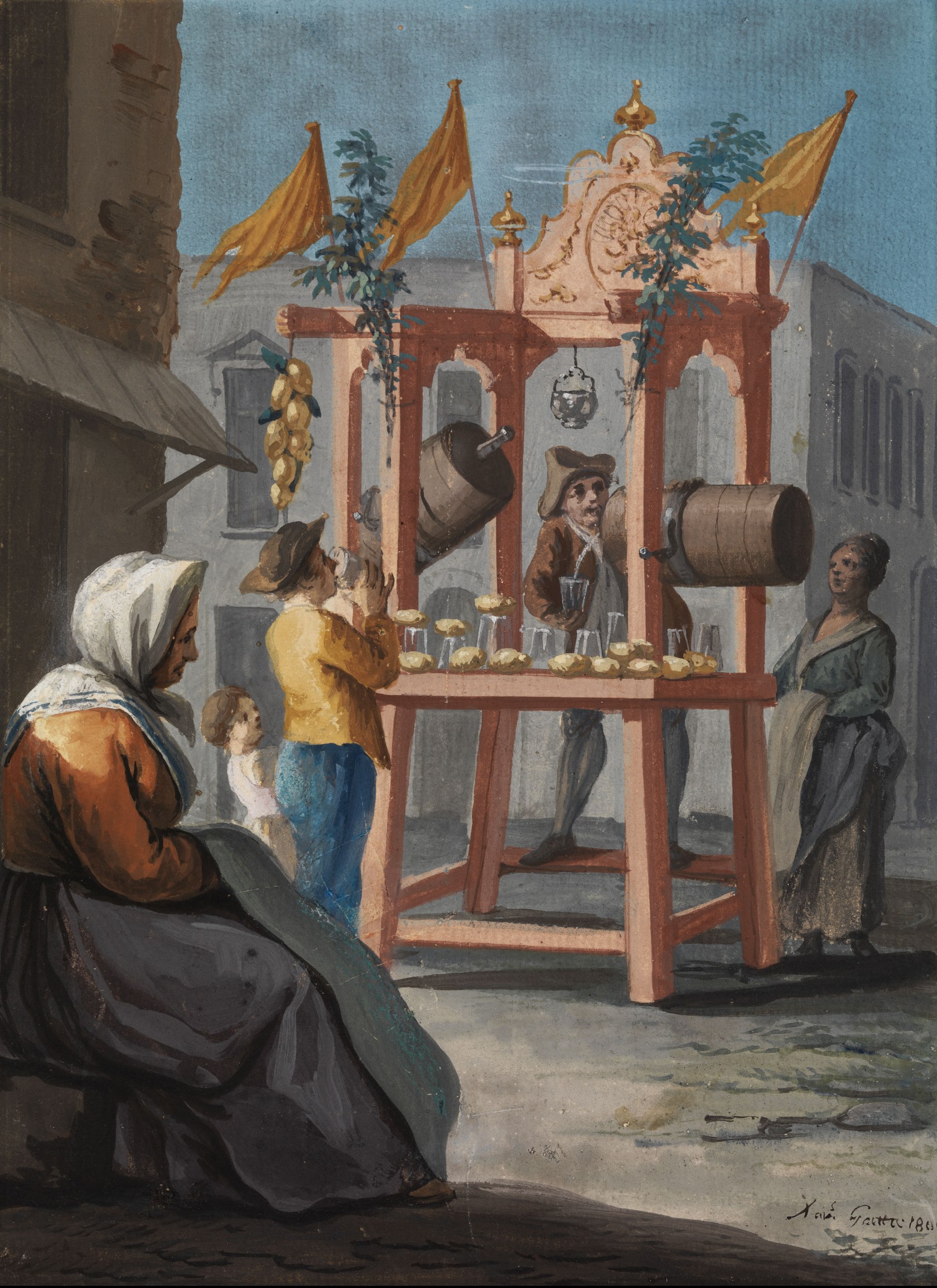
Here men know nothing of one another; they scarcely observe that others are also going on their way, side by side with them. They run all day backwards and forwards in a Paradise, without looking around them; and if the neighbouring jaws of hell begin to open and to rage, they have recourse to S. Januarius.
To pass through such a countless multitude, with its restless excitement, is strange, but salutary. Here they are all crossing and recrossing one another, and yet every one finds his way and his object. In so great a crowd and bustle I feel myself perfectly calm and solitary; the more bustling the streets become, the more quietly I move.
Often do I think of Rousseau and his hypochondriacal discontent; and I can thoroughly understand how so fine an organization may have been deranged. Did I not myself feel such sympathy with natural objects; and did I not see that, in the apparent perplexity, a hundred seemingly contrary observations admit of being reconciled, and arranged side by side, just as the geometer by a cross line tests many measurements, I should often think myself mad.
Original German text · Neapel, den 17. März 1787
Neapel, zum 17. März.
Wenn ich Worte schreiben will, so stehen mir immer Bilder vor Augen des fruchtbaren Landes, des freien Meeres, der duftigen Inseln, des rauchenden Berges, und mir fehlen die Organe, das alles darzustellen.
Hierzulande begreift man erst, wie es dem Menschen einfallen konnte, das Feld zu bauen, hier, wo der Acker alles bringt, und wo man drei bis fünf Ernten des Jahres hoffen kann. In den besten Jahren will man auf demselben Acker dreimal Mais gebaut haben.
Ich habe viel gesehen und noch mehr gedacht: die Welt eröffnet sich mehr und mehr, auch alles, was ich schon lange weiß, wird mir erst eigen. Welch ein früh wissendes und spät übendes Geschöpf ist doch der Mensch!
Nur schade, daß ich nicht in jedem Augenblick meine Beobachtungen mitteilen kann; zwar ist Tischbein mit mir, aber als Mensch und Künstler wird er von tausend Gedanken hin und her getrieben, von hundert Personen in Anspruch genommen. Seine Lage ist eigen und wunderbar, er kann nicht freien Teil an eines andern Existenz nehmen, weil er sein eignes Bestreben so eingeengt fühlt.
Und doch ist die Welt nur ein einfach Rad, in dem ganzen Umkreise sich gleich und gleich, das uns aber so wunderlich vorkommt, weil wir selbst mit herumgetrieben werden.
Was ich mir immer sagte, ist eingetroffen: daß ich so manche Phänomene der Natur und manche Verworrenheiten der Meinungen erst in diesem Lande verstehen und entwickeln lerne. Ich fasse von allen Seiten zusammen und bringe viel zurück, auch gewiß viel Vaterlandsliebe und Freude am Leben mit wenigen Freunden. über meine sizilianische Reise halten die Götter noch die Waage in Händen; das Zünglein schlägt herüber und hinüber.
Wer mag der Freund sein, den man mir so geheimnisvoll ankündigt? Daß ich ihn nur nicht über meiner Irr- und Inselfahrt versäume!
Die Fregatte von Palermo ist wieder zurück, heut über acht Tage geht sie abermals von hier ab; ob ich noch mitsegele, zur Karwoche nach Rom zurückkehre, weiß ich nicht. Noch nie bin ich so unentschieden gewesen; ein Augenblick, eine Kleinigkeit mag entscheiden.
Mit den Menschen geht mir es schon besser, man muß sie nur mit dem Krämergewicht, keineswegs mit der Goldwaage wiegen, wie es leider sogar oft Freunde untereinander aus hypochondrischer Grille und seltsamer Anforderung zu tun pflegen.
Hier wissen die Menschen gar nichts voneinander, sie merken kaum, daß sie nebeneinander hin und her laufen; sie rennen den ganzen Tag in einem Paradiese hin und wider, ohne sich viel umzusehen, und wenn der benachbarte Höllenschlund zu toben anfängt, hilft man sich mit dem Blute des heiligen Januarius, wie sich die übrige Welt gegen Tod und Teufel auch wohl mit – Blute hilft oder helfen möchte.
Zwischen einer so unzählbaren und rastlos bewegten Menge durchzugehen, ist gar merkwürdig und heilsam. Wie alles durcheinander strömt und doch jeder einzelne Weg und Ziel findet. In so großer Gesellschaft und Bewegung fühl’ ich mich erst recht still und einsam; je mehr die Straßen toben, desto ruhiger werd’ ich.
Manchmal gedenke ich Rousseaus und seines hypochondrischen Jammers, und doch wird mir begreiflich, wie eine so schöne Organisation verschoben werden konnte. Fühlt’ ich nicht solchen Anteil an den natürlichen Dingen und säh’ ich nicht, daß in der scheinbaren Verwirrung hundert Beobachtungen sich vergleichen und ordnen lassen, wie der Feldmesser mit einer durchgezogenen Linie viele einzelne Messungen probiert, ich hielte mich oft selbst für toll.
Naples, 19 March 1787
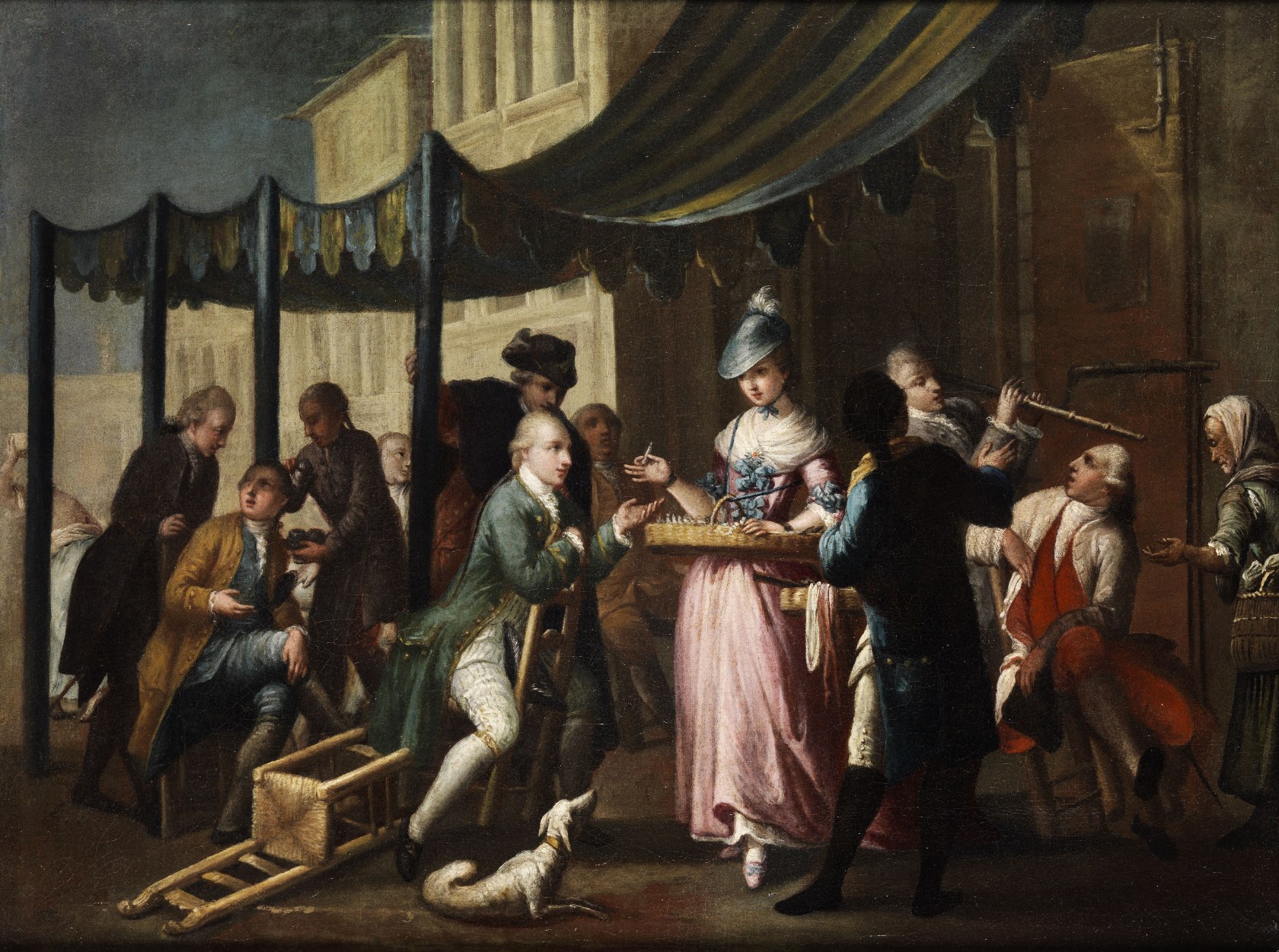
One needs only to walk along the streets, and keep one’s eyes well open, and one is sure to see the most unequalled of scenes. At the Mole, one of the noisiest quarters of the city, I saw yesterday a Pulcinello, who on a temporary stage of planks was quarrelling with an ape, while from a balcony above a right pretty maiden was exposing her charms to every eye. Not far from the ape and his stage a quack doctor was recommending to the credulous crowd his nostrums for every evil. Such a scene painted by a Gerard Dow would not fail to charm contemporaries and posterity.
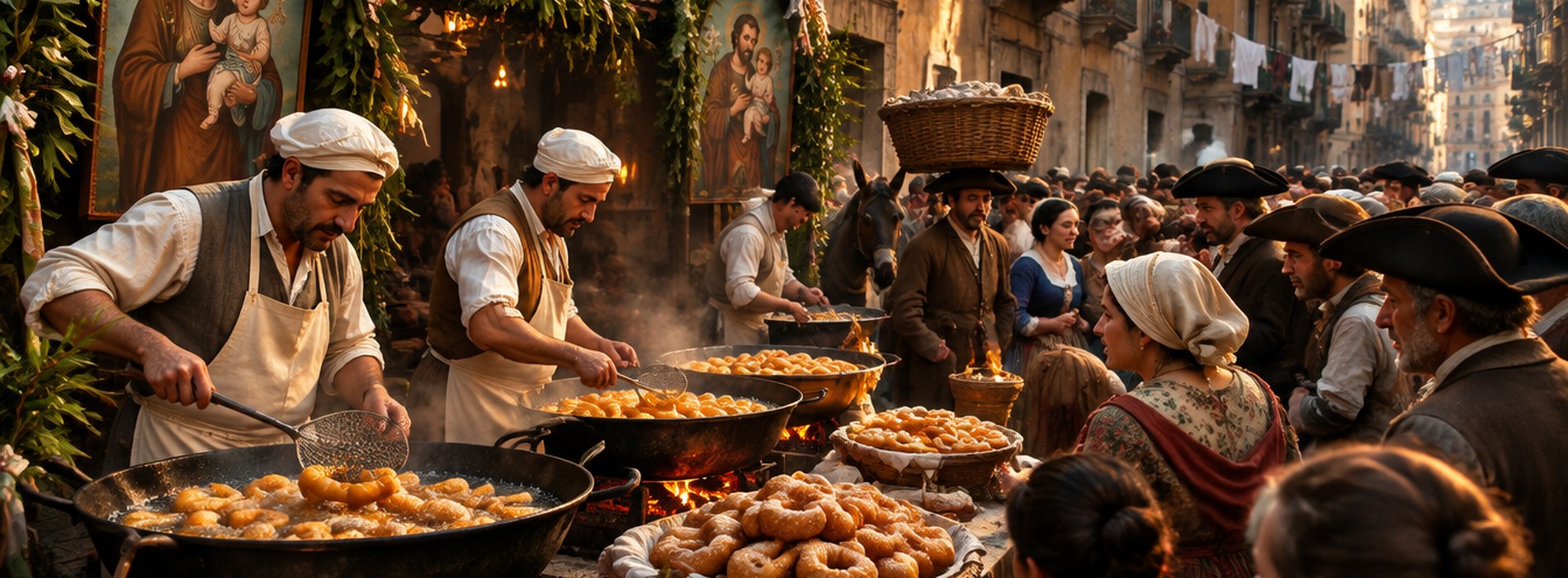
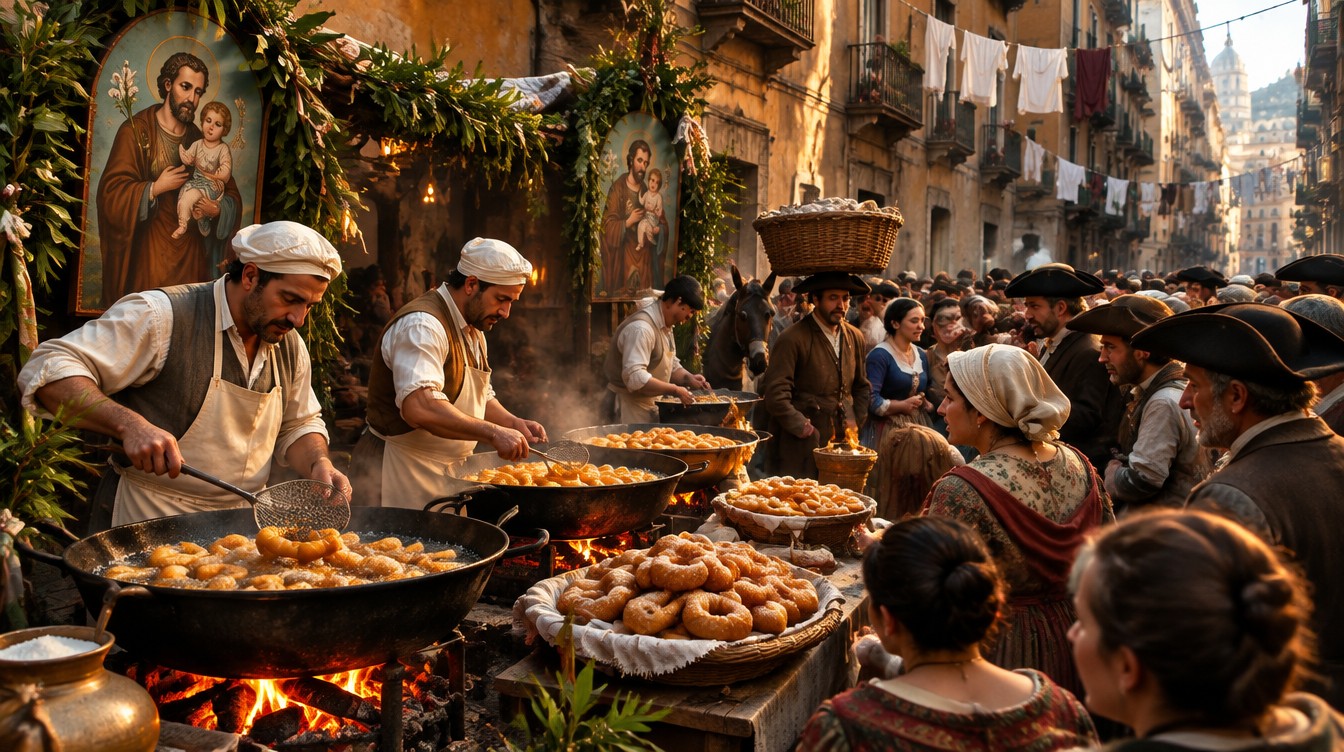
To-day, moreover, was the festival of S. Joseph. He is the patron of all Fritaruoli—that is, pastry-cooks, and understands baking in a very extensive sense. Because beneath the black and seething oil hot flames will, of course, rage,—therefore, every kind of torture by fire falls within his province. Accordingly, yesterday evening, being the eve of the Saint’s day, the fronts of the houses were adorned with pictures, to the best of the inmates’ skill, representing souls in Purgatory, or the Last Judgment, with plenty of fire and flame. Before the doors frying-pans were hissing on hastily-constructed hearths. One partner was working the dough, another shaped it into twists, and threw it into the boiling lard; a third stood by the frying-pan, holding a short skewer, with which he drew out the twists as soon as they were done, and shoved them off on another skewer to a fourth party, who offered them to the bystanders. The two last were generally young apprentices, and wore white curly wigs,—this head-dress being the Neapolitan symbol of an angel. Other figures besides completed the group; and these were busy in presenting wine to the busy cooks, or in drinking themselves, crying, and puffing the article all the while; the angels, too, and cooks were all clamouring. The people crowded to buy—for all pastry is sold cheap on this evening, and a part of the profits given to the poor.
Scenes of this kind may be witnessed without end. Thus fares it every day; always something new—some fresh absurdity. The variety of costume, too, that meets you in the streets; the multitude, too, of passages in the Toledo street alone!
Thus there is plenty of most original entertainment, if only one will live with the people; it is so natural, that one almost becomes natural oneself. For this is the original birth-place of Pulcinello, the true national mask—the Harlequin of Pergamo, and the Hanswurth of the Tyrol. This Pulcinello now is a thoroughly easy, sedate, somewhat indifferent, perhaps lazy, and yet humorous fellow. And so one meets everywhere with a “Kellner” and a “Hausknecht.” With ours I had special fun yesterday, and yet there was nothing more than my sending him to fetch some paper and pens. A half misunderstanding, a little loitering, good humour and roguery, produced a most amusing scene, which might be very successfully brought out on any stage.
Original German text · Neapel, Montag, den 19. März 1787.
Neapel, zum 19. März.
Man darf nur auf der Straße wandeln und Augen haben, man sieht die unnachahmlichsten Bilder.
Am Molo, einer Hauptlärmecke der Stadt, sah ich gestern einen Pulcinell, der sich auf einem Brettergerüste mit einem kleinen Affen stritt, drüber einen Balkon, auf dem ein recht artiges Mädchen ihre Reize feilbot. Neben dem Affengerüste ein Wunderdoktor, der seine Arkana gegen alle übel den bedrängten Gläubigen darbot; von Gerhard Dow gemalt, hätte solch ein Bild verdient, Zeitgenossen und Nachwelt zu ergötzen.
So war auch heute Fest des heiligen Josephs; er ist der Patron aller Frittaruolen, d. h. Gebacknesmacher, versteht sich Gebacknes im gröbsten Sinne. Weil nun immerfort starke Flammen unter schwarzem und siedendem Öl hervorschlagen, so gehört auch alle Feuerqual in ihr Fach; deswegen hatten sie gestern abend vor den Häusern mit Gemälden zum besten aufgeputzt: Seelen im Fegfeuer, Jüngste Gerichte glühten und flammten umher. Große Pfannen standen vor der Türe auf leicht gebauten Herden. Ein Gesell wirkte den Teig, ein anderer formte, zog ihn zu Kringlen und warf sie in die siedende Fettigkeit. An der Pfanne stand ein dritter, mit einem kleinen Bratspieße, er holte die Kringlen, wie sie gar wurden, heraus, schob sie einem vierten auf ein ander Spießchen, der sie den Umstehenden anbot; die beiden letzten waren junge Burschen mit blonden und lockenreichen Perücken, welches hier Engel bedeutet. Noch einige Figuren vollendeten die Gruppe, reichten Wein den Beschäftigten, tranken selbst und schrieen, die Ware zu loben; auch die Engel, die Köche, alle schrieen. Das Volk drängte sich herzu; denn alles Gebackene wird diesen Abend wohlfeiler gegeben und sogar ein Teil der Einnahme den Armen.
Dergleichen könnte man endlos erzählen; so geht es mit jedem Tage, immer etwas Neues und Tolleres, nur die Mannigfaltigkeit von Kleidern, die einem auf der Straße begegnet, die Menge Menschen in der einzigen Straße Toledo!
Und so gibt es noch manche originale Unterhaltung, wenn man mit dem Volke lebt; es ist so natürlich, daß man mit ihm natürlich werden könnte. Da ist z. B. der Pulcinell, die eigentliche Nationalmaske, der Harlekin, aus Bergamo, Hanswurst, aus Tirol gebürtig. Pulcinell nun, ein wahrhaft gelassener, ruhiger, bis auf einen gewissen Grad gleichgültiger, beinahe fauler und doch humoristischer Knecht. Und so findet man überall Kellner und Hausknecht. Mit dem unsrigen macht’ ich mir heute eine besondere Lust, und es war weiter nichts, als daß ich ihn schickte, Papier und Federn zu holen. Halber Mißverstand, Zaudern, guter Wille und Schalkheit brachte die anmutigste Szene hervor, die man auf jedem Theater mit Glück produzieren könnte.
Today
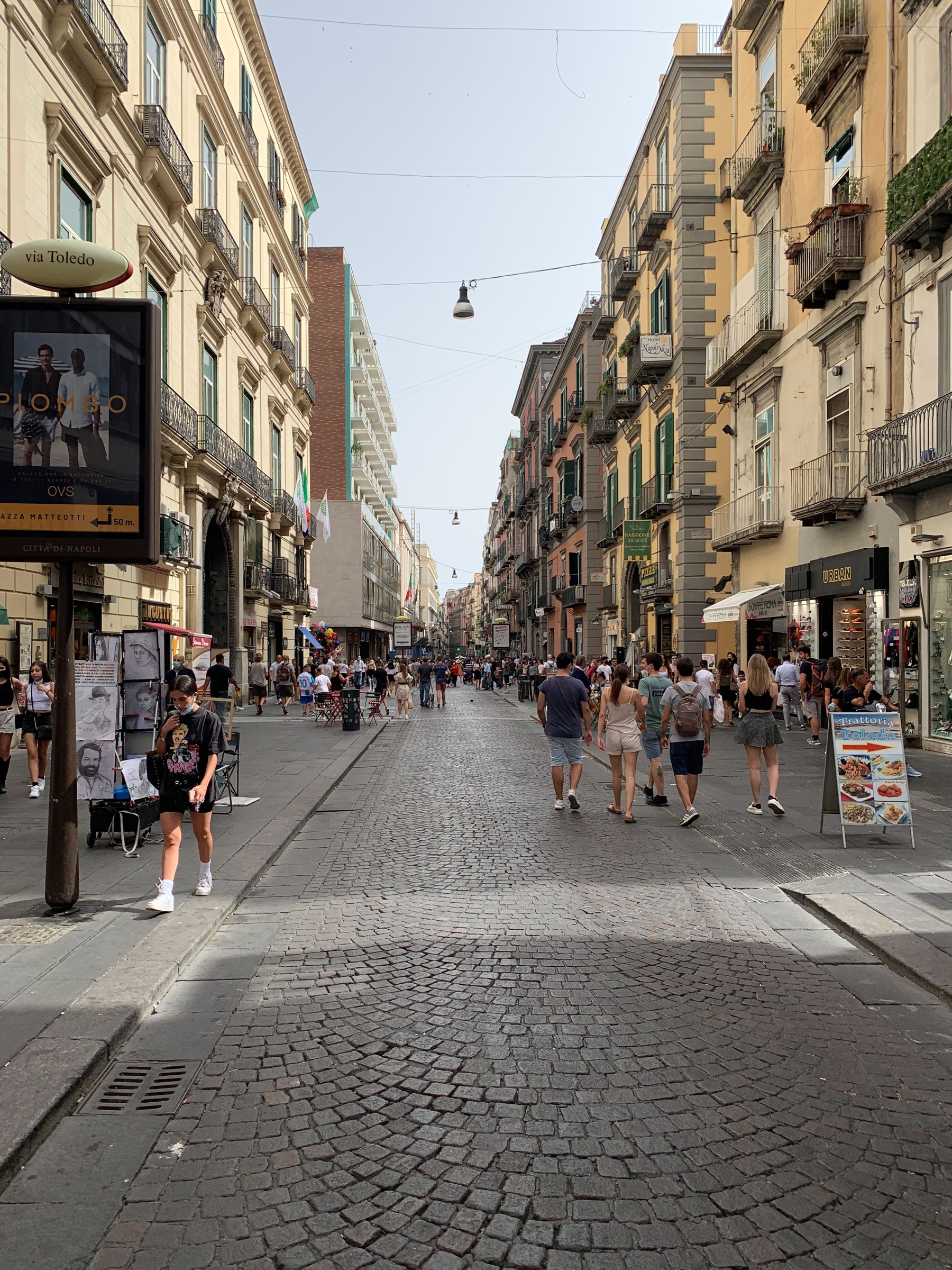
Via Toledo, the Molo and the surrounding alleys; the square with the boys on the warm paving is not named.
Where: Via Toledo, 80134 Napoli
Works and documents
AI reconstruction
Further reading
Sources
J.W. Goethe, Italienische Reise, original German text (public domain).
Translated by A.J.W. Morrison (Goethe’s Travels in Italy, London, Bell; public domain).


