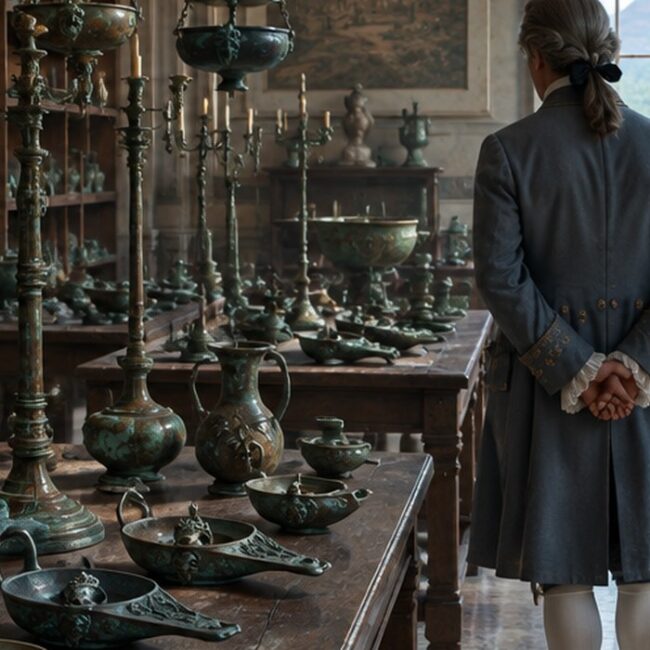
At the Portici museum drawing and note-taking are forbidden, and perhaps for that reason one looks all the better.
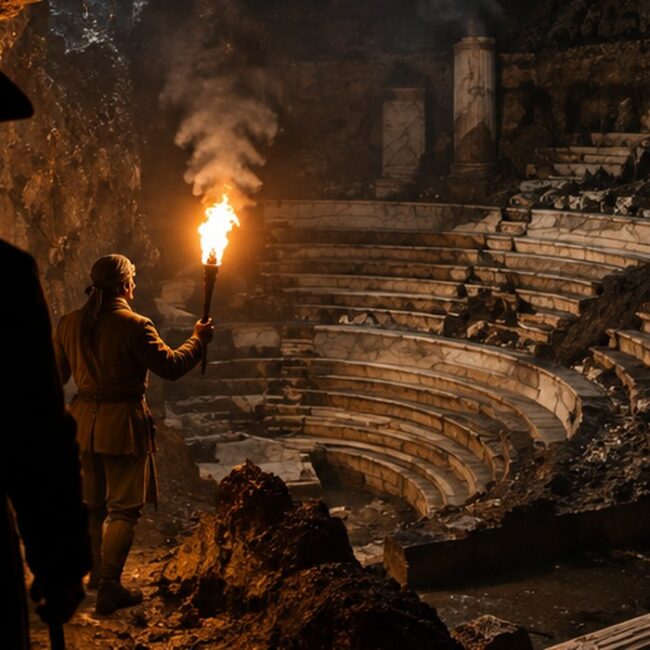
The city at the foot of Vesuvius lies buried under sixty feet of material.
A guest of Hackert in the old palace, beside the new one «like the Escorial».
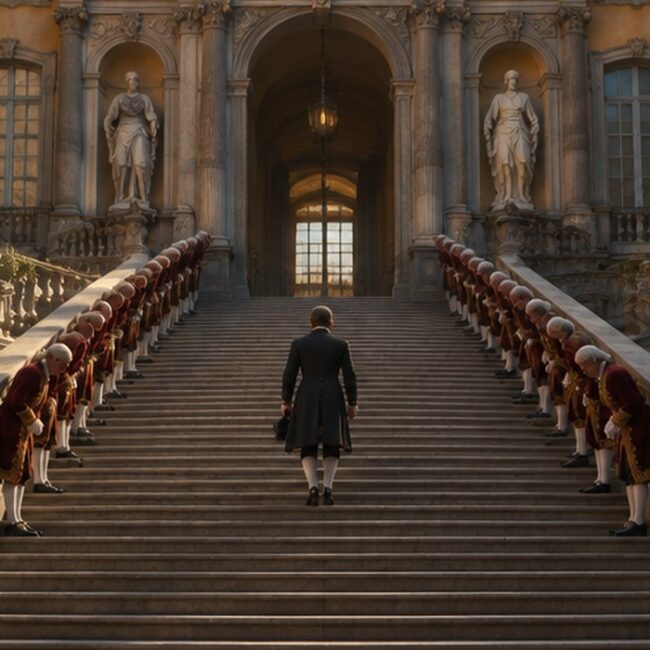
Believing her as poor as the Filangieris, Goethe finds himself in the little princess's sumptuous palace, with liveried servants lining the stairs: he feels like the sultan in Wieland's fairy tale.
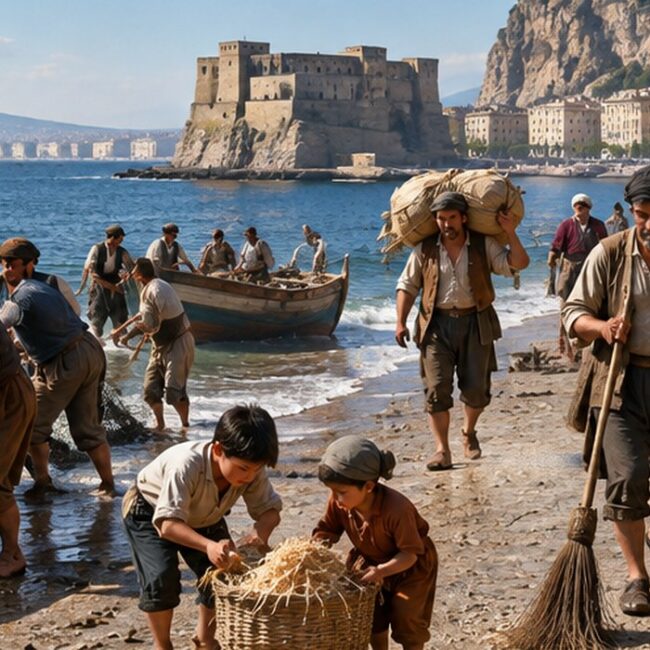
Against Volkmann's guidebook and its «forty thousand idlers», Goethe goes hunting for lazzaroni and finds only people at work: porters, fishermen, children gathering wood shavings, street sweepers with their donkeys.
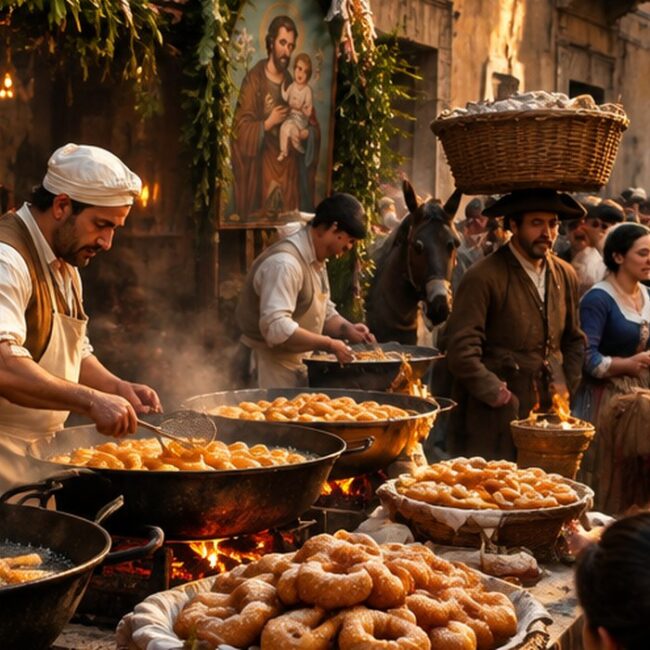
Boys soaking up the last warmth of a wheel-rim heated on the paving, the boundless crowd in which Goethe feels alone and calm, the blood of San Gennaro against the nearby inferno, a Pulcinella quarrelling with a monkey on the Molo and the fritter-makers of St Joseph's Day: the people of Naples in March.
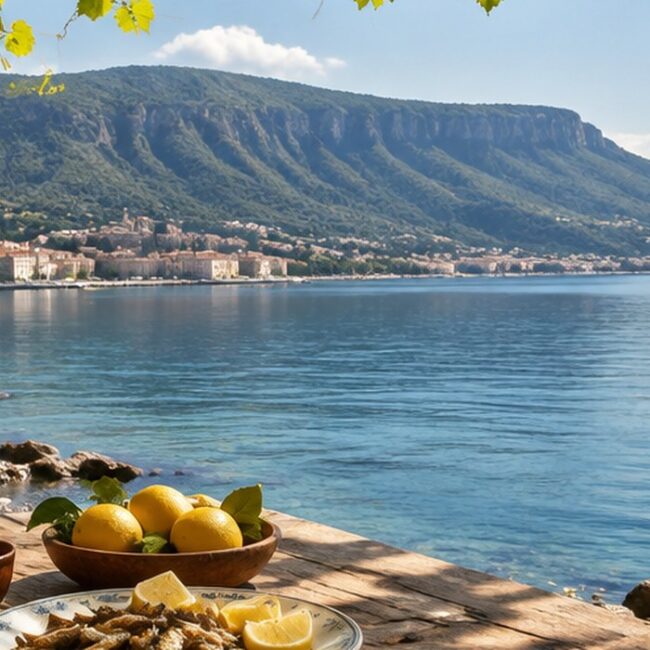
The strange, half unpleasant impression of the mummified city is washed away by a frugal meal under the arbour of a small inn by the sea.
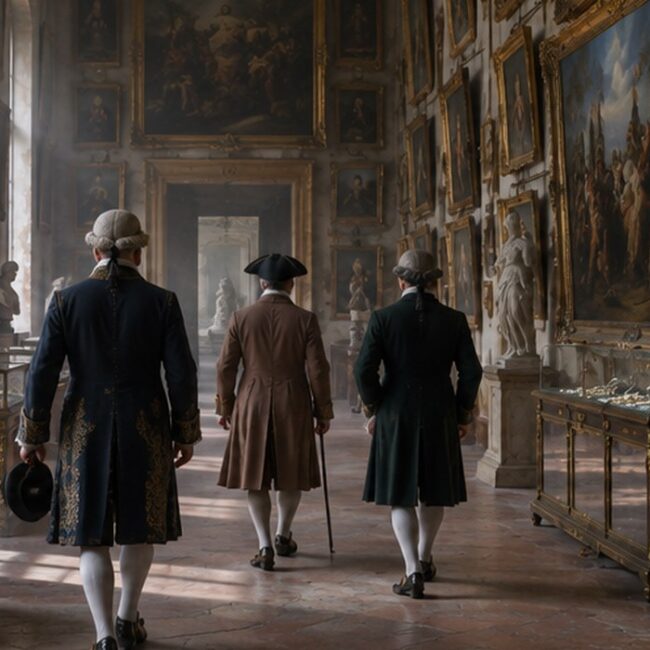
With the Prince of Waldeck to the great collection of paintings, coins and gems at Capodimonte.
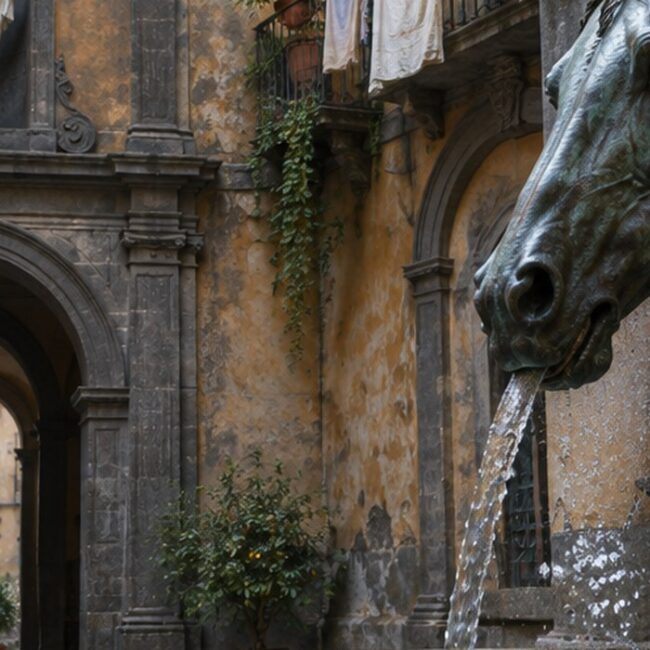
In the courtyard of the Palazzo Colubrano, above a fountain, the colossal bronze horse's head: mighty brow, quivering nostrils, pricked ears.
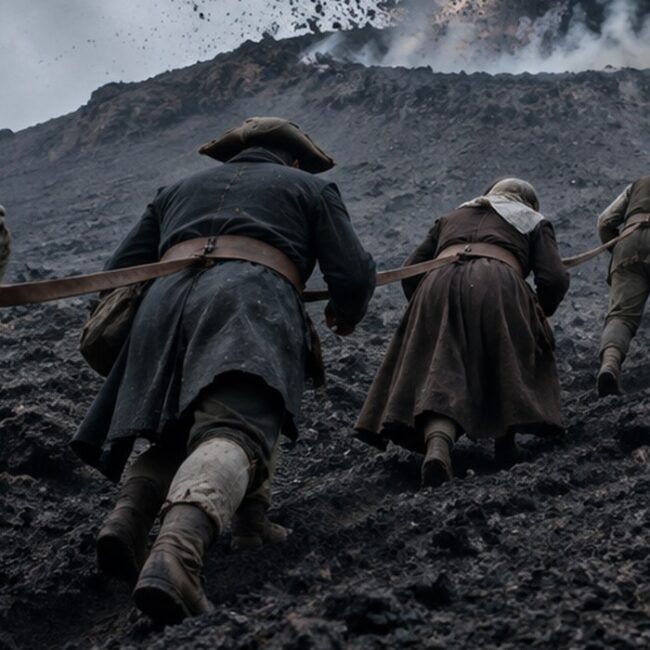
With Tischbein, who loathes the shapelessness of the volcano: two guides haul them up by a leather strap.