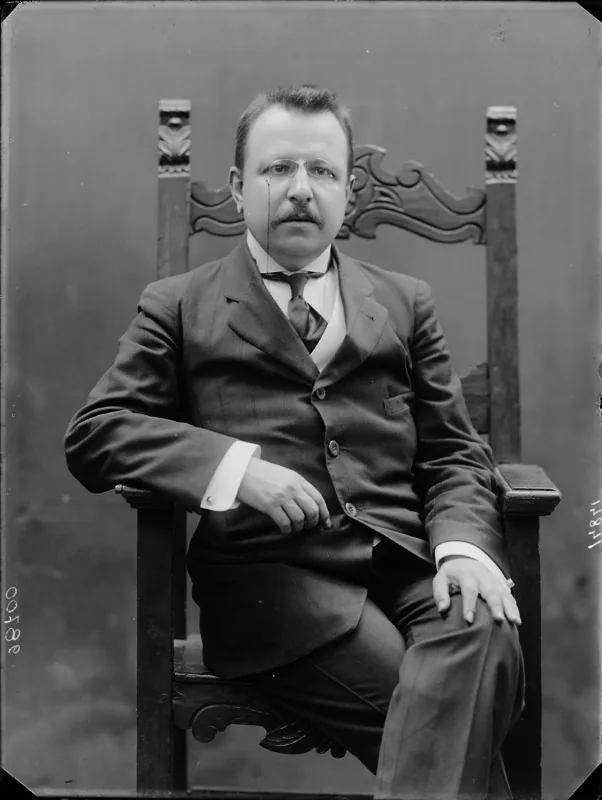


Benedetto Croce

  • 1866–1952
  • Stages: 5

Pescasseroli 1866 – Naples 1952

Philosopher, historian and critic, a central figure of twentieth-century Italian culture. In 1903 he publishes "Goethe a Napoli", a small book of Neapolitan scholarship that rereads the pages of the Italian Journey against archival documents: he finds Moriconi's inn on the Largo del Castello, gives a name to the "little princess", Filangieri's sister, and to the Duchess Giovane of the window over Vesuvius, and tells the story of Emma Hart before she became Lady Hamilton. It is the source Unreal Goethe's Grand Tour uses to verify the places and people of Naples in 1787. He returns to Goethe in his essay "Goethe" of 1919.

Main image: AI reconstruction at the age 37, as in 1903, based on the period portrait (SPUN, 2026).

Benedetto Croce
The period portrait. Benedetto Croce photographed by Mario Nunes Vais, 1909. Public domain (photographer died 1932), Wikimedia Commons.

Sources: B. Croce, Goethe a Napoli (1903); B. Croce, Goethe (1919).

Benedetto Croce (ricostruzione AI)

On the evening of 2 June, with the Duchess of Giovane, a cultivated young German lady.

Palazzo Reale, Piazza del Plebiscito 1, 80132 Napoli

A guest of Hackert in the old palace, beside the new one «like the Escorial».

Reggia di Caserta, Piazza Carlo di Borbone, 81100 Caserta

Believing her as poor as the Filangieris, Goethe finds himself in the little princess's sumptuous palace, with liveried servants lining the stairs: he feels like the sultan in Wieland's fairy tale.

Palazzo Ravaschieri di Satriano, Riviera di Chiaia at Via Calabritto, Naples

The portrait of Cavaliere Filangieri, author of the Science of Legislation: soldier, cavalier and man of the world, tempered by fine moral feeling.

Museo Civico Gaetano Filangieri, Via Duomo 288, 80138 Napoli

«Alla Locanda del Sgr. Moriconi al Largo del Castello»: Goethe's first Neapolitan address.

Piazza Municipio, 80133 Napoli